Recent Diplomatic Developments in North Africa
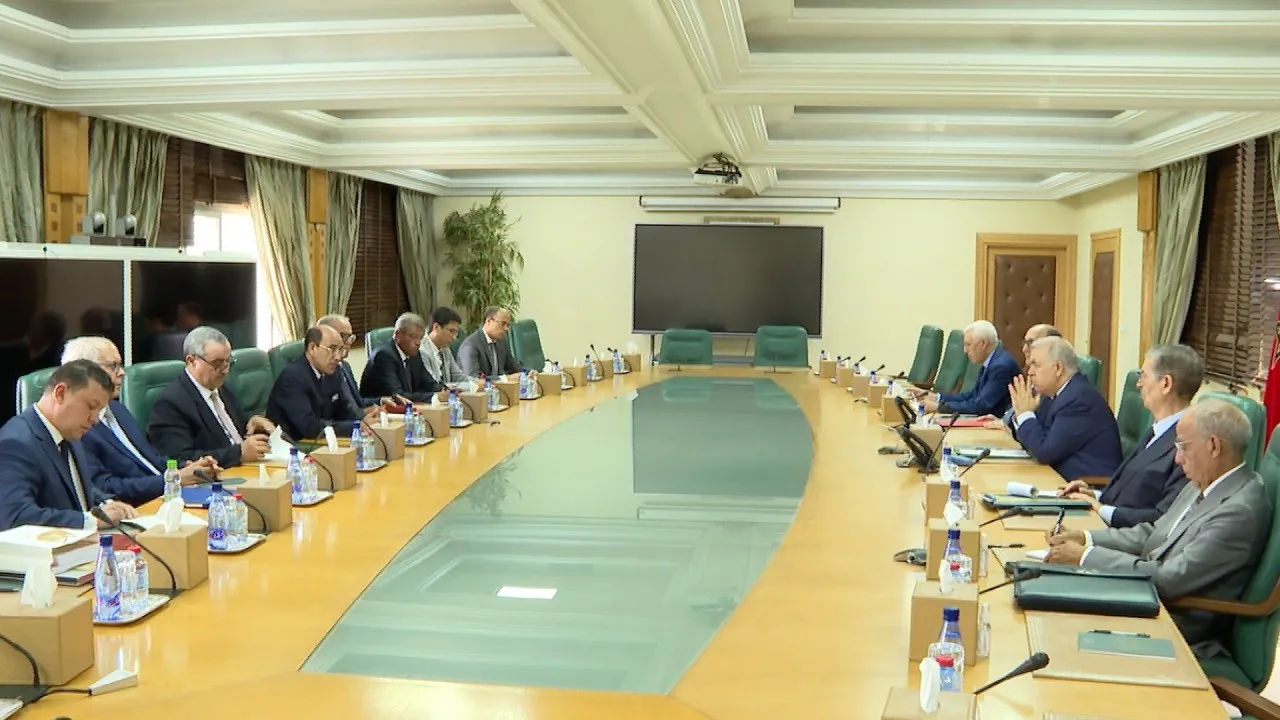
During a significant visit to Morocco by French Prime Minister Sébastien Lecornu, who was leading a substantial government delegation for a High-Level Meeting (HLM) aimed at fostering dialogue between Morocco and France, Algerian President Abdelmadjid Tebboune was simultaneously in Germany. These two concurrent diplomatic events generated a layered narrative, highlighting the underlying competition between Rabat and Algiers. For Morocco, the visit represented an opportunity to strengthen its strategic partnership with Paris. In contrast, Algeria appeared to be making efforts to regain favor on the international stage.
This competitive atmosphere was palpable in Lecornu's speech, wherein he praised the exceptional Franco-Moroccan relations and expressed a shared ambition to elevate their cooperation to unprecedented levels. He emphasized the irreversible nature of the advancements made since President Emmanuel Macron's pivotal decision to clarify France's stance on the Moroccan Sahara. This message resonated well beyond Rabat, signaling a concrete strategic alignment with Morocco that could redefine regional dynamics.
Implications for Regional Politics
Lecornu's remarks and the historical perspectives he provided regarding the vital relationship between Paris and Rabat were not solely directed at a Moroccan audience, which is already aware of the intricacies involved. Instead, they were intended for the broader North African audience, delivering a clear message: France has made its strategic choice to invest in comprehensive cooperation with Morocco, thereby intertwining their futures in a lasting partnership that spans multiple sectors.
On the contentious issue of the Moroccan Sahara, Lecornu's assertive message was also aimed at Algeria's political and military hierarchy, which continues to cling to an illogical hope of a shift in French diplomacy or, at the very least, a return to the pre-July 2024 status quo. Indeed, discussions—both formal and informal—between Algerian and French officials have consistently brought the Moroccan Sahara into focus, often as a justification for Algeria's reluctance and antagonism.
President Tebboune has cited this issue as a primary reason for his cooling relations with Macron. In a similar vein, Algeria's diplomatic strategy has sought, albeit with limited success, to rebalance its economic ties with at least three European nations in an overtly punitive manner toward Paris.
In this complex web of Euro-Maghreb relations, Morocco seems to have decisively won the respect, trust, and future prospects in the diplomatic arena. Conversely, the Algerian regime is banking on a strategy of power dynamics and rupture, hoping to disrupt Morocco's momentum. As European institutions strive to redefine their strategic ambitions with Morocco, Paris aims to be the driving force. In stark contrast, Algeria is increasingly perceived by many Europeans as a source of migratory and security concerns, along with political instability and threats to regional peace.
The more Morocco enhances its standing in the eyes of Europeans, the deeper the Algerian military regime sinks into distrust and skepticism. This trend positions Algeria as the weaker link in the Mediterranean concerning political, economic, and migratory stability.
As reported by fr.le360.ma.