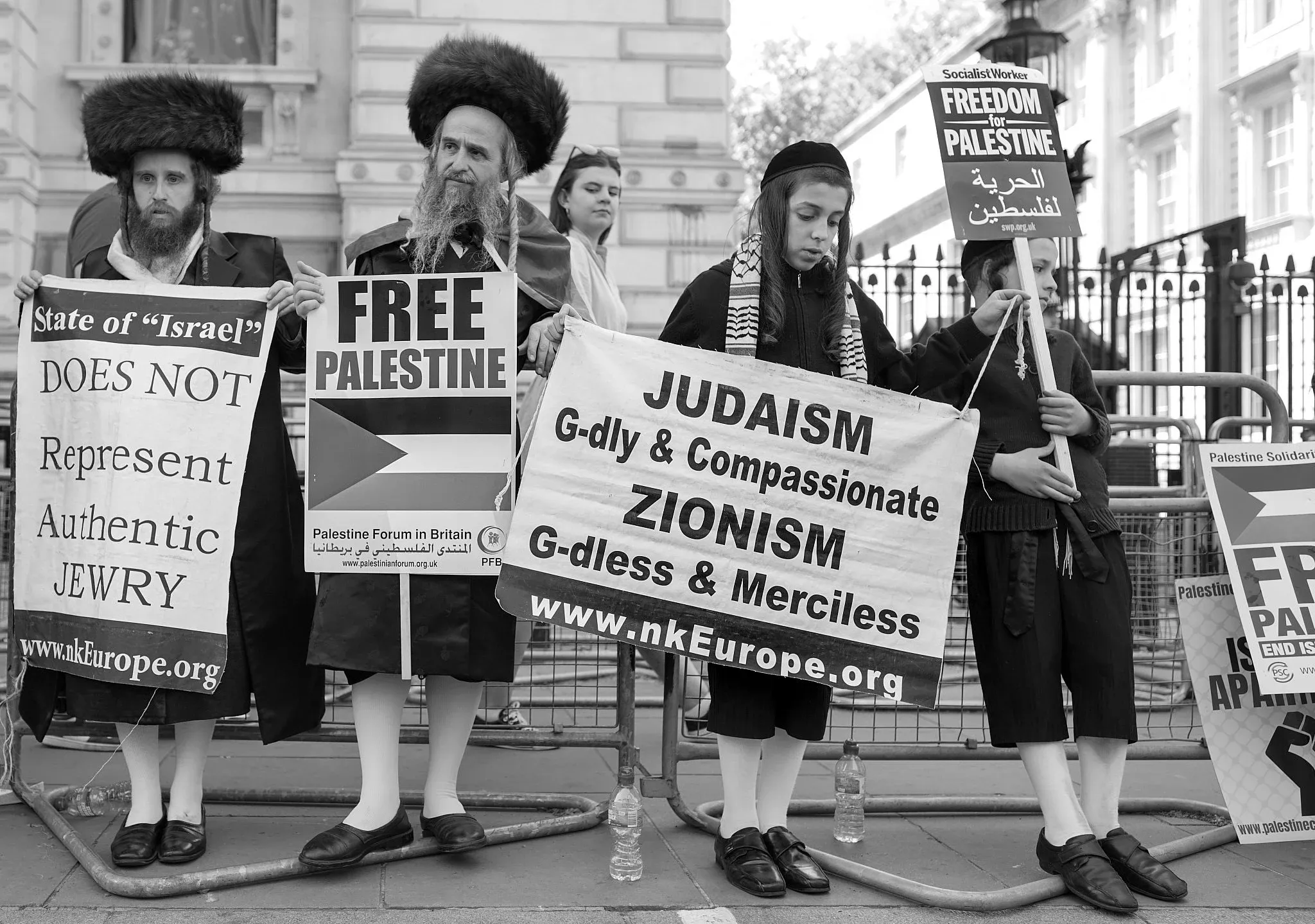
For many years, a widely heard sentiment across the Arab and Muslim communities was that there exists no animosity towards Jews; rather, the contention lies with Zionists. This sentiment often served as a protective veneer, allowing individuals to express their grievances while maintaining a semblance of respectability. While the distinction between opposition to Zionism and antisemitism may have provided a necessary psychological barrier, it is now crumbling. The architects of this dismantling are not solely the far-right antisemites or the protestors from the Global South; rather, they are institutions that purport to represent Jewish safety and interests.
The systematic conflation of Zionism with Judaism by Israeli authorities—asserting that criticism of one equates to an attack on the other—does not serve to protect Jewish communities. Instead, it risks endangering them by making them targets. This situation mirrors the unfortunate realities faced by Muslims post-9/11, where a vast faith practiced by nearly two billion individuals was unfairly equated with a politicized ideology embraced by a small fraction. The consequences of such conflation were dire, resulting in violence and discrimination against innocent Muslims simply because of their faith.
Today, Jews are experiencing a similar peril, but this time the threat is not from external adversaries but from those who claim to defend their heritage. When Israeli officials insist that the state of Israel embodies the Jewish people, and when Western legislatures adopt definitions of antisemitism that equate opposition to Israeli policies with hatred of Jews, they do not protect Jewish communities in cities like Paris, Buenos Aires, or Brooklyn; they put them at risk. This rhetoric effectively places all Jews under the burden of accountability for the actions of the Israeli state, thereby creating a dangerous dynamic where every criticism can be misconstrued as an attack.
While one could argue that the foundational idea of Zionism—the belief in the Jewish right to self-determination in their historical homeland—is essential to Jewish identity, the reality of Zionism as practiced today diverges significantly from this idealistic notion. It is not the concept itself that is problematic; rather, it is the implementation of this idea, marked by occupation, dispossession, and the devastation in places like Gaza, that demands scrutiny. Ideas alone do not carry responsibility; it is the states that enact policies based on these ideas that must be held accountable.
The core issue has never been whether Jews deserve safety and sovereignty; it has always revolved around the means by which that safety is pursued and the human costs associated with it. The principles of justice and compassion inherent in Islam should not be tainted by the actions of extremist groups like ISIS, just as the profound ethical teachings of Judaism should not be judged solely by the conduct of any one government. To insist otherwise is not an expression of loyalty but rather a form of coercion.
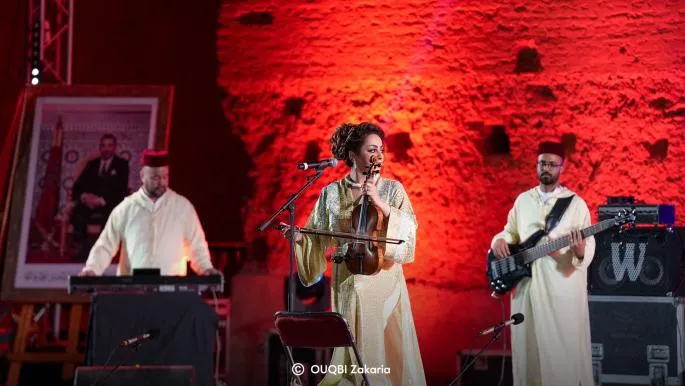
Reflecting on my experiences in Morocco, where Jewish life is intricately woven into the national identity, I observe a troubling shift. Prior to the recent escalation of violence in Gaza, Jewish visitors in cities like Marrakech were met with curiosity and a sense of shared heritage. However, as tensions mounted, social media reactions began to reflect a singular narrative: 'Free Palestine.' This shift is not indicative of a loss of tolerance among Moroccans but rather illustrates how the rhetorical frameworks constructed by Israel and its allies have obscured the individual identity of Jewish individuals, forcing them into a political narrative that does not represent them.
A recent incident involving a group of Hasidic Jews performing a prayer in Marrakech serves as a stark example of this transformation. What was once a simple act of faith became misconstrued as a political statement, prompting protests and leading to a backlash that highlights the increasing difficulty of separating religious identity from political contexts. Concerns have been voiced that Morocco could be drawn into Israel’s contentious political landscape, invoking fears that Moroccans might face challenges to their own homes based on historical claims.
It is critical to recognize that this phenomenon is not isolated to Morocco; it is a global issue that poses a significant risk, not only to Jewish communities but to societal harmony as a whole. The rise of antisemitism today is not merely a product of historical prejudice; it is exacerbated by a new narrative that equates a Jewish person with the policies of the Israeli state, a conflation that leads to increased hostility and violence against innocent individuals.
As Ezra Klein poignantly articulated, perpetuating the idea that opposition to the Jewish state equates to hatred of the Jewish people inevitably leads to a widespread belief in this fallacy. Israel’s insistence on merging its identity with that of the Jewish people only serves to embolden those who harbor antisemitic sentiments, creating a cycle of misunderstanding and conflict. The irony is particularly cruel, as Jewish communities worldwide—who often hold diverse and sometimes conflicting views on Israeli policies—are left to bear the consequences of a conflation they never endorsed.
In conclusion, a faith that has endured centuries of persecution should not be reduced to the political machinations of a single state. Jews deserve better than to be caught in the crossfire of geopolitical conflicts, and it is imperative for the global community, especially the Muslim world, to recognize the dangers of conflation and to advocate for clarity and understanding between faith and politics.
As reported by blogs.timesofisrael.com.