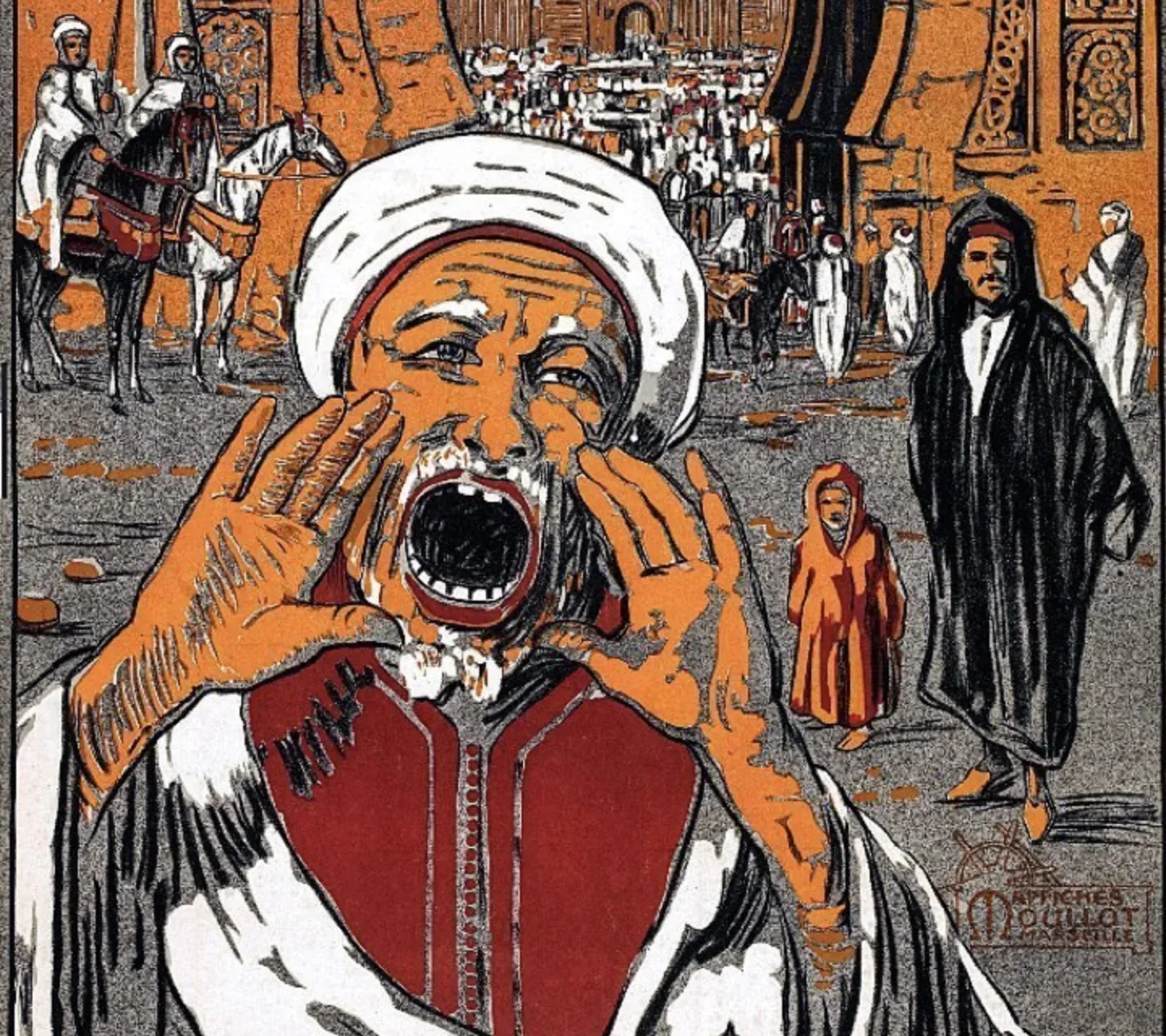
The phrases like "Discover the Enigmatic Fez," "Experience Rabat Year-Round," and "Savor Morocco's Early Fruits and Vegetables" were not mere fleeting marketing slogans; rather, they were prominently featured on captivating artistic posters created during the first half of the 20th century. These posters served the interests of shipping companies, railways, and travel agencies, all aimed at enticing European travelers to explore Morocco's cities, natural landscapes, and rich traditions.
Today, these posters can be classified as classic advertisements, transcending their role as mere promotional tools to become significant works of art. They bore the signatures of renowned artists such as Jacques Majorelle, Joseph Dulac, and Maurice Romberg. Between 1906 and 1956, hundreds of such posters were produced, with approximately three-quarters of them linked to tourism and trade exhibitions. However, their influence extended beyond promoting tourism; they played a crucial role in crafting a specific image of Morocco that would shape foreign perceptions of the kingdom for decades to come.
Historian Pascal Blanchard, author of "Morocco in French Posters (1906-1956): Between the Medieval World and the Ideal Colony," indicates that these posters aimed not only to attract tourists but also to inspire Europeans to dream of Morocco by portraying it as a realm of mystery, discovery, and escape from the mundane. Blanchard asserts that "the primary mission of the Moroccan poster was to make people forget that the country was a colony." In contrast to Algeria, where the visual discourse directly showcased colonial power and French achievements, Morocco was presented as a space detached from political realities. Images of conquest, colonial administration, and nationalist movements were absent, replaced instead by scenes specifically designed to entice European travelers.
Despite their seemingly spontaneous nature, these images were part of a broader colonial project aimed at defining the contours of the "authentic Morocco" that visitors were encouraged to explore. Historian Omar Boum argues that these posters constituted an integral part of a comprehensive tourism strategy designed to market a specific image of Morocco to the European audience. Through travel guides, transport companies, and tourism offices, the French authorities promoted a country whose identity was distilled into kasbahs, ancient cities, the Atlas Mountains, and traditional crafts. Boum explains that the idea was to "redefine traditional Morocco or the model Morocco for tourism purposes and then maintain and promote this image among French and foreign tourists."
One of the vintage posters created for the Moroccan transport company (CTM) clearly embodies this trend, placing Berber kasbahs at the center of the scene, surrounded by the Atlas Mountains, while camels appeared as an additional symbol enhancing the exotic allure of the destination. Thus, a portrayal of Morocco emerged as if it were suspended in a specific moment in time; where minarets, palace walls, ancient cities, and desert landscapes dominated the visual landscape, presenting the country as a space suspended between history and legend, far removed from the political and social transformations it was undergoing at the time. In this context, Blanchard writes, "It is a place for rest, discovery, enjoyment, and travel, a world where there is no place for politics."
Jacques Majorelle stands out as one of the most significant figures contributing to this imagery. Although he produced only around ten tourism posters, Blanchard considers him the most influential character in shaping the visual perception of Morocco during the colonial era. The historian confirms that Majorelle, "more than any other artist, established the forms and colors associated with Morocco." His works, which depicted Marrakech, the Atlas Mountains, kasbahs, and traditional markets, established a set of visual symbols that would later be revived in advertising and tourism campaigns and remain present today in foreign representations of Morocco.
Despite the strong presence of architecture and landscapes in these posters, Moroccans themselves often remained in secondary roles. Men appeared as horsemen or merchants, or in groups without distinct individual features, while women were presented through exotic and orientalist lenses. Blanchard notes that "the other does not exist in the poster as an actor in their own fate." In many cases, Moroccans were used as visual elements to enhance the atmosphere of exoticism and excitement that tourism propaganda sought to establish, portraying the country as a visual spectacle rather than a society living its political and social realities.
Decades after the end of the protectorate system, many of these visual symbols continue to resonate strongly in contemporary tourism discourse. The ancient cities, kasbahs, vibrant markets, and desert landscapes remain at the forefront of Morocco's promotional campaigns, making the image constructed by those posters in the last century recognizable even today.
As reported by ar.yabiladi.com.