The Formalization of Morocco-Sweden Security Cooperation
The recently signed security agreement between Morocco and Sweden marks a significant development in a long-standing relationship that has now gained increased visibility and formal structure. This agreement is not an isolated initiative or a reaction to a specific event; rather, it reflects years of collaboration and intelligence-sharing efforts that Morocco has established with various European nations. These cooperative measures have notably contributed to thwarting potential threats on European soil, underlining Morocco's pivotal role in regional security dynamics.
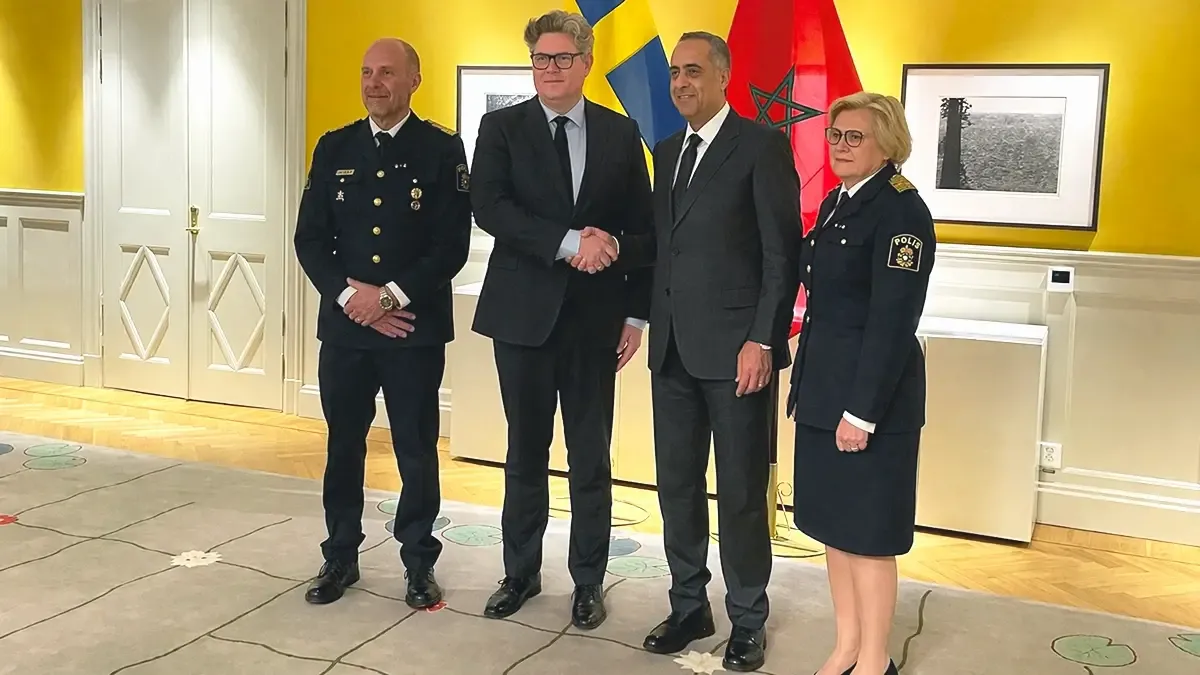
During a crucial visit to Sweden on April 20 and 21, 2026, Abdellatif Hammouchi, head of Morocco's General Directorate for National Security (DGSN), engaged in high-level discussions with key Swedish officials, including Justice Minister Gunnar Strömmer and National Police Chief Petra Lundh. These meetings were not mere formalities. Instead, they were designed to address shared security concerns and to lay the groundwork for a more stable and continuous cooperation framework, moving beyond ad hoc agreements. The objective articulated in these discussions was to evolve the relationship into a “lasting strategic partnership” aimed at tackling transnational threats, which have escalated in recent years.
Broader Implications and Regional Context
The core of the visit was underscored by the signing of a protocol between Morocco's DGSN and the Swedish police, formally establishing a structure for cooperation that had already been partially in place. This agreement encompasses various critical areas, including counter-terrorism, violent extremism, organized crime, illicit trafficking, and cybercrime, thereby addressing a spectrum of threats that transcend national borders and affect Europe as a whole. As highlighted by Mohamed Larbi, a contributor at Atalayar, the Swedish authorities have not only acknowledged the effectiveness of Morocco's security model but have also recognized it as a benchmark for operational standards in the region. Furthermore, discussions have emerged regarding the potential integration of Morocco into European mechanisms for tracking wanted individuals, marking a significant advancement in collaborative efforts.
The increasing interest from Sweden can be attributed to its own challenges with organized crime tied to international networks. For years, Sweden has faced escalating issues related to urban violence and cross-border criminal operations, making it necessary to establish stronger ties with Morocco, which serves as a strategic control point along key transit routes. Notably, many European investigations have identified connections between ports in the western Mediterranean and destinations in Scandinavia, involving logistical networks that span southern and northern Europe, including ties to North Africa.
Abdellatif Hammouchi's role extends beyond ceremonial functions; he is a pivotal figure steering a strategy often referred to as 'intelligence diplomacy.' Under his guidance, Moroccan intelligence services have expanded their presence and influence within cooperative networks across Europe and Africa, focusing on integrating intelligence into more stable operational frameworks. This collaborative approach is not new, as evidenced by Morocco's contributions to dismantling jihadist cells in Spain in 2019, which highlighted the effectiveness of intelligence sharing. Similarly, a 2021 joint operation between Morocco and Spain led to the proactive arrest of radicalized individuals in Spain, showcasing a preventive strategy that could disrupt criminal networks before they solidify.
As Morocco's security collaboration has historically centered around France and Spain, this expanding network now includes countries like Sweden, reflecting a broader trend of northern European nations seeking direct security partnerships with southern partners. However, this shift raises important questions about governance and the implications of increased reliance on external intelligence. Such developments necessitate a closer examination of institutional oversight, transparency, and the legal parameters governing these cooperative efforts, particularly as they influence investigations and judicial coordination within Europe.
In conclusion, the security agreement with Sweden represents more than just a new partnership; it is indicative of a broader reconfiguration of how Europe approaches its security framework, with non-European actors like Morocco becoming increasingly integrated into the system. As this trend continues to evolve, Morocco is poised to play a critical role in addressing pressing issues such as cybersecurity, migration, and transnational crime, reaffirming its position as a key player in regional and global security.
As reported by atalayar.com.