
The activation of Spain's National Security Law marks a significant escalation as the government grapples with what can be interpreted as a hybrid warfare episode, particularly in light of persistent provocations from various Moroccan ministers challenging Spanish sovereignty. Despite these challenges, the government has opted not to summon the Moroccan ambassador for a formal protest meeting at the Foreign Ministry, a decision that raises eyebrows given the seriousness of the situation.
Prime Minister Pedro Sánchez characterized recent events in the autonomous city as "an attack, a violation of Spain's territorial integrity," stating that it was unprecedented and deserving of the utmost condemnation. He equated the incident to a direct aggression against national territory. However, 25 days later, following an extended vacation period for the president, the government has taken a mixed approach, activating the National Security Law for the first time and declaring the crisis as a "situation of national security interest." This designation has resulted in the appointment of a single command led by Minister of Territorial Policy Ángel Víctor Torres, who will wield extraordinary powers until the end of the year.
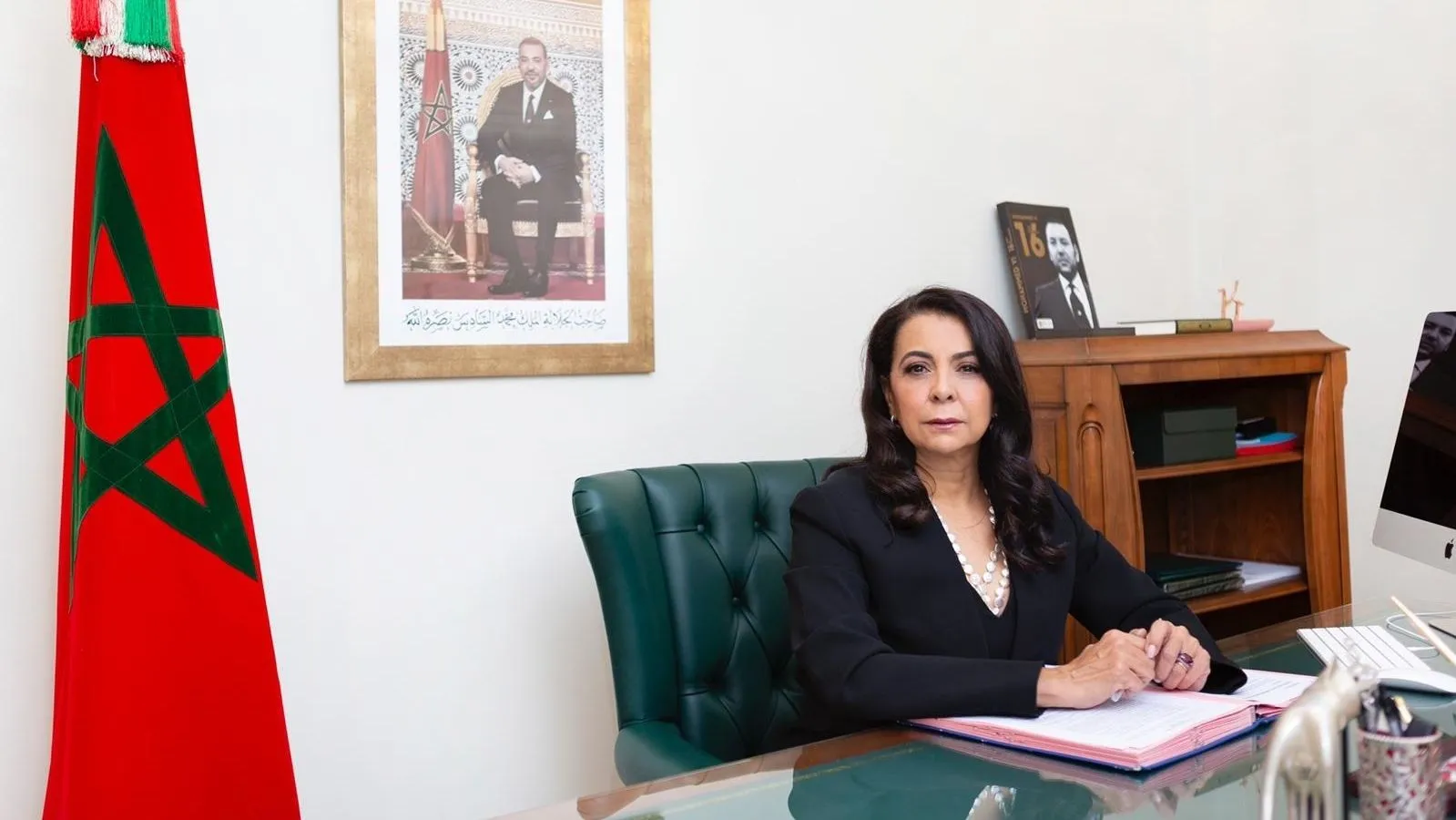
From a security doctrine perspective, Spain is now effectively one step away from categorizing the situation as a case of hybrid warfare. The massive pressure on the border and the ongoing "violation of territorial integrity" extends beyond irregular migration dynamics, as evidenced by statements made by the Minister of Religious Affairs in front of King Mohamed VI just this week. Despite these developments, the Ministry of Foreign Affairs has refrained from taking the "most obvious" diplomatic step, according to consulted sources, which would involve summoning Moroccan Ambassador Karima Benyaich or recalling the Spanish ambassador from Rabat for consultations.
Internal sources confirm that no formal invitation has been extended to the ambassador to communicate Spain's rejection of the assault and Morocco's subsequent claims over Ceuta and Melilla. When questioned about the absence of such a summons, official spokespersons from Foreign Minister José Manuel Albares' office have dodged the inquiry, referring instead to a note disseminated by the ministry late on August 21, which asserts that "Ceuta and Melilla are two Spanish cities at the border of Spain and the EU," forming an integral part of Spain's internationally recognized territorial integrity.
Some diplomatic circles have ironically commented on the "new scale" of severity that seems to guide Foreign Affairs. According to one source, the government has reacted more swiftly to summoning the nuncio or the ambassador from Andorra than to that of Morocco, indicating a disparity in response levels. In stark contrast, when the Italian government announced the temporary suspension of Schengen with Spain and reimposed border controls for travelers from Spain, linking the crisis in Ceuta to extraordinary regularization of migrants, Albares promptly summoned the Italian ambassador in Madrid, labeling the remarks of his Italian counterpart as "improper" and "partisan demagoguery."
Looking back at 2024, a mere insinuation by Javier Milei in Madrid regarding Sánchez's wife being involved in corruption led to Spain summoning its ambassador in Buenos Aires for consultations indefinitely, demanding public apologies from the Argentine president for his "direct attack" on the Spanish president. Officials concede that, as things stand, these two circumstances are "less serious than the invasion of Ceuta induced or tolerated by Morocco, or the repeated statements by its ministers questioning the sovereignty of Ceuta and Melilla." The public response has been limited to the aforementioned terse note and discreet messages through ministerial contacts, details of which have not been disclosed.
Sources from the diplomatic community assert that there were directives to Spanish missions in the EU during those days to refrain from intervening in the European debate regarding the crisis in Ceuta. They were instructed to avoid promoting resolutions or statements that directly linked the pressure on the autonomous city to actions taken by Morocco. This silence from Spanish diplomacy is perceived as part of a strategy to maintain the "supposed new phase" that began with Rabat in 2022, when Spain supported Morocco's autonomy plan for Western Sahara to mitigate the crisis that followed the 2021 Ceuta assault. In return, the Moroccan kingdom reinstated Karima Benyaich to Madrid following months of vacancy in the embassy.
Since then, the official narrative has been one of "exemplary cooperation." Sánchez has repeatedly expressed gratitude for Morocco's collaboration in controlling the border of Ceuta after the assault, as well as the repatriation of "the vast majority" of those who entered irregularly. Albares, also present in the autonomous city, has characterized Morocco as a "reliable partner" and "not a threat" to Spain.
The crisis of 2026 has strained this "new phase." Moroccan Justice Minister Abdellatif Ouahbi has reiterated in several interviews that Ceuta and Melilla represent a "historical and geographical right" of Morocco and that the issue "remains on the table." He has even called for a dialogue body with Spain to address its future. The verbal escalation took a significant leap on August 25, when Mohamed VI reappeared alongside his heir at a religious ceremony at the Royal Palace in Rabat, in celebration of Eid al-Mawlid. During this event, Minister of Religious Affairs Ahmed Toufiq publicly demanded before the king the "liberation of the occupied territories of Ceuta and Melilla," citing Islamic scholars born in the city prior to its transfer to Spanish hands in the 16th century.
This represents a direct challenge to Spanish sovereignty, articulated publicly in front of the Moroccan head of state and government. All this occurs against a backdrop of a crisis that the Spanish government itself treats as an emergency violation of national security, while it appears to Rabat as merely a surge in migration. Meanwhile, both Sánchez and the Moroccan ambassador have spent much of August outside Madrid. The president reemerged this Tuesday at the National Security Council and in the first Council of Ministers following the summer recess, 25 days after the crisis erupted, having managed the situation via videoconferences from Lanzarote.
According to information gathered by this newspaper, Karima Benyaich traveled to Tetouan shortly after celebrating in Madrid the anniversary of Mohamed VI's enthronement, coinciding with the massive entry into Ceuta. That same afternoon, the ambassador had summoned ministers Fernando Grande-Marlaska and Elma Saiz to a festive reception at her Moroccan diplomatic residence in Madrid, but both cancelled their attendance due to the unfolding events in the autonomous city. The Interior Ministry confirmed that Marlaska remained "working in his office," while Inclusion refrained from providing details until the following day.
There is evidence that the ambassador has participated in events in northern Morocco in the weeks following, such as a festival on "the voice of women" held on August 14 in Tetouan, according to videos circulated on social media. Diplomatic sources insist that, in any case, "the absence of the titular ambassador does not prevent a protest summons." "If she is not present, the number two is summoned, but a summons is made; because it is about the gesture of protest, not about who it is directed at," summarized one consulted diplomat.
These same sources emphasize that summoning an ambassador—or the chargé d'affaires—is, in the hierarchy of diplomatic responses, a gesture of anger "greater than the simple note issued by Foreign Affairs 21 days after the assault and after the third instance where the Justice Minister publicly overstepped boundaries." While the relationship with Rabat is handled with caution, internal management has escalated. The government has declared Ceuta a "situation of national security interest" and appointed a single command under Ángel Víctor Torres, which integrates President Juan Jesús Vivas, the Government Delegate, the CNI, and the involved ministries, with advice from the National Security Department.
This decision comes nearly a month after the assault and represents, according to these sources and the opposition, a "self-amendment" regarding the initial position of Moncloa, which deemed a unified command "unnecessary and inappropriate" when Vivas requested it prior to the major assault. Now, the declaration allows the central government to centralize the response, compel local authorities to provide human and material resources, and mobilize extraordinary resources without the need to vote on a state of alarm or exception in Congress.
In this context, the government's rhetoric towards Morocco has oscillated between gratitude and tolerance. Sánchez expressed gratitude on July 31 for Morocco's "reiterated, constant, and fluid cooperation" in repatriation, highlighting that Moroccan actions "have nothing to do with what happened in 2021" and placing blame on the "unsolidarity" of some European partners. Days later, Albares insisted that "Morocco's willingness is for every last person to return," asserting that the neighboring country "has not asked for anything in return" and that its collaboration demonstrates it is a "reliable partner" and "not a threat" to Spain.
Óscar Puente defended in Moroccan media that "Rabat is a loyal and necessary partner" and dismissed the "anti-Morocco discourse" from the PP, while Marlaska celebrated having "managed the crisis in 24 hours" thanks to Moroccan cooperation. He went so far as to label the episode as "things that happen" and downplayed the Alawite regime's claims over Ceuta and Melilla, which he considers "without reach." The only semi-dissonant voice has been that of Defense Minister Margarita Robles. During her visit to the autonomous city, she insisted that "Ceuta and Melilla are not just Spanish; they are extremely Spanish," that "they are not to be touched," and that any aggression towards the cities "is an aggression against Spain as a whole." This Tuesday, Robles apologized to the people of Ceuta who may have felt "abandoned" and warned that "what happened on July 30 cannot happen again." In her appearance before the Cortes, she revealed the deployment of 25 CNI agents in Ceuta and defended that they "shared and analyzed their information." This, however, contradicts Marlaska's assertions. According to the Interior Minister, there were no reports from any official body warning of an impending assault.
Meanwhile, within the diplomatic community and among the opposition, the absence of a summons for the ambassador, the orders for silence issued to Spanish ambassadors, and the refusal to allow Felipe VI to visit the autonomous cities are interpreted as a "show of weakness" and a "risk" to Spanish sovereignty. Concerns are heightened by precedents from 2021—when the Ceuta crisis concluded with a pivot concerning Western Sahara—and from 1975, when the Green March and the Madrid agreements culminated in Spain's exit from Western Sahara. The question seeking an answer, which will necessitate a future appearance by Sánchez before the Cortes, is whether the government's strategy of appeasement—avoiding a diplomatic escalation of an episode it has defined as a violation of territorial integrity and a national security emergency—is a prudent strategy for managing a delicate relationship with Morocco, or whether it signifies a weakness that may encourage the regime of Mohamed VI to continue leveraging migratory pressure and the discourse regarding the "occupied territories" of Ceuta and Melilla as tools of a low-intensity hybrid warfare against Spain's southern border and the European Union.
As reported by elespanol.com.