
Spain's Diplomatic Dilemma: Navigating Relationships with Morocco and the West
The recent actions of Spanish Prime Minister Pedro Sánchez regarding the territorial tensions in Ceuta have raised eyebrows, suggesting that Spain is operating under the influence of Morocco rather than asserting its own sovereignty. Sánchez has issued commendations to the very Moroccan government that orchestrated the surge of migrants into the Spanish enclave, highlighting a perceived weakness in his administration. Notably, Sánchez broke with tradition by failing to make an initial visit to King Mohammed VI, which has historically been a first step for new Spanish leaders in fostering diplomatic relations. Instead, he has engaged with the leader of the Polisario Front, formed a pact with Algeria, embraced ties with Hamas, and adopted a policy of concessions aimed at placating Morocco. This series of missteps has not only undermined Spain's standing but has also left Sánchez vulnerable to potential manipulation, as revealed by the invasive Pegasus spyware that exposed sensitive governmental secrets.
Spain now finds itself in an unprecedented foreign policy predicament, standing at odds with major allies such as the United States and Israel—both pivotal providers of arms and intelligence in North Africa—alongside France. The decision to adopt a mass regularization approach to migration as a political maneuver aimed at countering right-wing opposition has resulted in a backlash, leading to the alienation of 22 member states within the European Union. This move has distanced Spain from the broader European consensus which emphasizes stricter border controls, reduced regularization, and increased deportations in an effort to preserve national cultures. The Spanish left, with Sánchez at the helm, continues to cling to outdated propaganda that fails to address the realities of contemporary migration challenges.
The Consequences of Misguided Policies
Europe has increasingly recognized that migration is being wielded as a political weapon, a sentiment underscored by recent events where Belarus utilized migration to create tension with Poland and Lithuania, and Morocco's calculated maneuvers in Ceuta and Melilla. While other European nations are fortifying their borders through military and police measures, Spain appears to be inviting conflict by failing to adequately defend its territory, thereby fostering a narrative that Ceuta and Melilla could be Moroccan territories. This shift has resulted in a significant loss of support and respect from the United States, the EU, and Israel, marking a critical juncture that can be classified as a state crisis.
The core issue lies in Morocco's understanding of power dynamics, contrasting sharply with Sánchez's inclination towards submission. Each gesture from Spain towards the Sahrawi territories—such as the unregulated acceptance of unaccompanied minors and granting citizenship without oversight—has provoked human waves attempting to breach Ceuta and Melilla. The 2022 pivot regarding the Sahara was a monumental error, deteriorating relations with Algeria and weakening Spain's position in the Maghreb while sending a clear message to Morocco that territorial integrity could be compromised.
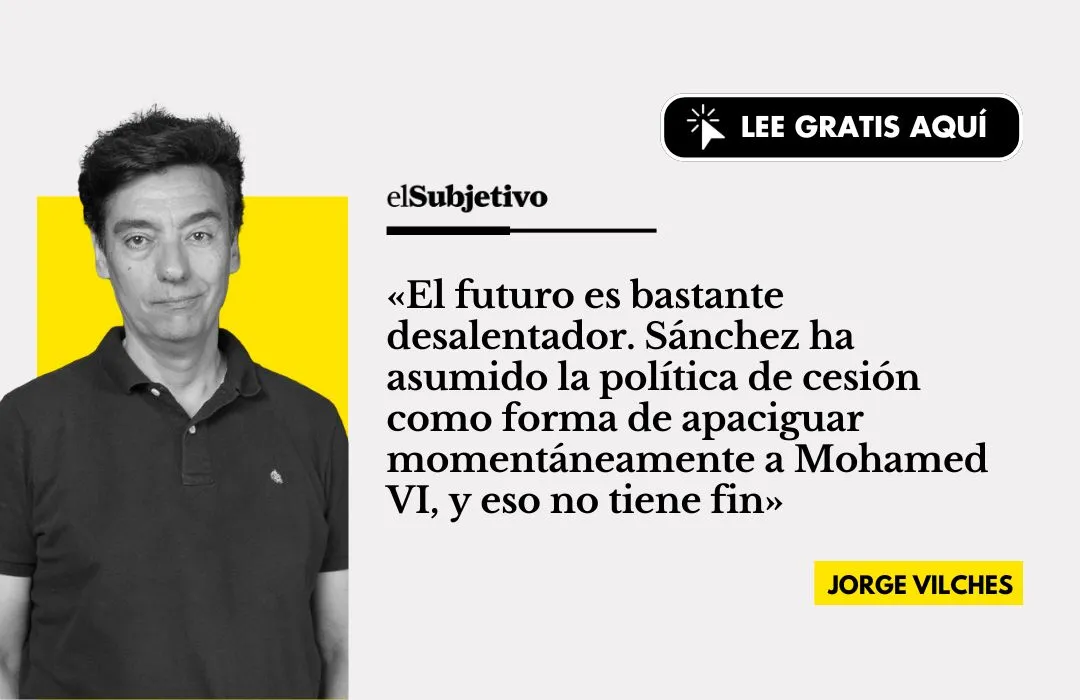
The outlook for Spain's foreign relations appears bleak. Sánchez's strategy of appeasement seems to be aimed at placating King Mohammed VI temporarily, with no end in sight. The motivations are clear: Sánchez is focused on maintaining power until 2027, while the Moroccan king pursues a historical agenda. Ideally, if the Spanish government prioritized the common good and national interests, it would seek to rebuild ties with the United States and Israel, distance itself from far-left governments and groups, and negotiate a coherent immigration policy with the European Union. Instead, Sánchez seems to prioritize his political survival over national integrity, even if that means rendering Spain subordinate to Morocco and allowing hybrid warfare tactics to be tested on Spanish soil.
It is evident that a serious government’s foreign policy cannot be rooted in party interests or shaped by the electoral ambitions of a single individual. Sánchez has positioned himself as more extreme than his leftist counterparts, attempting to play the antithesis to former President Trump while engaging in actions that could be seen as anti-Semitic, such as withdrawing from Eurovision and boycotting the Vuelta Ciclista. The rush to regularize migrants for electoral gain reflects a lack of responsible governance and foresight, leaving a legacy that may be exceedingly difficult to rectify.
As reported by theobjective.com.