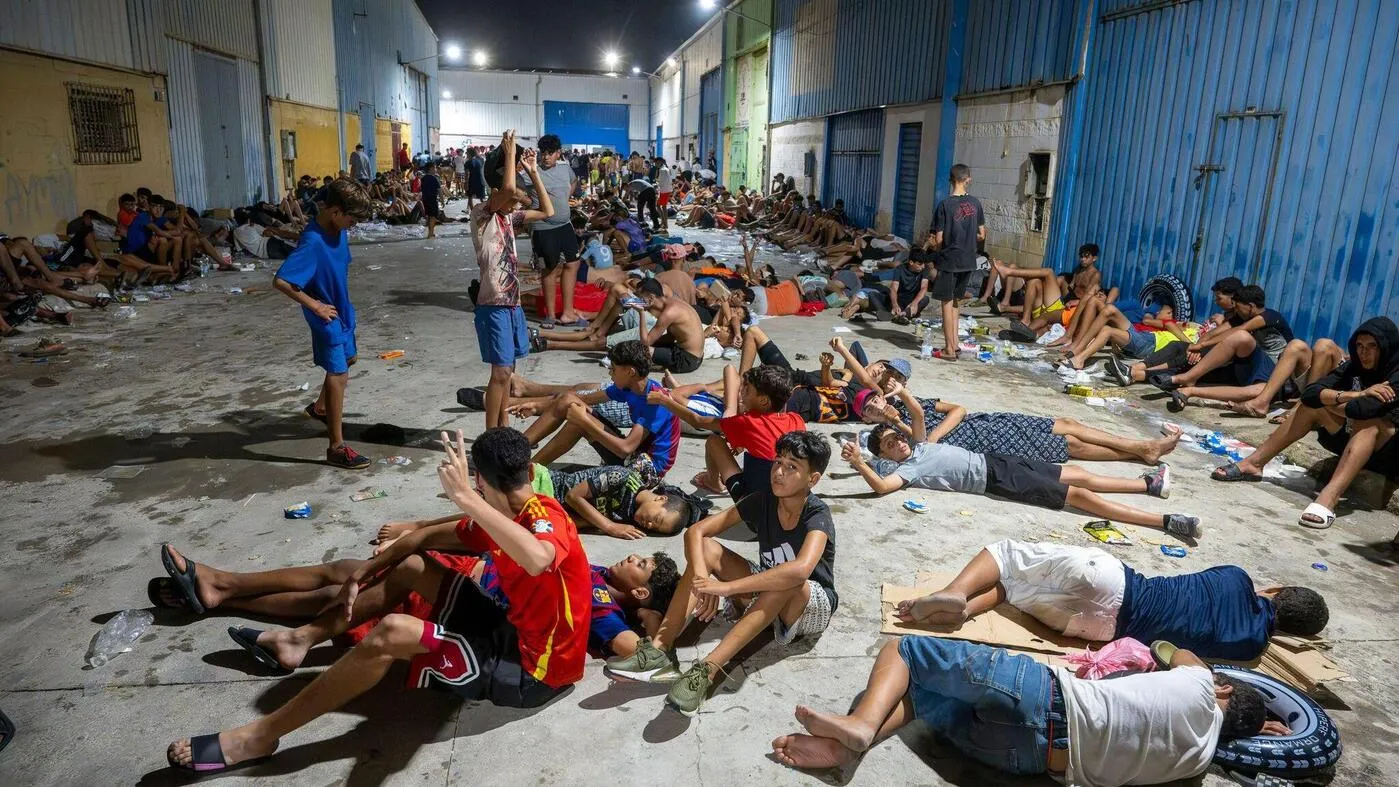

Spain's Government Responds to Migration Crisis
The Spanish government, led by Minister of Territorial Policy and Democratic Memory, Ángel Víctor Torres, has announced plans to implement existing migration agreements with Morocco. This decision comes in response to a significant influx of migrants arriving in Ceuta in recent hours. Torres emphasized that the agreements with various countries, including Morocco, Mauritania, and Senegal, will guide the process of returning those who have entered Spain illegally. He assured that the rights and humanitarian considerations of the individuals involved will be taken into account, particularly distinguishing between adults and minors. The government aims to ensure a regulated return process for these individuals, adhering to the established frameworks of the signed agreements.
Political Reactions and Ongoing Tensions
In light of the escalating situation, opposition leader Alberto Núñez Feijóo of the Popular Party has criticized Prime Minister Pedro Sánchez for what he describes as a weak response to the crisis. Feijóo has called on the government to prioritize national security and territorial integrity, asserting that the government has the necessary resources to manage the situation effectively but has failed to act decisively. Reports indicate that throughout the night, migrants continued to cross into Ceuta from Morocco, with additional entries into Melilla noted as well.
As the crisis unfolds, King Felipe VI has engaged in discussions with both Sánchez and Ceuta's President Juan Jesús Vivas to assess the ongoing migration crisis that has seen thousands of individuals attempting to enter Spain irregularly. The government plans to send Sánchez and Interior Minister Fernando Grande-Marlaska to Ceuta for on-ground coordination with security forces. Meanwhile, hundreds of migrants have reportedly begun returning to Morocco, but the flow of people entering Ceuta persists, raising concerns about the capability of local authorities to manage the situation effectively.
The Civil Guard's union, AUGC, has demanded the activation of an immediate national emergency plan, citing that this is the most severe migration crisis since May 2021. They advocate for urgent reinforcements at the border, maritime rejection protocols, and more effective measures to combat human trafficking networks. Reports suggest that over 1,800 individuals have crossed into Ceuta via maritime routes within a week, with estimates indicating that around 20,000 people may have entered Spain recently. This surge has resulted in overcrowding at local reception centers, prompting fears of reaching crisis levels akin to those witnessed in 2021.
Violent confrontations have erupted at the borders as groups of individuals attempt to breach the barriers separating Morocco from Ceuta and Melilla. The Moroccan authorities have intensified border security measures, yet sporadic acts of violence continue to be reported. Amid these developments, the Israeli Ambassador to the UN has criticized Spain's immigration policies, questioning the nation's colonial enclaves in Africa while highlighting the ongoing humanitarian challenges faced at the borders.
As reported by as.com.