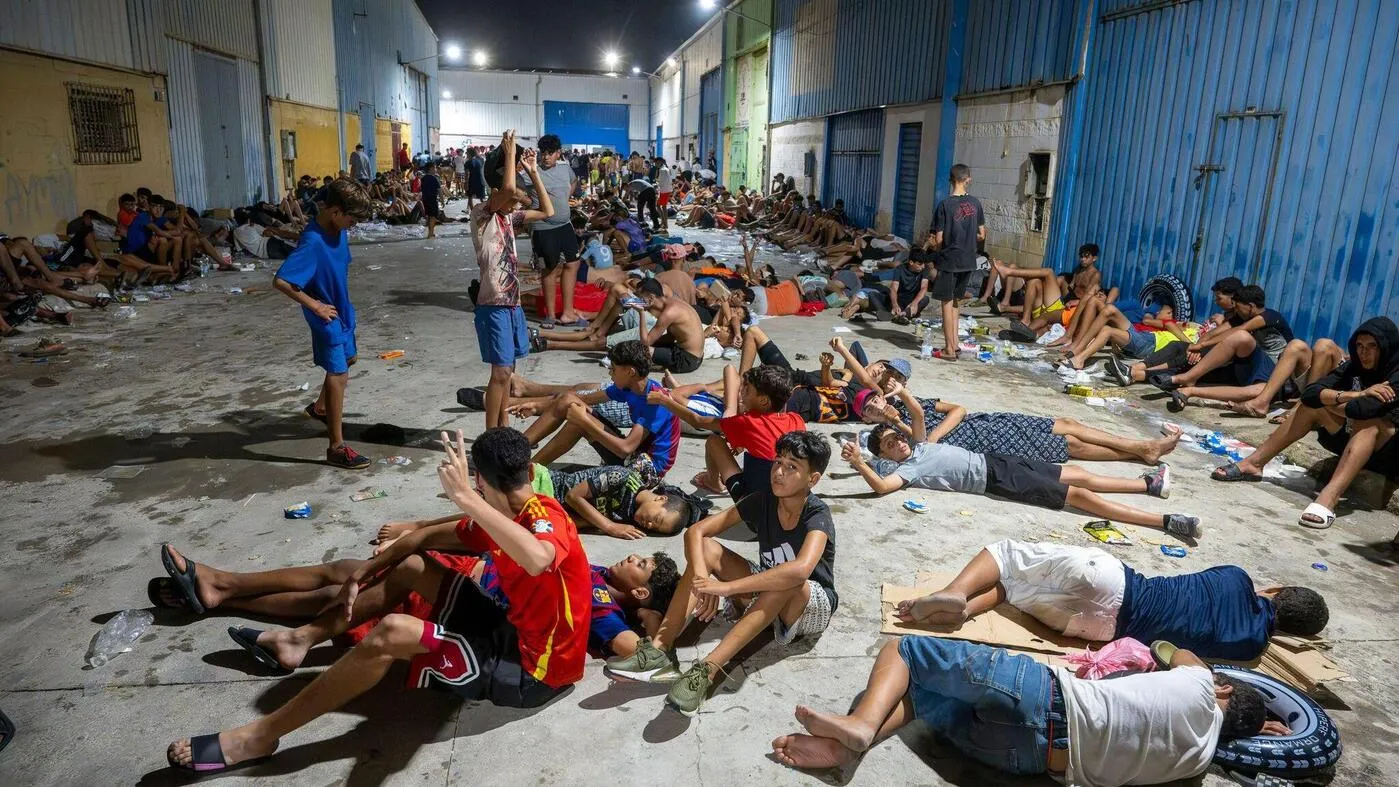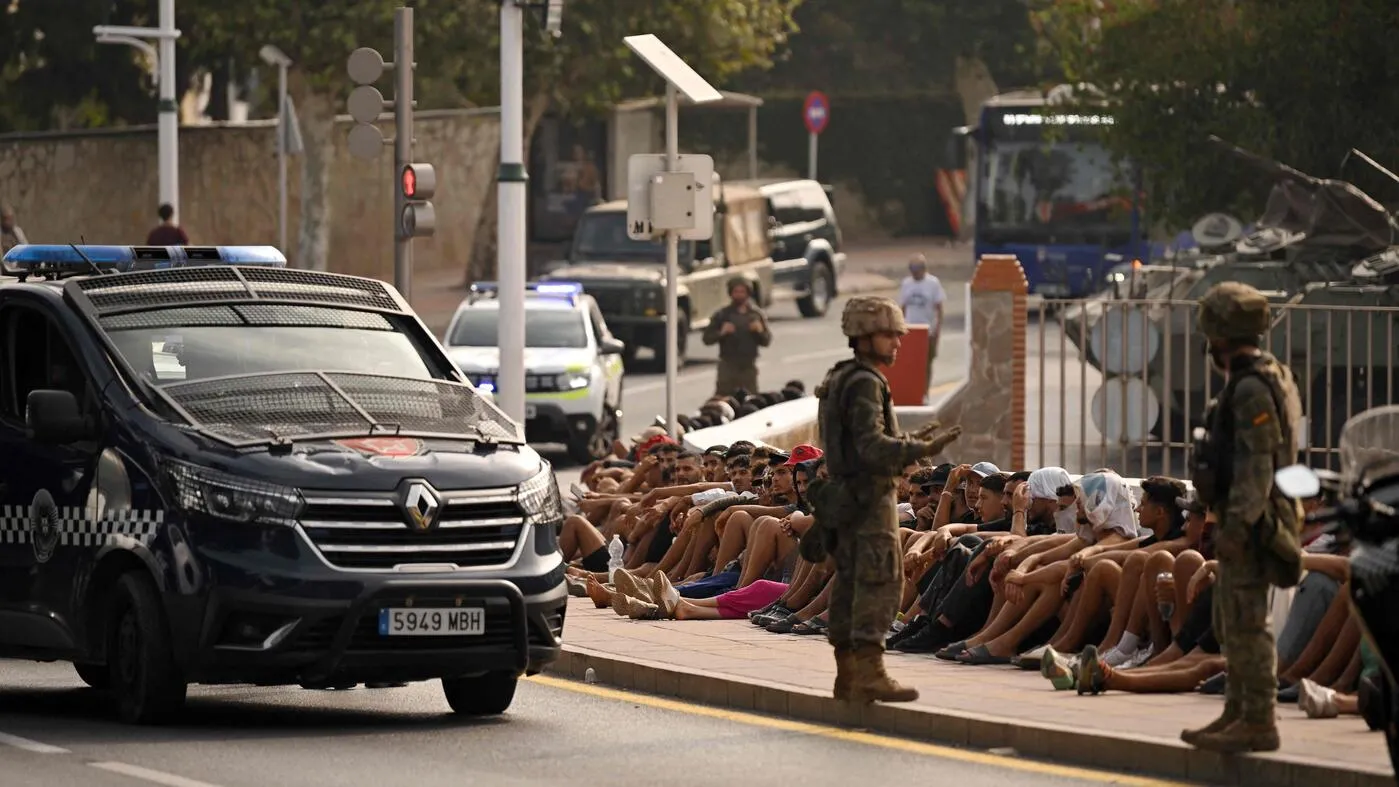

The recent surge of tens of thousands of migrants reaching the Spanish enclave of Ceuta has prompted significant diplomatic repercussions, with many of these individuals reportedly returning to Morocco. Spanish Prime Minister Pedro Sánchez has called for an extraordinary meeting of EU interior ministers in response to the European criticism regarding Spain's handling of the migration crisis. This request has garnered support from 22 EU member states, as Sánchez accused certain countries of exhibiting a "selfish" and "illegal" reaction in a letter addressed to the leaders of European institutions, which was disclosed on Saturday.
In his correspondence, Sánchez articulated that such attitudes, driven by prejudice, misinformation, ignorance, or political self-interest, not only contravene European and humanitarian law but also undermine the principles of solidarity that bind the EU together. He emphasized that in the current international context, the European Union cannot afford a reaction that is selfish, divisive, and illegal. To address the escalating situation, he demanded a videoconference involving the interior ministers from all 27 EU member states.
The crisis was triggered by the arrival of approximately 60,000 migrants in Ceuta from Morocco this week, leading to tragic incidents where at least 67 migrants lost their lives while attempting to reach the enclave, with many drowning in the sea, according to reports from the Spanish government. As of Friday evening, the Madrid government stated that nearly all of the arrivals had returned to Morocco. The situation has drawn sharp criticism from right-wing and conservative politicians both in Europe and the United States, with Italy's far-right Prime Minister Giorgia Meloni describing the scenes in Ceuta as "shocking" and suggesting a suspension of the Schengen agreement with Spain.
In the wake of these events, Italy has reinstated border controls in air and sea travel with Spain for an initial month. Italian Foreign Minister Antonio Tajani criticized Sánchez's migration policy, asserting that the images from Ceuta reveal its failures. Politicians from Denmark, Sweden, Finland, the Czech Republic, and Austria have also echoed calls for suspending the Schengen agreement with Spain. Amid these developments, U.S. President Donald Trump remarked on the shocking visuals from Ceuta, likening the situation to an invasion, warning that a similar scenario could unfold in the U.S. if Republicans fail to win in the upcoming midterm elections.
In response to threats from other countries regarding Spain's exclusion from the Schengen Zone, the Madrid government labeled these threats as "demagogic." Legal experts consulted by the news agency AFP indicated that such a measure is not feasible under current EU law. Spanish Foreign Minister José Manuel Albares stressed that no one could cross from Ceuta to the Spanish mainland uncontrollably, as the usual freedom of movement within the Schengen area does not apply to Ceuta. Sánchez characterized the migrant influx as an "attack" on Spain's territorial integrity, attributing the rumors about an allegedly open border to the "smuggler mafia." Albares confirmed that almost all individuals who arrived in Ceuta had returned to Morocco, a statement corroborated by reports from independent local media.
As EU member state experts convene for an emergency meeting to discuss the unfolding situation, EU Migration Commissioner Magnus Brunner reassured that "not a single person has crossed the border to the EU mainland." The Spanish Interior Ministry has deployed 60 soldiers and 200 special police forces to Ceuta to restore order, marking the first use of military support for border security in the enclave since 2021. Previously, numerous individuals from Morocco had overwhelmed the Spanish Guardia Civil. Video footage depicted hundreds of migrants arriving by sea with flotation devices or breaking through gates in the border fence, while Moroccan authorities utilized water cannons in the border town of Fnideq to prevent further crossings.
These incidents have intensified political debates within Spain, with the socialist government recently launching a program to grant legal status to around 500,000 undocumented migrants. Right-wing parties have held Sánchez accountable for the escalation, with opposition leader Alberto Núñez Feijóo from the conservative Popular Party (PP) labeling it a threat to national security. Experts have speculated that a recent ruling from the Spanish Supreme Court, which prohibits the immediate expulsion of migrants intercepted at the border, may have contributed to the sudden influx. However, two migration specialists expressed skepticism about this theory, attributing the surge instead to smuggling operations exploiting the ruling.
Meanwhile, the events have sparked memories of a similar surge in May 2021 when around 10,000 youths from Morocco and sub-Saharan countries entered the enclave amid a diplomatic crisis between Spain and Morocco. Following Spain's decision to provide medical treatment to Brahim Ghali, a leader of the Polisario Front advocating for Western Sahara's independence, Morocco suspended border controls. Reports indicated that only six illegal migrants successfully reached Ceuta throughout the entirety of 2025, and none from the beginning of the year until mid-July. As the current situation unfolds, it raises concerns about the effectiveness of border controls and the role of government authorities in managing migration. Ceuta, along with Melilla, remains the sole land border of the European Union with the African continent, making it a hotspot for migration attempts into the EU.
As reported by tagesspiegel.de.