South Korea's Trade Minister Advocates for Free Trade Agreement with Morocco
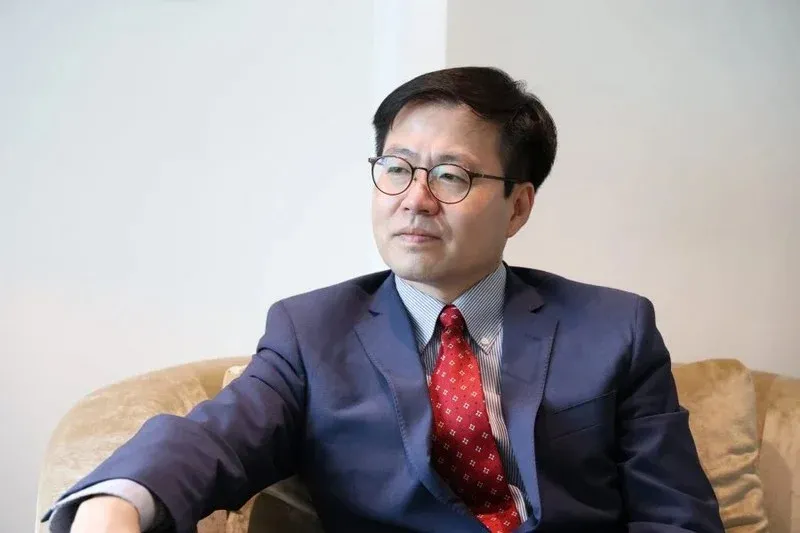
The South Korean Minister of Trade, Yoo Han-Koo, has expressed concerns over the competitiveness of Korean companies in Morocco under current conditions. He emphasized the necessity to expedite efforts towards establishing a free trade agreement (FTA) between the two nations by mid-2027. In a recent interview with hespress.com, he noted that the tariffs imposed on Korean components hinder these companies from utilizing Morocco as a manufacturing base for vehicles, batteries, and other products destined for the European market. In contrast, companies from competing countries benefit from tariff-free imports due to existing free trade agreements.
Yoo pointed out that a comprehensive economic partnership agreement, which encompasses tariffs, investment, and public procurement, is the only framework capable of ensuring equal opportunities for economic stakeholders. The absence of such a framework diminishes the competitiveness of Korean companies within the Moroccan market. Furthermore, he highlighted the increased investments from China in Morocco's battery sector, noting that China's trade volume with Morocco is approximately nine times greater than that of South Korea. Additionally, both India and Japan have outpaced Korea in terms of industrial and commercial presence, placing Seoul at a disadvantage.
Strategic Opportunities and Challenges Ahead
The South Korean minister acknowledged that his country is not fully capitalizing on the available opportunities within the Moroccan market. He mentioned that the Korean government is actively working to bridge this gap, especially with Morocco preparing for significant infrastructure investments in anticipation of hosting the 2030 World Cup. In 2025, the Korean company Hyundai Rotem successfully secured a monumental contract valued at $1.5 billion to supply trains to the National Railway Office, showcasing a model for what Korean companies can achieve in Morocco. He noted that there are potentially hundreds of other opportunities available.
Moreover, Yoo emphasized that Korean firms are distinguished by their swift execution and risk-taking capabilities compared to other competitors, maintaining a solid reputation for delivering projects on time and within budget. Regarding future investments, he revealed that LG Energy Solution is engaged in advanced discussions to establish a lithium refinery in Morocco, describing the kingdom as a strategic location that could serve European, American, and regional markets. However, he cautioned that the main obstacle to this expansion remains cost-related. Korean firms import a significant portion of their equipment and components from their home country, exposing them to tariffs that can reach 30%, while companies from other nations enjoy tariff exemptions due to free trade agreements.
Yoo also pointed out that public procurement poses an additional challenge for companies from nations without trade agreements with Morocco, further widening the competitive gap in the local market. Despite the increasing Korean investments in Morocco, he indicated that they are not yet commercially viable enough in the absence of a comprehensive legal framework.
In light of these challenges, the trade ministers of both countries, alongside Morocco's investment minister, have agreed to launch a working group to commence official negotiations before the year's end. This initiative is expected to accelerate the path toward a broad-ranging agreement. The South Korean minister reiterated that his country has previously entered into similar agreements in a short timeframe with countries like Serbia and the United States, reflecting the potential for a similar accord with Morocco within a brief period.
Yoo Han-Koo concluded by stating that South Korea’s interest in Morocco primarily revolves around the possibility of transforming the kingdom into a production and export platform for the African continent, particularly in light of the absence of a free trade agreement between Seoul and African nations. He remarked that a comprehensive economic partnership agreement with Morocco could establish the kingdom as a regional industrial hub for Korean companies, facilitating their expansion into African markets. Additionally, he noted that such an agreement would also benefit Morocco by opening its markets to Asian economies and Korean supply chains, as both nations strive to diversify their trade partnerships. He emphasized that "Asia is the economy of the present," urging Moroccan stakeholders to look eastward as Korean companies expand southward. The Korean minister referenced United Nations trade data, which revealed that Morocco's exports to South Korea totaled $61 million in 2024, compared to imports valued at $908 million, resulting in a trade deficit of approximately $847 million favoring Seoul. Electronics, machinery, and vehicles dominate the largest portion of Korean exports to Morocco. He summarized that the anticipated agreement, if finalized, could begin to yield results within two to three years, marked by increased trade exchanges, rising investments, and enhanced interaction between the two peoples.