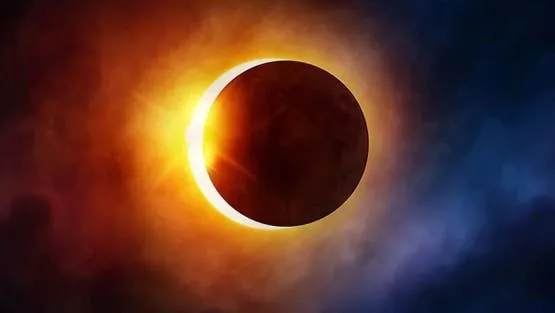

On Wednesday, August 12, Morocco, along with several European countries, is expected to experience a solar eclipse that will take place from late afternoon until sunset. This celestial event is likely to attract many citizens eager to witness the phenomenon firsthand. However, it is crucial to understand that improper viewing techniques can lead to significant health risks, particularly concerning eye health. Medical professionals specializing in ophthalmology have issued stern warnings against looking directly at the sun, whether with the naked eye or through inappropriate means.
Dr. Doha Hamid Allah, an ophthalmologist, has urged the public to refrain from viewing the eclipse without proper eye protection to safeguard their vision. She emphasized that the allure of the solar eclipse might tempt individuals, especially children, to gaze at the sun out of curiosity. However, this can result in damage to the eyes that may not be immediately noticeable; symptoms can manifest hours after exposure, underscoring the importance of preventive measures to mitigate these risks.
Potential Damage to the Cornea and Retina
Dr. Hamid Allah elaborated in an interview with "The Voice of Morocco" that direct sunlight during the eclipse exposes the eyes to intense rays that can cause significant harm. The cornea is at risk, but the more concerning threat lies with the retina, which is sensitive to light and is responsible for processing visual information. Exposure to high light intensity can lead to phototoxic damage to retinal cells, particularly in the central area responsible for sharp vision. This condition is medically recognized as solar retinopathy, which results from toxic reactions caused by excessive light exposure.
Moreover, the danger of this type of injury is compounded by the fact that individuals often do not feel any immediate discomfort at the moment of exposure, even though damage may already be occurring within the retina. The intense light reaching the center of vision can lead to what Dr. Hamid Allah describes as "oxidative stress," a reaction that occurs in retinal cells when subjected to high light levels. Medical data confirms that photic retinal injury can occur painlessly, as the retina lacks pain receptors, and visual symptoms may not emerge until hours later.
Symptoms and Long-term Recovery
Dr. Hamid Allah pointed out that the absence of immediate symptoms following the eclipse does not necessarily indicate that no damage has occurred; some effects may only become apparent later. Among the potential symptoms are the appearance of a dark spot or blurred area in the central field of vision, along with difficulty seeing or a diminished sight level in one eye. Medical references indicate that prominent symptoms of solar retinopathy include the emergence of a central or paracentral blind spot and blurred vision, which can occur within hours of exposure. Recovery, when it occurs, may stretch over several months, with some patients experiencing lingering visual disturbances.
Dr. Hamid Allah emphasized that damage to the central retina can be exceedingly severe, and prevention remains the cornerstone of managing such cases. She cautioned against risking direct exposure to the sun merely for the sake of witnessing a fleeting astronomical event. This recommendation aligns with guidelines from scientific bodies, which assert that the safest approach to avoid retinal damage is to refrain from looking directly at the sun without specialized viewing protection.
In light of this, the doctor warned against attempting to view the eclipse through smartphones, and she reiterated that ordinary sunglasses, no matter how dark, do not provide adequate protection for viewing the sun directly. The American Astronomical Society and NASA have both stated that regular sunglasses are not safe for solar viewing, and using cameras, binoculars, or telescopes without the necessary solar filters can lead to serious eye injuries. For individuals wishing to view the eclipse directly, specialized solar viewing products are essential, and it is crucial to ensure that these items meet the required safety standards.
The internationally recognized standard for direct solar viewing filters is ISO 12312-2, and merely labeling a product as “eclipse glasses” is insufficient. The American Astronomical Society stresses that claims of compliance with this standard must be backed by proper testing in accredited laboratories. Additionally, any solar viewing glasses that are scratched, punctured, or damaged should not be used, as the integrity of the solar filter is critical for effective protection.
In conclusion, Dr. Hamid Allah urged increased vigilance regarding children, advising that they should be prevented from looking directly at the sun out of curiosity, particularly as the eclipse may entice them to do so without understanding the risks involved. The desire to witness the eclipse should not translate into jeopardizing eye safety. Citizens are encouraged to adhere to the recommended protective measures or opt for indirect viewing methods to avoid potential harm to their vision.
As reported by thevoice.ma.