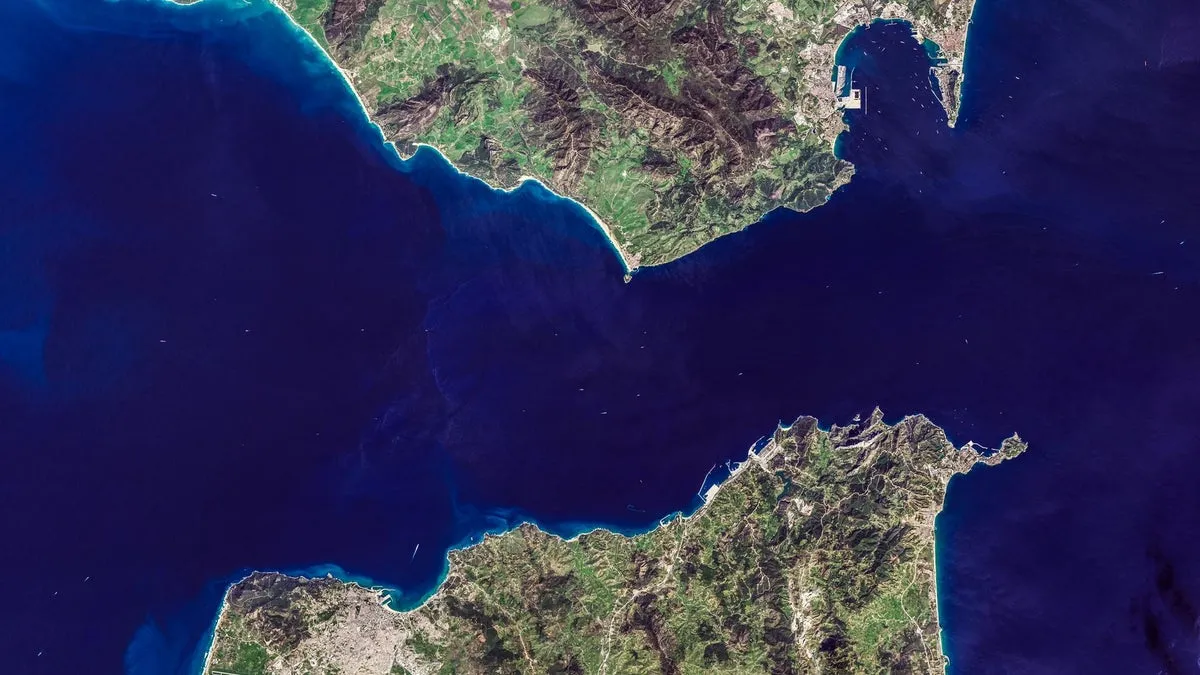
The long-standing ambition to physically connect Europe and Africa through a fixed link beneath the Strait of Gibraltar has gained significant traction in 2026, moving beyond mere speculation. After more than four decades of proposals, the Spanish Society for Fixed Communication Studies of the Strait of Gibraltar (SECEGSA) has confirmed the technical viability of a railway tunnel that promises to revolutionize logistical relations between the two continents.
The planned route will link Punta Paloma in Tarifa with Punta Malabata near Tangier, encompassing a 42-kilometer tunnel, of which 27.7 kilometers will be submerged beneath the seabed, reaching a maximum depth of 475 meters. This ambitious project includes three parallel tunnels: two dedicated to railway traffic for both passenger and freight trains, and a third designated for service and emergencies. Consequently, the circulation of private vehicles, which had been considered in earlier phases, has been definitively ruled out.
One of the primary challenges affecting timelines and budgets is the so-called Camarinal Threshold, an underwater elevation that separates the Atlantic Ocean from the Mediterranean Sea, characterized by its irregular composition of materials and fractures. To mitigate uncertainties, the Spanish government has tasked the Superior Council for Scientific Research (CSIC) with developing a three-dimensional geological model of this area, allocating a budget of €553,187 for this endeavor.
In parallel, the Council of Ministers approved an additional allocation of €1.73 million in March 2026 for SECEGSA to continue engineering studies throughout the year. The economic magnitude of this megaproject is estimated to range between €7.5 billion and €10 billion, as per SECEGSA's own assessments.
The construction is envisioned to occur in phases, with the initial exploratory gallery expected to take between six to nine years, delaying any operational timeline beyond 2035. The ambitious target of 2030, which some sectors hoped would align with the World Cup jointly hosted by Spain and Morocco, now appears unfeasible.
Nevertheless, the confirmation of the tunnel's feasibility significantly enhances the strategic importance of the Strait. This project, which has spanned over half a century of studies and political fluctuations, now faces the challenge of transforming these reports into concrete action, ensuring that neither material instability nor diplomatic tensions cause it to be shelved once again.
As reported by larazon.es.