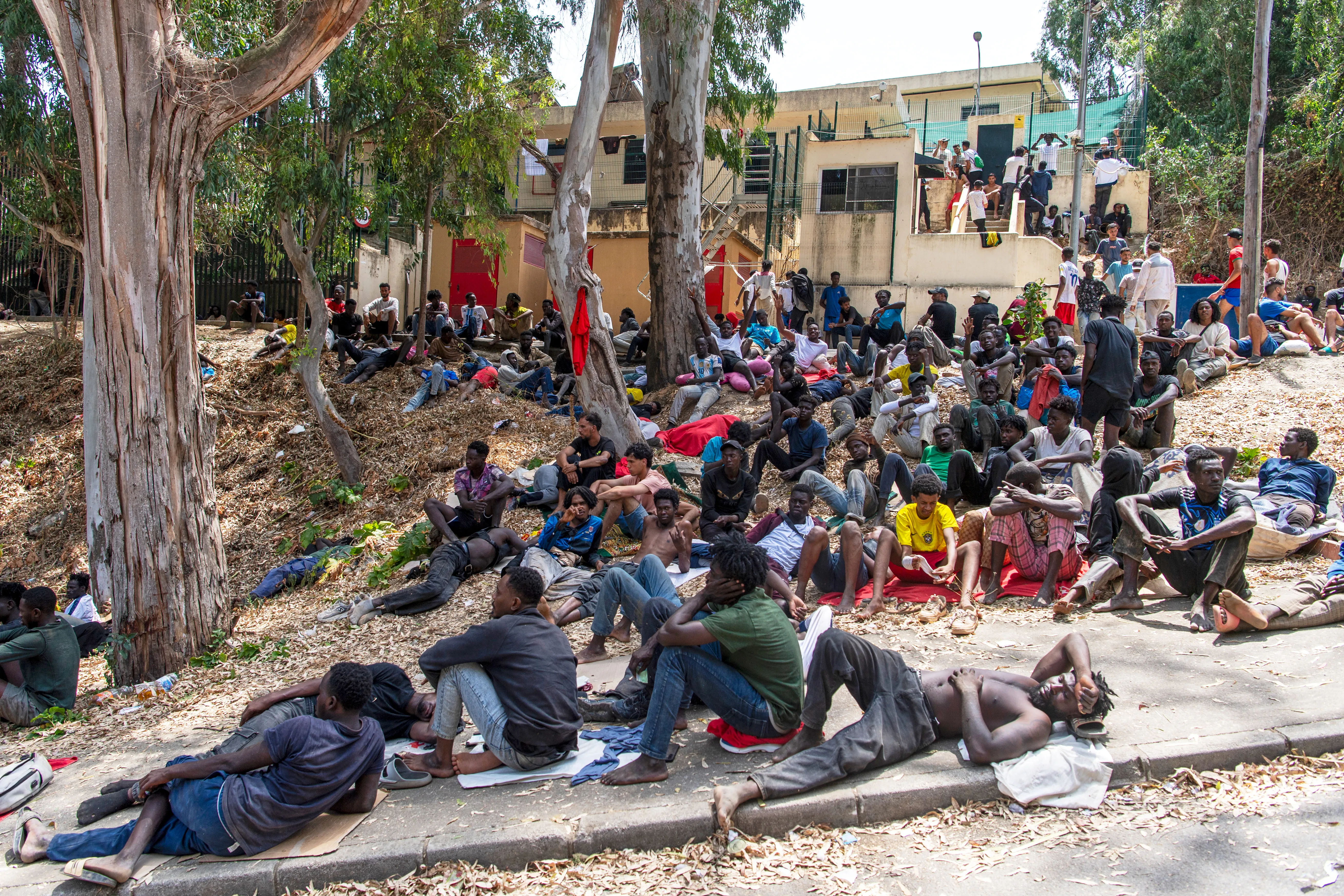
Massive Migrant Movements in Ceuta: Current Situation
In the early hours of Friday, the second Spanish exclave in North Africa, Ceuta, witnessed a significant influx of irregular border crossings. Reports indicate that approximately 37,500 individuals, who had entered Ceuta illegally, have since returned to Morocco, according to Spain's state broadcaster RTVE and other media outlets citing the Interior Ministry in Madrid. As of 3:30 PM, this figure suggests that roughly three-quarters of the estimated 50,000 migrants who had crossed into the exclave in recent days are no longer present. The regional government of Ceuta had initially estimated the number of arrivals to exceed 60,000, although these figures remain unverified independently. Reports indicate that thousands of migrants were still present in the exclave by the afternoon, with the majority having arrived by swimming across the Strait of Gibraltar.
Political Reactions and Implications
The Left Party in Germany has called for the country to accept migrants from Ceuta, emphasizing the urgent need to ensure that no lives are lost during this crisis. Fraktionsvize Clara Bünger stated that it is imperative for these individuals to receive medical attention, water, and a safe place to stay, arguing that Spain cannot shoulder this burden alone. She insisted that Germany and the EU have a responsibility to provide assistance and shelter to those seeking refuge. Bünger also highlighted that the situation in Ceuta is not a natural disaster but a consequence of political decisions, asserting that people are fleeing war, poverty, and climate crises. She condemned the notion that increased border fortifications would resolve the issue, asserting that such measures merely exacerbate the dangers faced by migrants.
In response to the situation in Ceuta, German Interior Minister Alexander Dobrindt has reiterated the need to maintain control over the country's borders. He announced plans to extend internal border controls beyond September, emphasizing that flexible and adapted measures are essential to sustain the successes achieved in curbing illegal migration. Although EU borders are intended to be open, checks have been reinstated at all German external borders since September 16, 2024, as ordered by the then-Interior Minister Nancy Faeser (SPD) to mitigate unauthorized entries. This measure has faced growing criticism but has been extended three times, most recently until mid-September 2026. Dobrindt pointed to the situation in Ceuta as indicative of the volatile landscape of illegal migration.
Meanwhile, former US President Donald Trump has drawn parallels between the crisis in Ceuta and potential future scenarios in the United States, warning that similar conditions could arise if Democrats regain power in the upcoming presidential elections. He characterized the situation as dire, arguing that a shift towards liberal immigration policies could lead to detrimental consequences for Americans.
As the crisis unfolds, the EU border agency Frontex has yet to receive a formal request for assistance from the Spanish government, although EU Migration Commissioner Magnus Brunner has expressed the bloc's readiness to support Spain, including through Frontex, to manage the situation in Ceuta effectively.
Danish Prime Minister Mette Frederiksen has suggested that the EU consider expelling Spain from the Schengen Zone, emphasizing the need for immediate action to address uncontrolled immigration, which she views as a threat to Europe and Denmark. Alongside Italian Prime Minister Giorgia Meloni, Frederiksen aims to convene European leaders to discuss the situation, highlighting concerns about the pressing need for a coordinated approach.
The British government has offered support to Spain amidst the crisis, acknowledging that while it primarily remains a matter for the Spanish authorities, the situation warrants concern. Prime Minister Andy Burnham stated that the UK would reach out to Spain to provide assistance and better understand the implications of the ongoing crisis.
In light of the migrant crisis in Ceuta, German Union politicians have attributed part of the blame to the socialist government in Madrid, arguing that rewarding illegal entries leads to increased unlawful migration. They criticized Spain's decision to grant citizenship to 500,000 illegally entered Africans, viewing it as a catalyst for further attempts to breach borders illegally. Calls for urgent dialogue with Morocco have emerged, emphasizing that cooperation with neighboring countries is vital to prevent a larger wave of migrants heading towards Europe. The ongoing situation in Ceuta serves as a stark reminder of the complex challenges posed by migration and the need for cohesive policies across Europe.
As reported by t-online.de.