Public Reaction to Religious Rituals in Marrakech
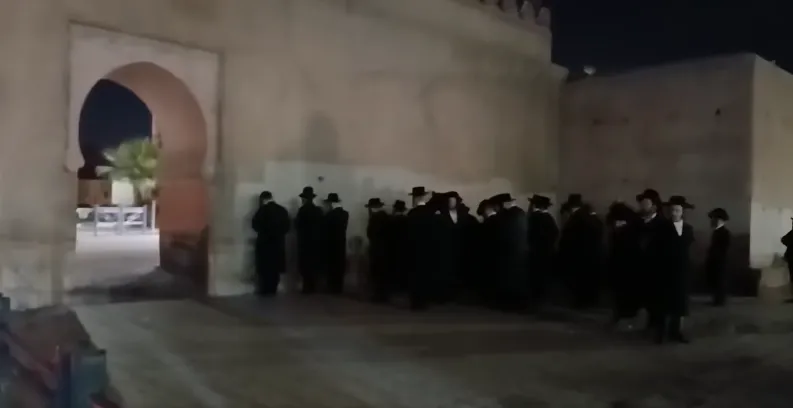
On the night of April 21, 2026, a video surfaced on social media that ignited widespread anger and outrage among the Moroccan populace. The footage depicted a large group of individuals performing Jewish religious rituals in a public space near the historic Bab Doukkala wall in Marrakech. This event has been particularly striking not only due to the nature of the rituals but also because of the sensitive context in which they occurred—taking place in an open public area rich with historical significance, and coinciding with existing regional tensions.
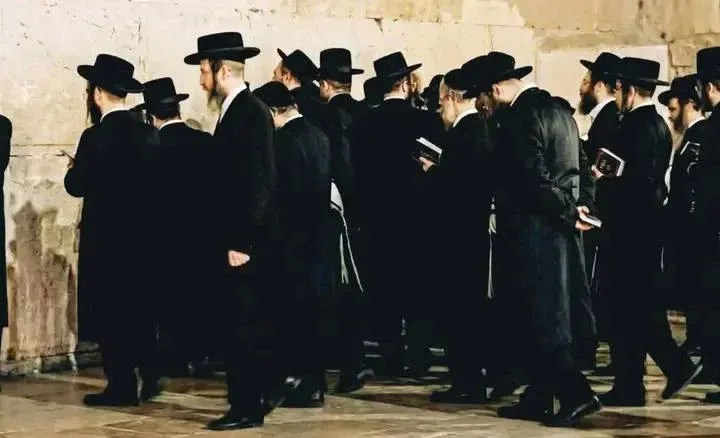
Many observers have drawn parallels between this scene and the controversial practices associated with the Western Wall in Jerusalem, often referred to as the "Wailing Wall". The participants were seen dressed in traditional Orthodox Jewish attire, complete with long black coats and hats, as they engaged in collective public rites. This situation is particularly provocative in a nation where the constitution clearly proclaims Islam as the state religion, raising significant issues about the boundaries of tolerance and what constitutes a violation or provocation.
Adding to the complexity of the situation is the ambiguity surrounding the event itself: who are these individuals? Did they receive official permission to conduct their rituals in such a public setting? And why choose this specific location? The silence from local authorities has only served to further fuel suspicion and speculation among citizens. In the absence of transparency, political interpretations abound, particularly as some link this incident to the broader dynamics of normalization that are increasingly infiltrating public spaces.
Numerous journalists and analysts have labeled the incident as a blatant provocation, suggesting that it represents an attempt to impose a new reality under the guise of coexistence. They argue that true coexistence must be rooted in mutual respect and an understanding of historical symbols and societal sensitivities. The transformation of urban monuments into sites of politically charged rituals transcends the realm of a mere transient incident and instead signals a potential shift in societal norms.
As reported by al24news.dz.