Uniting Efforts to Celebrate Sala's Heritage
Esteemed professor and prominent media figure Mohamed Sidik Ma’nine has passionately urged the community of Sala to unite their efforts in preserving, appreciating, and safeguarding the rich heritage and history of their ancient city. Recognized for its unique blend of diversity, authenticity, and historical significance, Sala's legacy is particularly highlighted by its notorious pirate history, a feature that sets it apart from other cities in Morocco and North Africa. Ma’nine emphasized the necessity of delving deeper into research and scholarship on this intriguing aspect of Sala's past, aiming to position it as a cultural emblem and a focal point of the city's civilizational narrative.
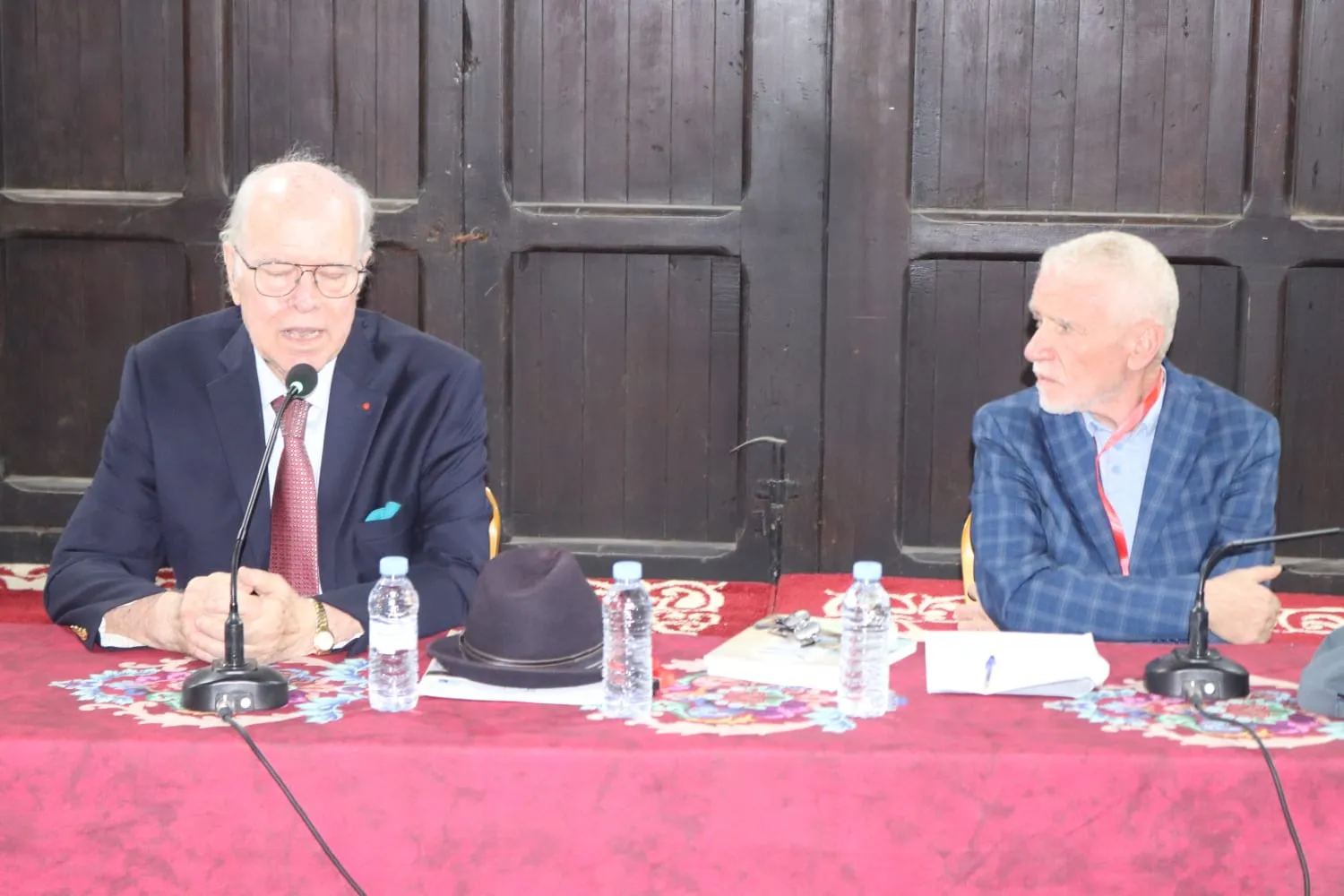
This call to action was made during the presentation and signing of Ma’nine's book, **Sala: Through Foreign Eyes**, which was part of the second phase of the 16th edition of the Maqam Festival held in Sala on the evening of June 5th at the Bab Fes gallery, under the management of festival director Abd al-Majid Fanich.
The book discusses a significant document from 1937, which is a report compiled by a French civil inspector about Sala, commissioned by the colonial authorities. This report, translated and annotated by the author, offers a unique perspective from the actual ruler of the city, reflecting the viewpoint of French intelligence on the major national events occurring in the city during the 1930s.
In his introduction, Ma’nine explained that the report was authored by French inspector Abadi, who was tasked by the colonial regime to oversee Moroccan cities, with the primary goal of defending their interests and exploiting opportunities to strengthen their influence. Following the translation of the report, Ma’nine conducted a thorough analysis and commentary on its content, correcting inaccuracies regarding the city’s ancient history and the vibrant national activities taking place during the time of the report's writing.
Celebrating Cultural Diversity and Historical Significance
Additionally, the author introduced several notable figures from Sala mentioned by the civil inspector, highlighting their contributions to national, professional, or educational work. According to Ma’nine, this study serves as a colonial foreign gaze into a city that played a pioneering role in the establishment of the liberation movement and supported all of its initiatives, with a particular focus on the roles of education, journalism, and social life in the quest for Morocco's independence.
The opening ceremony was further distinguished by a welcoming address from Fanich, who confirmed that this edition carries the theme “Sala Heritage: From Preservation and Rehabilitation to Developmental Function.” This aligns with the 40th anniversary of the founding of the Abir Raqqaq Association and marks a full century since the establishment of the first association dedicated to intellectual and literary activities, primarily in theater, in Sala, known as the Sala Literary Club.
Fanich also stressed that one of the festival's main objectives is to enhance the connections between intangible cultural heritage and tangible heritage through a diverse program of activities held in heritage sites that are foundational to Sala’s memory, including the Bab Fes gallery, the Maritime Industry Gate, the Bab Sebta Tower, the Wool Market, and the Bab Ihssain Square.
During the opening event, a library was inaugurated at the Bab Fes gallery, featuring dozens of books donated by Ma’nine to the association, along with additional books from the Abir Raqqaq Association, inviting further contributions to support students and interested individuals. A visual arts exhibition by artist Rokia Zahra was also organized.
Furthermore, the Bab al-San’a al-Bahriya space hosted an evening of Aissaoui art featuring the veteran group led by Al-Muqaddim Walid al-Aref, which captivated a diverse audience who engaged with its rhythms, animated by artist Hassan al-Jundi.
The Abir Raqqaq Association, in collaboration with the Ministry of Youth, Culture, and Communication - Culture Sector - and the Sla Prefecture (National Initiative for Human Development), is organizing the second phase of the 16th edition of the Maqam Festival from Friday, June 5th to Wednesday, June 10th, 2026. The program for this phase emphasizes presenting traditional artistic expressions that have a significant presence both in Sala and beyond, incorporating performances that provide historical and intellectual insights into each art form, while also integrating innovative elements that resonate with diverse audiences.
The second phase's agenda includes various professional musical activities, seminars, book presentations and signings, honoring distinguished figures, open discussions with cultural and artistic icons, workshops, and exhibitions of visual arts featuring traditional Sala embroidery and oil paintings.
As reported by elhadat24.com.