Tragic Death Sparks Nationwide Protests and Comparisons to George Floyd
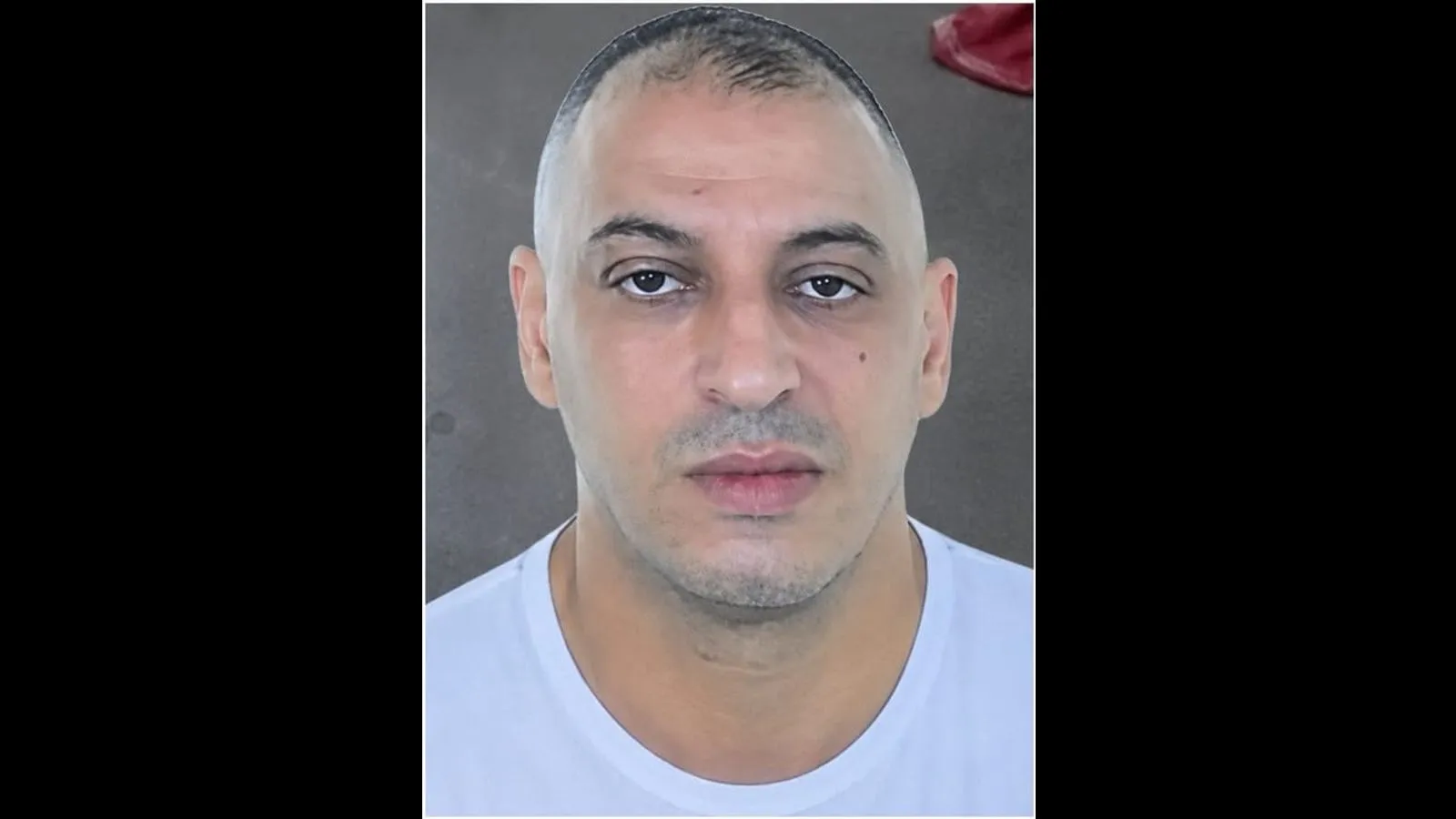
The tragic death of Abderrahim Fakir, a 42-year-old worker of Moroccan origin, has ignited a wave of outrage and protests across Italy, drawing poignant parallels to the police-related death of George Floyd in the United States six years ago. On July 19, Fakir, a logistics worker and small business owner who had resided in Italy for over thirty years, visited the Pilastro district of Bologna, a working-class area known for its significant immigrant population. At the time, he was experiencing severe psychological distress, exacerbated by overwhelming debts due to client defaults, which had forced him to lay off employees. Additionally, despite holding legal residency under the European Union’s stringent migration policies, Fakir was haunted by the fear of deportation.
Emergency services, including police officers and Red Cross paramedics, arrived shortly after noon as temperatures soared above 35°C, with the asphalt heating up to around 65°C. The police utilized pepper spray and physically subdued Fakir, pinning him face-down on the scorching pavement. A chilling six-minute-and-56-second video captured by nearby residents shows two officers and a civilian applying their weight onto Fakir's back, restricting his movement. In a harrowing display, Fakir, handcuffed and helpless, cried out for help in Italian, pleading, "Aiuto, aiuto, basta!" ("Help, help, that's enough!"). Shockingly, four Red Cross paramedics stood by without intervening to check on his condition. When he eventually fell silent and unresponsive, officers proceeded to bind his ankles with a zip tie before ultimately declaring him dead at the scene shortly thereafter.
Implications of State Violence and Systemic Inequality
This incident in Bologna is not an isolated occurrence within Italy, nor is it merely a reflection of racial tensions. It epitomizes a broader, global assault on democratic rights perpetuated by ruling elites amid an escalating crisis of capitalism. The chilling similarities to George Floyd's case are unmistakable: an unarmed man subdued by law enforcement, his cries for help disregarded, with the entire event preserved on video. In both instances, protesters have taken to the streets, rallying under the slogan “Say his name.”
The Socialist Equality Party has previously articulated that the police serve as instruments of class rule, a notion echoed by Friedrich Engels, who described the police as the embodiment of state power that intensifies in response to acute class struggles. The victims of police violence are predominantly from impoverished and working-class backgrounds across the globe, revealing that the core issue at play is class rather than race.
Fakir's death is a direct outcome of the far-right policies implemented by Giorgia Meloni's government, whose party, Fratelli d’Italia, has historical ties to Mussolini’s fascist regime. Meloni’s administration has systematically targeted immigrants through legislation such as the 2023 Decreto Cutro, which dismantled special protection permits, effectively creating a class of precarious, legally vulnerable workers. Such measures aim to sow discord within the working class while diverting attention from the austerity measures her government enacts, all while scapegoating migrants for societal challenges exacerbated by capitalist structures.
Under Meloni’s leadership, Italy has witnessed an alarming rise in its population living in absolute poverty, reaching a record 9.8 percent. Furthermore, the recent enactment of Law No. 80/2025 signifies the broadest expansion of criminal penalties in post-war Italy, criminalizing acts such as roadblocks, which are often employed during protests, and increasing penalties for actions that disrupt infrastructure, all while introducing new offenses for nonviolent resistance in detention facilities.
The investigation into Fakir’s death marks the first significant application of the Meloni government's Modello 45-bis under Article 335 of the Code of Criminal Procedure, often referred to as the _scudo penale_ (penal shield). This provision, introduced in the 2026 Security Decree, allows police officers involved in fatal incidents to be registered in a separate preliminary registry that delays their formal status as criminal suspects. The Bologna Prosecutor’s Office has registered the two police officers and four paramedics involved under this provision, prompting the family’s attorney, Fabio Anselmo, to request an independent judicial inquiry, a demand the government fiercely opposes.
In response to the public outcry following Fakir’s death, Meloni condemned the protests as “unacceptable” and expressed her “total solidarity” with law enforcement. Deputy Prime Minister Matteo Salvini initiated a campaign under the slogan “Hands off the Police,” warning Fakir’s family against any talk of revenge. Interior Minister Matteo Piantedosi remarked that questioning police actions exhibited “a fundamental lack of trust in democratic institutions,” demonstrating a stark disconnect between the government and the public sentiment. Meanwhile, the opposition Democratic Party (PD) has feigned outrage, with leader Elly Schlein labeling Fakir’s death a “catastrophic failure of the state” while simultaneously demanding the release of body-camera footage, despite their own historical complicity in the legal frameworks that allow such acts to occur.
The PD, which previously introduced laws weakening labor protections and criminalizing humanitarian rescue efforts, remains entrenched within the same capitalist and imperialist systems that perpetuate inequality and violence. Their responses serve primarily to contain the growing anger among the working class, who are increasingly mobilizing against a government that is straying from democratic ideals and leaning towards authoritarian control.
Fakir’s tragic demise is emblematic of a larger struggle, as workers in various sectors across Italy are currently rising up against the Meloni government, linking their demands for fair wages with opposition to militarism and authoritarian rule. The police are being deployed against a working class that is beginning to mobilize against systemic injustices. In this context, the fight against police violence must intersect with broader struggles against inequality, war, and the capitalist system itself.
As reported by wsws.org.