
Unveiling the Ctenosuchus tenuidens: A Unique Jurassic Creature
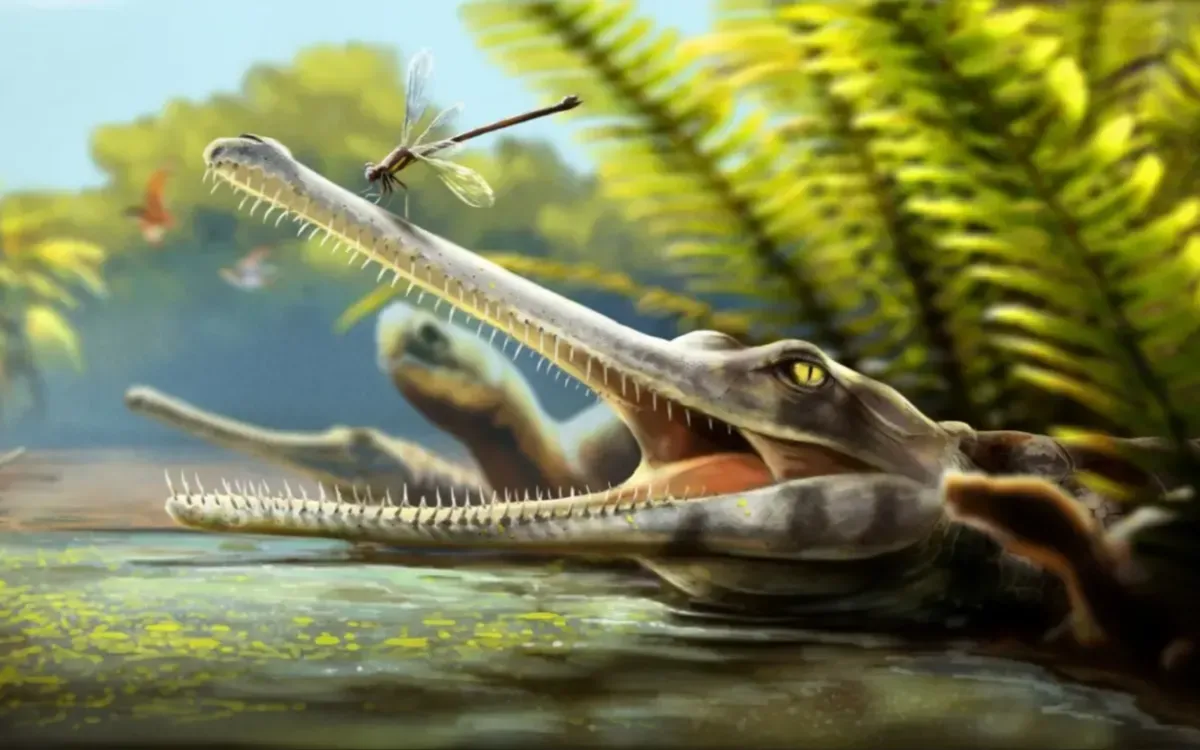
A groundbreaking discovery has emerged from the Atlas Mountains in Morocco, where a new species of prehistoric crocodile has been identified. Dating back approximately 170 million years, this remarkable creature, named Ctenosuchus tenuidens, possessed an extraordinary set of teeth that are unlike any known relatives. This significant finding is the result of collaboration between researchers from the University of Portsmouth in the UK and Hassan II University in Casablanca.
The Ctenosuchus tenuidens thrived in what is now Morocco during the Jurassic period. The research team announced their findings on October 12, detailing the unique morphology of this ancient reptile, which featured an impressively slender jaw equipped with needle-like teeth. The announcement was made by the University of Portsmouth.
Fossil Findings and Dietary Implications
The fossils, discovered in the Talsint–Anoual region of the Figuig province, consist of two incomplete specimens, including jaw fragments and teeth. These remains belong to thalattosuchians, a group of crocodile-like reptiles that inhabited aquatic environments during the age of dinosaurs. The unexpected discovery of these delicate teeth caught the attention of the researchers. Hamzah Imran, the lead author of the study, noted small black circles on one of the fossils. Upon further examination under a microscope, these markings revealed themselves to be exceptionally fine teeth, prompting a deeper investigation into their structure.
Published in the Journal of Vertebrate Paleontology on October 8, the study reveals that the teeth of Ctenosuchus tenuidens were approximately ten times taller than they were wide, with an average spacing of merely 2.3 millimeters between each tooth. Researchers estimate that this species had over 35 teeth on each side of its upper jaw. Such a specialized dentition suggests that this prehistoric crocodile likely did not prey on large animals; rather, its fragile teeth would have made capturing powerful fish a challenge, leading scientists to believe that its diet primarily consisted of small fish, crustaceans, worms, and other soft-bodied aquatic organisms. The jaw structure may have functioned similarly to a trap, effectively securing these smaller prey.
The name Ctenosuchus tenuidens reflects its unique characteristics, with “Cteno” referring to the comb-like structure, “suchus” denoting crocodile, and “tenuidens” signifying fine teeth. Additionally, researchers discovered tiny striations on the teeth through electron microscopy, further confirming their specialized nature. This research, which included contributions from Samir Zouhri of Hassan II University, enhances our understanding of prehistoric crocodiles from Gondwana, the ancient supercontinent that included Africa. It reveals that ancient lakes and waterways in Morocco were home to crocodile species with dietary habits distinctly different from those of their modern descendants.
As reported by bladi.net.