Morocco's Strategic Oil Refinery Needs
The National Front for the Rescue of the Moroccan Oil Refinery has emphasized the critical necessity of revitalizing the "Samir" refinery, framing it as a central national demand and an urgent strategic requirement. This assertion arises amidst significant changes in the energy market and increasing dependency on imports, which pose potential threats to the country's energy security. The organization has advocated for the establishment of a second refinery to bolster Morocco's energy sovereignty, aligning with the nation's long-term strategic interests.
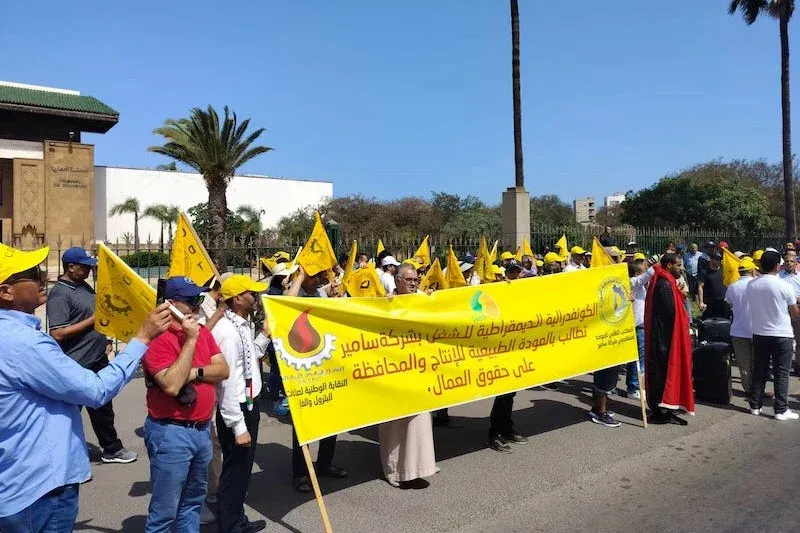
In a recent statement, the unified confederated syndicate, following a meeting held at their headquarters in Mohammedia, reinforced the need for the "Samir" company to resume its operations as a vital industrial complex for oil refining. This resumption is crucial for Morocco to benefit from the refinery's essential roles in enhancing national energy security.
Call for a Second Refinery
Hussein Yamani, the head of the National Front for the Rescue of the Moroccan Oil Refinery and Secretary-General of the National Syndicate for Oil and Gas, highlighted that as the international arbitration process between the Moroccan state and the foreign investor reaches critical stages, it has become evident that Morocco requires not only the reactivation of the Mohammedia refinery but also the construction of a second refinery of similar capacity. This need is driven by the increasing domestic demand for petroleum products.
Yamani elaborated that national consumption of diesel alone reaches approximately six million tons annually, while the maximum production capacity of the Mohammedia refinery is limited to three million tons. This disparity makes it infeasible for a single refinery to meet national demand, underscoring the need for at least two refineries to secure essential needs effectively.
Moreover, Yamani pointed out that this discussion pertains specifically to diesel, without accounting for other petroleum products where Morocco already experiences some surplus. He emphasized that the discourse should focus on achieving a comprehensive balance in the oil derivatives market, rather than concentrating solely on one product.
On the topic of investment costs, Yamani noted that constructing a new refinery comparable to "Samir" with modern technologies is estimated to require around $10 billion (approximately 100 billion dirhams). This figure considers technological advancements and rising prices of raw materials, particularly steel, compared to the period when the previous refinery was built.
Additionally, establishing a refinery extends beyond merely the industrial unit; it necessitates an integrated system of supporting infrastructure, including ports, storage facilities, and logistics equipment. The Mohammedia facility was accompanied by a series of auxiliary industrial installations that play an integral role in the energy ecosystem.
Yamani further revealed that the "Samir" company is currently on sale for about 21 billion dirhams, which is merely one-fifth of the estimated cost for building a new refinery. He argued that the costs for rehabilitating and operating the refinery would not exceed 3 billion dirhams and could be completed within one to two years, allowing it to return to its normal production capacity, which previously met approximately 67% of national petroleum product needs.
In conclusion, Yamani stressed that discussions surrounding the "Samir" refinery should not be narrowly confined to financial viability but should be viewed through the lens of comprehensive economic feasibility, especially considering the current unprecedented global energy crisis. Experts have indicated that this crisis has adversely affected between 45% and 50% of global energy assets, with supply chain disruptions potentially lasting up to two years, making the restoration of national refining capabilities an urgent necessity to ensure energy security.
As reported by hespress.com.