Morocco's Economic Transformation: A New Development Philosophy
Morocco's recent economic transformation is often celebrated as a remarkable achievement in industrial policy, infrastructure investment, and strategic geopolitical positioning. While this perspective captures some aspects of the transformation, it remains incomplete. What is occurring in Morocco transcends mere sectoral growth in areas like automobiles and renewable energy; it represents the emergence of a distinctive development philosophy that views constraints not as obstacles, but as vital components of strategic planning.
The year 2023 marked a significant turning point for Morocco when automobile exports surpassed phosphate revenues, historically the backbone of its economy. Although this shift is frequently hailed with enthusiasm, its true importance lies in a more profound narrative: it signifies a fundamental rethinking of how the Moroccan government approaches economic development. Rather than depending on natural resource rents or external financial winds, Morocco has cultivated an export-driven economy that emphasizes integration, coordination, and a long-term institutional vision.
Adaptive Governance and Economic Resilience
This transformation was not a matter of chance; it was the result of decades of adaptive policymaking in a context characterized by scarcity. Upon gaining independence in 1956, Morocco inherited a colonial administrative framework that prioritized extraction over development. At that time, the nation faced significant limitations in human capital, with only a small fraction of students completing secondary education and even fewer advancing to higher education. The country lacked the professional expertise typically essential for effective governance, including engineers, economists, and legal scholars.
Faced with these challenges, Moroccan policymakers made a pivotal decision that would shape the country's development trajectory. They mobilized the only well-educated group available in sufficient numbers—medical doctors—and repurposed them into roles far beyond their original profession. These physicians, largely trained in France, took on positions as ministers, diplomats, and institutional builders. In doing so, Morocco inverted the conventional approach to development: instead of waiting to establish robust institutions before deploying talent, it actively utilized existing talent to construct the very institutions needed for progress.
This pragmatic and improvisational approach has become a hallmark of Moroccan governance. Over time, it evolved into a broader principle: development is not merely the execution of a predetermined blueprint but a continuous process of recalibration based on available capabilities. Rather than following a linear path, Morocco has adeptly navigated changing constraints by adjusting its strategies while maintaining a consistent direction.
The tangible economic outcomes of this approach are impressive. Between 1990 and 2019, Morocco's GDP nearly tripled, and extreme poverty was significantly reduced. During the 2000s and 2010s, per capita income growth surpassed that of many peers in North Africa and the Middle East. Importantly, these advancements were not the result of commodity booms or sudden influxes of foreign capital; instead, they arose from gradual structural changes within the economy.
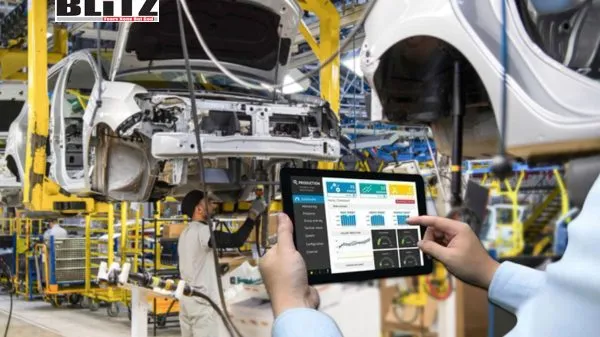
The automotive sector exemplifies this model's success. Rather than merely attracting foreign assemblers through tax incentives, the Moroccan state strategically developed a comprehensive ecosystem of production. The goal was not to create isolated factories but to embed production chains within the country. A single major manufacturer can generate hundreds of first-tier suppliers, which in turn stimulate thousands of subcontractors, leading to not just export growth but also industrial densification. By the early 2020s, this sector employed hundreds of thousands of workers and achieved substantial local value addition, positioning Morocco as one of the most integrated automotive platforms in the region.
A similar rationale underlies Morocco's energy transition. Historically reliant on imported fossil fuels, the country recognized energy security as a structural vulnerability. Instead of resigning to this dependency, Morocco viewed it as an opportunity for strategic transformation. The nation invested significantly in solar and wind infrastructure, aiming to establish itself as a renewable energy hub in a region still dominated by hydrocarbons. Large-scale projects in concentrated solar power and wind generation have become integral to the national strategy. This ambition to increase the share of renewables in the electricity mix reflects not only environmental goals but also a broader effort to convert external dependency into domestic capability.
What truly differentiates Morocco's model is not just the success of individual sectors but the coherence of its underlying logic: the state acts as an orchestrator rather than a micromanager or passive observer. It sets the strategic direction, coordinates various stakeholders, and ensures institutional continuity without attempting to control every operational detail. This hybrid approach—neither fully liberal nor entirely centralized—has enabled Morocco to remain flexible while pursuing long-term objectives.
The political continuity in Morocco has further reinforced this economic approach. Stable leadership has provided a framework for sustained policy implementation, minimizing the volatility often seen in development planning within emerging economies. While institutional trust may be uneven, it has been sufficient to support large-scale reforms and long-term investments. Morocco's reintegration into the African Union in 2017 marked a significant shift from defensive diplomacy to proactive continental engagement, followed by domestic reforms that acknowledged structural weaknesses in education, employment, and social equity.
As reported by weeklyblitz.net.
The COVID-19 pandemic further showcased Morocco's institutional capacity. The country executed one of Africa's fastest vaccination campaigns, leveraging centralized coordination and logistical readiness. Symbolic leadership actions during this time bolstered public confidence in the state's capabilities, illustrating the importance of perceived legitimacy in sustaining effective policy implementation.
In addition, Morocco has broadened its economic influence across West Africa, with financial institutions, fertilizer producers, telecom operators, and logistics firms extending their networks regionally. This outward expansion reflects an overarching ambition: to position Morocco not just as a manufacturing hub, but as a critical connector in regional and global supply chains. Analysts increasingly describe the nation as a “connector economy,” benefiting from the reconfiguration of global trade flows amid geopolitical tensions and supply chain diversification.
However, this model is not without its challenges. Income inequality remains a pressing issue, with notable disparities between urban and rural populations and between high-skilled and low-skilled workers. Youth unemployment continues to be a structural concern, raising questions about whether industrial growth is creating sufficient inclusive opportunities. These tensions highlight a significant risk: the potential disconnect between macroeconomic success and broad-based social mobility.
Furthermore, Morocco's integration into global supply chains exposes it to external shocks. As production networks evolve in response to geopolitical fragmentation, technological disruption, and climate volatility, Morocco's role as a connector economy could either serve as a significant advantage or a vulnerability, depending on its ability to adapt.
The deeper lesson from Morocco's experience is not that it has solved the puzzle of development, but that it has reframed the approach to development itself. Rather than importing established models from other regions—be it East Asia, Europe, or Washington-based frameworks—Morocco has developed an iterative approach grounded in constraint-driven adaptation. The guiding principle is both straightforward and profound: start with what exists, rather than what is lacking.
This philosophy has far-reaching implications beyond Morocco. Many developing economies continue to anchor their strategies in idealized assumptions about capital availability, institutional capacity, or external support. Morocco's experience suggests a different starting point: development is not contingent upon optimal conditions; it is forged through the systematic recombination of imperfect circumstances.
Looking to the future, Morocco faces an increasingly complex landscape, perhaps more challenging than any other point in its post-independence history. Technological disruption, climate pressures, and shifting global trade dynamics will test the resilience of its development model. The challenge now lies not only in building industries and infrastructure but also in ensuring that the benefits of growth are equitably distributed to maintain social cohesion.
Consequently, the next phase of Morocco's experiment will hinge on the ability of its adaptive philosophy to evolve from macroeconomic engineering into inclusive transformation. If successful, it will not only provide a regional success story but also serve as a rare example of a development model that does not rely on exceptional starting conditions but rather views imperfection as the foundation of strategic planning.