Recent Returns Highlight Humanitarian and Security Challenges
In a significant development, five Moroccan women have successfully returned to their homeland from northeastern Syria after navigating through extensive legal and administrative procedures in coordination with Morocco’s embassy in Damascus. This event has reignited discussions surrounding one of the kingdom's most intricate humanitarian and security issues, as the country grapples with the implications of its citizens stranded in war-torn regions.
The repatriation marks a pivotal moment in Morocco's commitment to repatriate its citizens who have found themselves caught in the conflict. Notably, these women are among those who have left the Al Hol camp and moved to regions currently governed by Syria's new authorities, where the process of obtaining identity documents and travel permits has become significantly more manageable. This shift facilitates the potential for more returns in the future, emphasizing the evolving nature of the situation on the ground.
Abdelaziz El Bakkali, who serves as the coordinator for the Moroccan Coordination of Families of Detainees and Missing Persons in Iraq and Syria, has shed light on the ongoing struggles faced by these women. He noted that they continue to grapple with severe psychological and physical repercussions stemming from their years spent under challenging camp conditions. El Bakkali commended the Moroccan diplomatic services in Damascus for their efforts in making these returns possible, despite the myriad logistical hurdles that often accompany such operations.
However, the financial aspect remains a significant barrier for many potential returnees. El Bakkali pointed out that the primary challenge facing others still awaiting repatriation is the cost of travel. Flights from Damascus to Morocco usually have stopovers in Qatar, with ticket prices ranging from 20,000 to 25,000 dirhams per individual. Consequently, several women who have successfully completed their legal formalities are now in a holding pattern, waiting for financial support to cover their travel expenses.
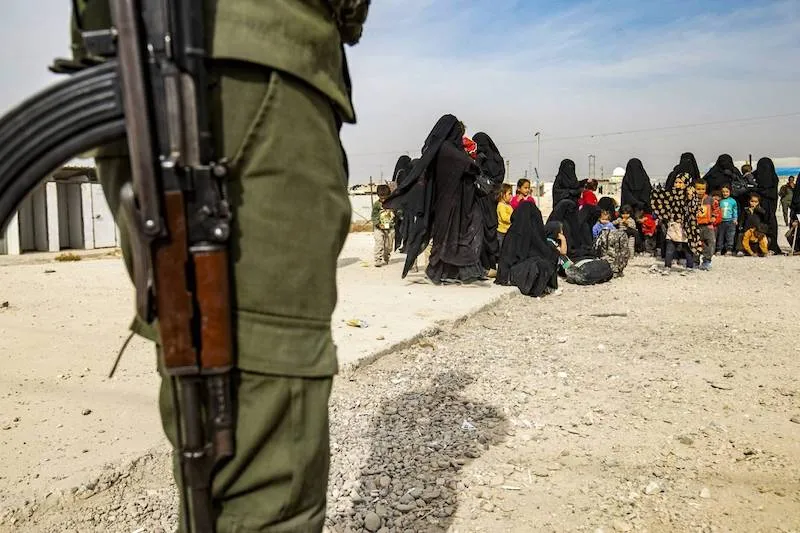
Moreover, a considerable number of Moroccan women continue to reside in camps throughout northeastern Syria, including Al Roj, where conditions are reported to be dire, and access to essential services is severely restricted. This underscores the urgent need for sustained humanitarian efforts and international assistance to address the plight of those still trapped in these precarious situations.
Moroccan Authorities Navigate Complex Security Challenges
Security analyst Ihssane Hafidi emphasized that managing the reintegration of individuals returning from former conflict zones in Syria and Iraq presents one of Morocco’s most sensitive security challenges. Research and official estimates suggest that approximately 1,660 Moroccans have traveled to conflict zones over the past decade, a figure that includes 291 women and 630 children. Current estimates indicate that more than 770 Moroccans are still believed to be in Syria and Iraq, comprising 387 children and 136 women.
In response to these challenges, Moroccan authorities have effectively managed over 150 returnee cases through a blend of judicial proceedings, intelligence monitoring, and reintegration strategies. This multifaceted approach reflects the country's commitment to addressing the complexities involved in the repatriation process while ensuring the safety and security of its citizens.
As reported by en.hespress.com.