Morocco's Economic Evolution: A Case Study in Resilience
In 2023, Morocco achieved a remarkable milestone as its automobile exports outstripped revenues from phosphates, a mineral resource that had long been the backbone of its economy. This unexpected transformation highlights Morocco's emergence as the most vibrant automotive hub in the Mediterranean, despite lacking traditional resource advantages like oil or gas. However, this success story is not merely the result of luck; it serves as a profound illustration of an effective economic strategy that prioritizes innovation and adaptability. Upon gaining independence in 1956, Morocco inherited a colonial administration focused on resource extraction rather than economic development. Education was severely limited, with only 1,395 students completing secondary school that year and fewer than 2,000 enrolled in universities across the nation. The country faced a significant deficit of trained professionals—there were no lawyers to draft legislation, no economists to create budgets, and no engineers to manage infrastructure.
In response, Morocco turned to an underutilized resource: its doctors. Many physicians who had studied in France took on significant roles in government, becoming ambassadors, ministers, and even prime ministers. This unique approach enabled Morocco to build its first state using the existing talent pool available, rather than waiting for ideal conditions to arise. The overarching lesson is clear: rather than waiting for perfect circumstances, nations should formalize improvisation as a strategy and effectively channel their available talent towards productive ends.
A Strategic Approach to Economic Development
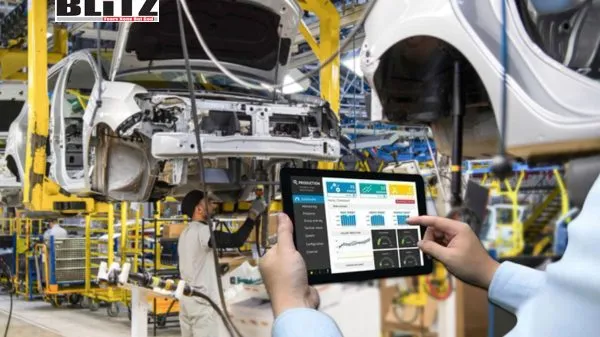
Morocco's post-independence journey is characterized not by a linear progression, but rather by a steady course adjustment in response to external challenges. Leaders have consistently adapted their strategies while maintaining a clear vision for the future. The results of this pragmatic approach are evident: from 1990 to 2019, the country's GDP nearly tripled, and extreme poverty was nearly eradicated. Between 2000 and 2017, per capita income growth outpaced that of most other nations in North Africa and the Middle East. This progress was not a byproduct of commodity booms or external financial windfalls; instead, it stemmed from a deliberate rethinking of the state's role in fostering economic development. Morocco's strategy involved not just the establishment of factories, but the creation of an entire ecosystem around its automotive industry. The government structured the supply chain such that a single car manufacturer would engage around 200 first-tier suppliers, thereby integrating approximately 1,000 subcontractors into the network. By 2023, the automotive sector had created over 200,000 jobs, with locally produced components accounting for more than 65 percent of the total.
Similarly, Morocco's energy strategy evolved significantly. Once reliant on importing 97 percent of its energy, the country recognized the potential of solar and wind power as crucial assets. Today, it boasts one of the world’s largest concentrated solar power facilities and one of Africa’s most significant wind farms. With an ambitious goal of achieving a 52 percent share of renewable energy in its national grid by 2030, Morocco has successfully transformed what was once a liability into a strategic advantage.
King Mohammed VI has been instrumental in guiding this transformative journey, providing stability and long-term commitment rather than acting as a micromanager. His leadership was pivotal in rejoining the African Union in 2017 without preconditions, shifting Morocco’s posture from defensive to strategic engagement. Furthermore, in 2019, he acknowledged shortcomings in the country's development model regarding social justice, which led to a national commission that consulted over 9,700 citizens to initiate a new wave of reforms. When COVID-19 struck, Morocco was ready to implement one of Africa's fastest vaccination campaigns, with the king himself being the first to receive the vaccine publicly.
This institutional trust, built over decades, has enabled Moroccan institutions to act effectively when needed, enhancing the country's role on the regional stage. Morocco has become a leading investor in West Africa, establishing a presence in sectors like banking, telecommunications, logistics, and agriculture. The Economist recently highlighted Morocco’s transformation with the headline, "Morocco Is Now a Trade and Manufacturing Powerhouse," a statement that reflects the country's increasing influence.
However, challenges remain, including significant wealth disparities, with the wealthiest 10 percent earning twelve times more than the poorest 10 percent. A generation of young Moroccans continues to seek equitable economic opportunities. While Africa has historically looked toward external models for development, Morocco's journey illustrates the importance of understanding one's constraints and leveraging existing resources. Rather than fixating on what is lacking, the focus should be on making choices that accumulate over time, leading to sustainable progress.
As Morocco reorients itself towards both the Atlantic and Mediterranean coasts, it prepares for significant events like the 2030 FIFA World Cup, co-hosted with Spain and Portugal. This shift represents a new era of connectivity and opportunity. Nevertheless, the future poses tough questions, particularly as Morocco positions itself as a "connector of globalization" in an era fraught with geopolitical tensions, especially between the US and China. The nation must navigate these challenges while ensuring that its young citizens are included in the ongoing economic transformation.
As reported by taipeitimes.com.