The defense landscape in Morocco is undergoing a significant transformation, marked by the emergence of specialized companies focused on the production of unmanned aerial vehicles (UAVs or drones). This shift is turning the nation into a pivotal hub for the manufacturing, assembly, and commercialization of these advanced systems, aiming to meet both domestic needs and expand into the broader African market.
At the forefront of this movement is the French company Delair, which has recently announced the opening of a manufacturing plant in Morocco under the name Delair Africa. This facility, situated in the capital city of Rabat, will serve as the central hub for the company's operations across the African continent. This strategic consolidation carries significant implications, as Delair has opted to relocate its logistics and technical center from Toulouse, transforming Morocco into a launching pad for its African market ambitions.
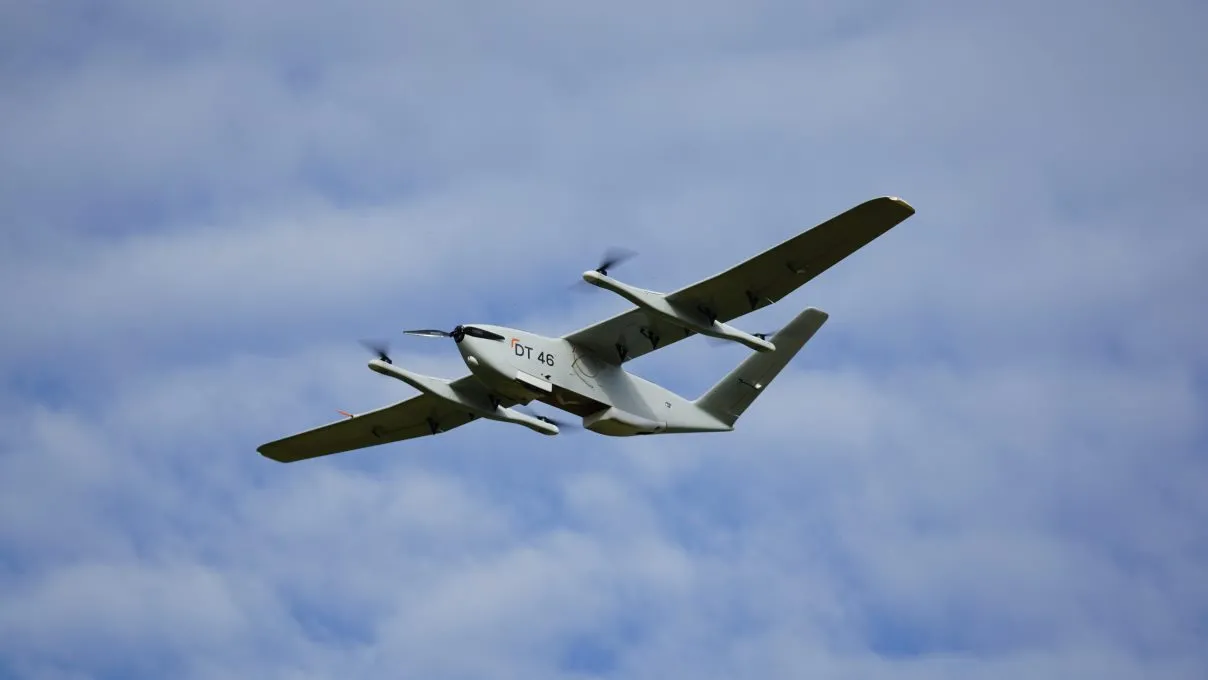
According to Bastien Mancini, the CEO of Delair, the company aims to achieve a revenue target between 500 and 1,000 million euros by 2030, with Africa being a critical component of this ambitious plan. The company's presence in Africa is not new, having commenced drone deliveries in Niger back in 2019, followed by contracts with countries such as Ivory Coast, Nigeria, Chad, Mauritania, and Benin, which focus on crucial missions like border control and anti-terrorism operations. Notably, the DT26 drone is renowned for its capability to stay airborne for 170 minutes, taking off via catapult in just eight minutes and landing on various terrains. Meanwhile, the DT46 drone is designed for long-range missions. Morocco joined Delair's clientele in 2021 when the Royal Gendarmerie acquired approximately fifteen DT26 drones for border control missions. This establishment of Delair in Morocco signals a robust commitment to the Kingdom's infrastructure and its strategic geographical position to address the growing security and surveillance needs across Africa, particularly given the continent's structural challenges in securing its borders against asymmetric threats.
Moreover, the trend of foreign companies establishing a presence in Morocco extends beyond European firms; it encompasses North American groups as well. Reports from March indicate that the Canadian group INKAS, known for its expertise in civil and military armored vehicles, is considering establishing a factory in Morocco for the production of drones and armored vehicles. This initiative represents a new development in the partnership initiated in 2023 between the Ontario-based company and Rabat. As Morocco's defense industries accelerate their growth, INKAS showcases a sophisticated range of drones, including loitering munitions, commonly referred to as kamikaze drones, with varying ranges from short-range FPV drones to the long-range Delta F150, which can travel up to 1,500 kilometers and maintain continuous flight for ten hours.
Furthermore, INKAS's product portfolio includes decoy drones, specifically designed to confuse adversaries' air defense systems. This category is characterized by its low production cost and a range of 300 to 500 kilometers. The decision to localize the manufacturing of these systems in Morocco underscores an understanding of regional market needs, which increasingly demand flexible, cost-effective solutions capable of saturating modern battlefields.
In terms of technological transfer, Israeli company BlueBird Aero Systems, a subsidiary of Israel Aerospace Industries (IAI), hosted Moroccan technical teams last year as part of an intensive technology transfer program aimed at initiating the production of the SpyX drone in Morocco. Moroccan engineers and technicians were integrated into the company’s production lines, where they received advanced training in assembly, sensor and guidance system integration, as well as onboard electronic wiring. This initiative aligns with Morocco's desire to enhance its local defense industries.
It is anticipated that this project will contribute to the localization of military technology and satisfy the increasing demand for defense equipment. This effort extends beyond mere final assembly to encompass an understanding of the internal technical architecture of the systems, promising the development of local competencies capable of managing future development and maintenance.
Simultaneously, serious local attempts have emerged to establish a distinctly Moroccan footprint in the drone sector, vividly showcased during the 2024 Marrakech Air Show, where several locally manufactured models were unveiled. Among the most notable is the P2 kamikaze drone from Ballistic Defense Systems, a company founded in Morocco in 2023. This system boasts a range of up to 1,500 kilometers and the ability to carry a 40-kilogram warhead, placing it in the heavy loitering munitions category. The same company introduced the P1 drone, a loitering munition with a range of 50 kilometers and a capacity to carry a six-kilogram warhead, which has proven effective against both fixed and moving targets and is equipped with artificial intelligence systems for target detection and tracking, capable of autonomously fixing and launching towards its targets with a precision of one meter. The company has announced the completion of the prototype for testing. Additionally, the Desert Falcon kamikaze drone, produced by the Moroccan startup Qsar Aerospace, was showcased. Founded in August 2023, this startup secured government funding for research and development in the same year. The Desert Falcon has a range of 500 kilometers, can carry a 20-kilogram warhead, features a secondary data link for guidance during the final phases of an attack, and can fly at a speed of 180 kilometers per hour.
However, the landscape is not without its paradoxes and challenges that warrant careful analysis. Despite the excitement generated by these Moroccan models at the Marrakech Air Show, there remains some ambiguity regarding the stage of development of these projects. It is unclear whether these drones have entered actual production, are still in field testing, or if their display was merely a statement aimed at showcasing emerging capabilities.
Simultaneously, it is evident that practical reliance still heavily leans on drones manufactured or assembled in Morocco by foreign companies, which enjoy greater trust due to their accumulated experience and proven track record in international operational scenarios. Military and security institutions tend to favor proven systems that offer high reliability guarantees, as opposed to local models that are still in their infancy and require time to demonstrate operational viability.
Moreover, numerous suspicions of corruption persist, as several former officials or their relatives establish companies that produce questionable quality products, which are exaggerated by government media for commercialization. Nonetheless, Moroccan military and security institutions may exhibit greater resistance and caution towards local defense products, considering the sensitivity of the regional situation and the arms race with Algeria.
From this intertwining of foreign investments and controversial local initiatives, it can be inferred that Morocco is gradually building an ecosystem to establish its drone industry, starting with attracting experts and localizing assembly, moving through technology transfer, and ultimately attempting to foster local innovation. However, the local industry still has a long way to go to achieve a level of genuine competitiveness against established foreign systems.
Transforming prototypes into systems that operate efficiently in real combat conditions demands ongoing investments in research and development, intensive field testing, and, crucially, gaining the trust of Moroccan military institutions in national products. In conclusion, it appears that the establishment of global drone companies in Morocco is not a fleeting project but rather a cumulative process progressing at a calculated pace, positioning the Kingdom as a meeting point between Western technology and African needs, with a serious attempt to create a local footprint that may require several more years to move beyond the stage of experimental exhibition and reach full operational capability and adoption.
As reported by defensa.com.