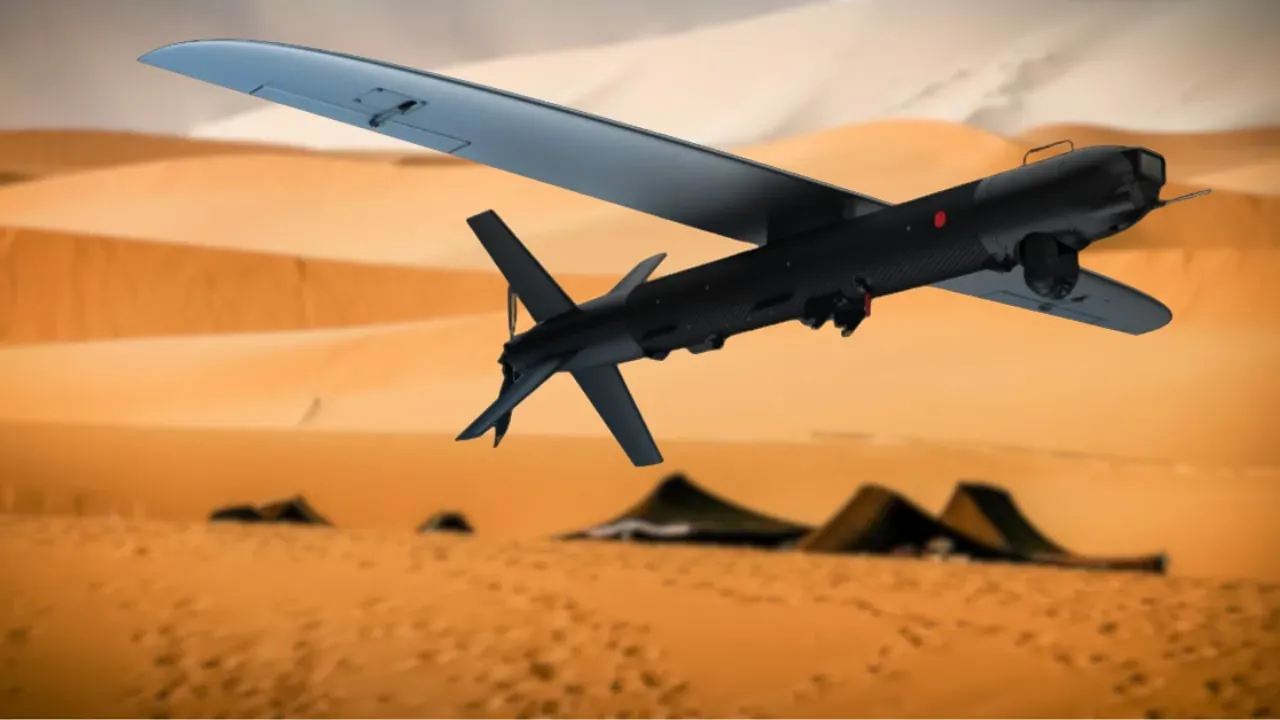
In November 2025, a significant development in North Africa's defense industry took place on the outskirts of Casablanca, specifically in the Benslimane industrial zone. BlueBird Aero Systems, a subsidiary of Israel Aerospace Industries (IAI), inaugurated a state-of-the-art production facility dedicated to the manufacturing of its SpyX loitering munitions. This facility marks the first of its kind in North Africa and the Middle East outside of Israel, symbolizing a pivotal moment in the region’s defense industrialization.
The SpyX systems, which are designed in Israel and can be operated manually, boast an impressive operational range of 50 kilometers, loitering capabilities of up to 90-120 minutes, and terminal dive speeds exceeding 250 km/h. With a warhead weighing 2.5 kilograms, they are optimized for precise targeting of armored vehicles, command centers, and other high-value assets. Equipped with advanced electro-optical/infrared (EO/IR) seekers and autonomous tracking algorithms, this innovative weapon system allows two operators situated within a single tactical vehicle to deliver impactful effects while maintaining a minimal logistical footprint. To ensure local expertise, Moroccan engineers, who received training at BlueBird facilities in Israel as recently as November 2025, now handle the assembly, integration, and maintenance of these systems, operating under a comprehensive technology transfer agreement.
This initiative transcends a mere arms sale; it represents a cornerstone of Morocco's sovereign defense-industrial strategy, which aims to cultivate indigenous human capital, develop engineering ecosystems, and enhance supply-chain resilience, enabling the country to operate advanced unmanned systems independently during crises. Morocco has strategically positioned itself as the most technically advanced defense partner in Africa, a role that has been officially recognized by Washington.
At the recent African Land Forces Summit held in Rome on March 23-24, General Christopher Donahue, Commander of US Army Europe and Africa, announced plans to establish Africa's first dedicated drone training center in Morocco. This facility will serve to train operators from various African nations on small Unmanned Aerial Systems (UAS), loitering munitions, counter-drone systems, and integrated electronic warfare (EW) operations. General Donahue emphasized the importance of building a sustainable and enduring capability, stating, “Once we prove its effectiveness, we can take it to other parts of Africa.”
The initiative will utilize the upcoming African Lion 2026 exercises as the initial testing ground before evolving into a permanent regional node supported by AFRICOM. No other African partner possesses the necessary stability, infrastructure, and operational maturity to undertake such a project.
The announcement of the drone training center followed closely on the heels of Israel and Morocco’s signing of a joint military work plan for 2026 during the third session of the Joint Military Committee in Tel Aviv in early January—precisely five years after the Abraham Accords restored diplomatic relations between the two nations. This plan outlines a year-round military dialogue, collaborative industrial projects, force development exercises, and strategic alignment to address evolving security threats. Israeli officials now regard Morocco as their most crucial security partner in Africa, serving as a conduit for the integration of cutting-edge Middle Eastern defense technology with African operational needs.
The extent of this integration is remarkable. Morocco has successfully deployed IAI’s Barak MX modular air-and-missile defense system, which represents an advanced iteration of the Barak 8 family. This system incorporates ELTA ELM-2084 AESA radars to simultaneously track and engage multiple threats, including aircraft, drone swarms, cruise missiles, and ballistic threats. Additionally, Morocco operates Elbit Systems’ ATMOS 155 mm self-propelled howitzers for rapid artillery support, and has integrated 20 Elta radars onto upgraded F-5E Tiger II fighters for enhanced situational awareness in both air-to-air and air-to-ground operations. Furthermore, Elbit EXTRA extended-range precision rockets, capable of 150 km stand-off strikes with a 10-meter circular error probable (CEP), complement this sophisticated defense architecture, which is further bolstered by domestic production of the SpyX systems. No other partner in the Abraham Accords has assimilated Israeli defense systems across air defense, precision fire, reconnaissance, and unmanned strike capabilities to this extent.
Morocco's strategic clarity extends beyond reliance on a single supplier. Concurrently, Turkish firm Baykar has established its Atlas Defense subsidiary in Rabat, with production elements advancing in Benslimane under a $70 million program aimed at producing up to 1,000 platforms annually, including the combat-proven Bayraktar TB2 MALE ISR/strike UAV and the heavier Akinci HALE system, known for its 1,500 kg payload capacity and extended endurance.
This dual-track approach—leveraging Israeli loitering munitions for tactical precision while concurrently incorporating Turkish heavy strike drones for persistent surveillance—creates a robust operational redundancy. This strategy ensures that Morocco maintains operational depth, protecting itself from potential disruptions caused by any single supplier’s political or logistical challenges.
The operational trust between Morocco and the United States has already been tested through integrated electronic warfare exercises held in the Agadir desert, where Moroccan operators were fully embedded in mission planning and execution alongside American forces. This collaboration included the use of drone-mounted jammers, portable counter-UAS systems, and tools for real-time spectrum dominance. Such high levels of interoperability are the result of years of focused investment in doctrine, training pathways, and institutional culture—foundational elements that AFRICOM requires before establishing sensitive training facilities on foreign soil.
This strategic convergence is intentional. Across Africa, adversaries are increasingly exploiting inexpensive commercial drones and loitering munitions in asymmetric warfare scenarios. The US response involves assessing scalable counter-drone frameworks that utilize swarms of 25 to over 100 interceptor unmanned aerial systems, supported by AI-driven sensors and commercial off-the-shelf command-and-control systems, to safeguard forward operating bases. Morocco’s evolving drone ecosystem seamlessly fits into this architecture, positioning the country as a reliable partner capable of training, maintaining, and exporting the very systems that African militaries need to develop light, agile, and network-enabled forces, moving away from reliance on outdated heavy armor.
In stark contrast to Algeria's staggering $25 billion annual defense budget—largely allocated to Russian legacy systems and Cold War-era strategies financed through deficit spending—Morocco has channeled billions into qualitative advancements and the establishment of a genuine domestic defense industry. This approach prioritizes interoperability with Western allies, technology transfer, and the cultivation of sovereign industrial capacity.
The United States’ decision to base its continental drone strategy in Morocco, coupled with Israel’s deepening defense collaboration, serves as a potent endorsement of a model that yields lasting strategic benefits.
As reported by jpost.com.