Introduction to South-South Cooperation in Morocco
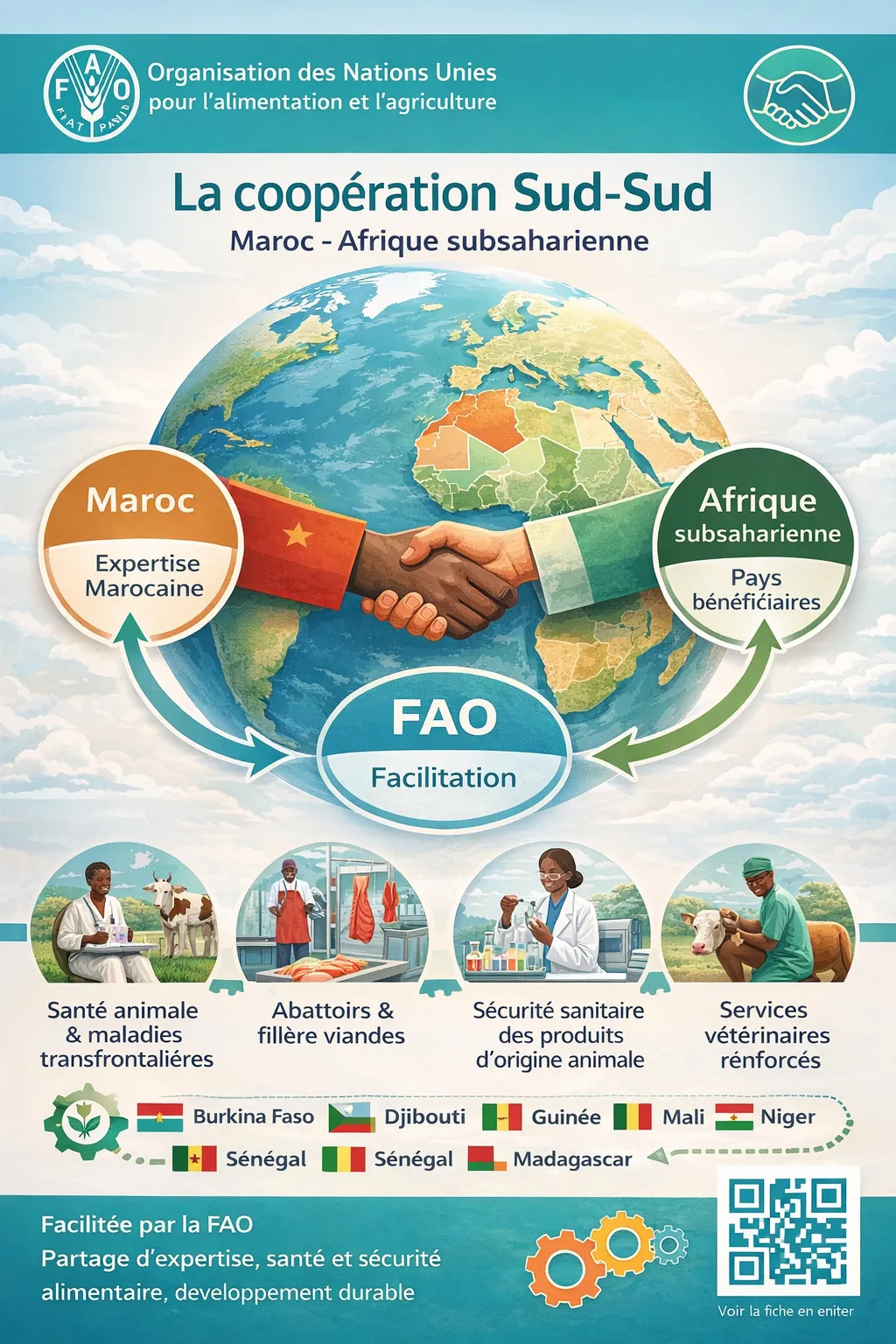
Enshrined in the Moroccan Constitution of 2011 and reaffirmed with Morocco's return to the African Union in 2017, South-South cooperation stands as a cornerstone of the Kingdom's foreign policy. Morocco actively shares its agricultural and veterinary expertise with its African partners through a unique tripartite mechanism in collaboration with the Food and Agriculture Organization (FAO). This partnership aims to bolster the agricultural sectors across the continent, enhancing food security and promoting sustainable development.
A Proven Tripartite Mechanism for Agricultural Development
Since the signing of the cooperation agreement with the FAO in 2014, Morocco has cemented its role as a financial and technical lever for Africa. The collaboration operates under a well-defined structure: Morocco provides its expertise, the FAO facilitates the process, and the beneficiary country outlines its specific priorities. This synergy ensures that the initiatives are tailored to the unique challenges faced by each nation.
In 2009, the FAO, in conjunction with the World Organization for Animal Health (OIE), established the Mediterranean Animal Health Network (REMSA), comprising 15 nations aimed at harmonizing and coordinating surveillance and control measures against transboundary animal diseases. The participating countries include Portugal, Spain, France, Italy, Malta, Cyprus, Lebanon, Jordan, Libya, Algeria, Tunisia, Morocco, Mauritania, Greece, and Egypt. To date, this network has successfully organized 31 meetings for veterinary service directors, averaging two meetings per year to discuss progress and strategies.
The FAO's commitments include facilitating technical and institutional exchanges among Southern countries, supporting national food security programs, and contributing to the achievement of Sustainable Development Goals (SDGs), particularly SDG 17, which focuses on partnerships for the goals.
Morocco's expertise in animal production, health, and food safety is vital for addressing the significant challenges the African livestock sector faces, such as transboundary diseases, low productivity, hygiene issues, and biosafety concerns. The Kingdom, backed by its extensive experience in animal health and sanitary control embodied in the National Office for Food Safety (ONSSA), shares its knowledge with African partners across four key domains:
- Animal Health and Control of Transboundary Diseases: This includes epidemiological surveillance, disease prevention and control, and biosafety measures in cattle, sheep, and poultry farming.
- Slaughterhouses and the Meat Supply Chain: The focus here is on the technical and sanitary upgrading of abattoirs, veterinary inspections during processing, hygiene in slaughtering, cold chain management, and carcass traceability.
- Food Safety of Animal-Origin Products: This domain covers the control of meat, milk, dairy products, eggs, poultry, fish, and seafood, as well as health approvals for production units and ensuring traceability across the food chain.
- Institutional Strengthening: Training veterinary inspectors, organizing veterinary public service functions, enhancing analytical laboratories, and establishing regulatory frameworks for livestock and animal products.
Several tripartite agreements have been signed with various beneficiary countries, highlighting their priority areas:
- Republic of Guinea: Agricultural innovation and animal health
- Republic of Guinea-Bissau: Experience sharing from Morocco's Green Plan
- Republic of Mali: Animal production and health, agro-poles
- Kingdom of Eswatini: Animal production and agricultural investment strategies
- Republic of Niger: Livestock management, agricultural statistics, and digitalization
Moreover, the initiative entitled "Water and Food Security for Africa" has previously facilitated the mobilization of Moroccan experts in five West African countries: Burkina Faso, Djibouti, Guinea, Mali, Niger, Senegal, and Madagascar. As a principal actor in South-South cooperation, the FAO collaborates closely with Morocco to build safer, more productive, and resilient livestock systems across the African continent.
As reported by fao.org.