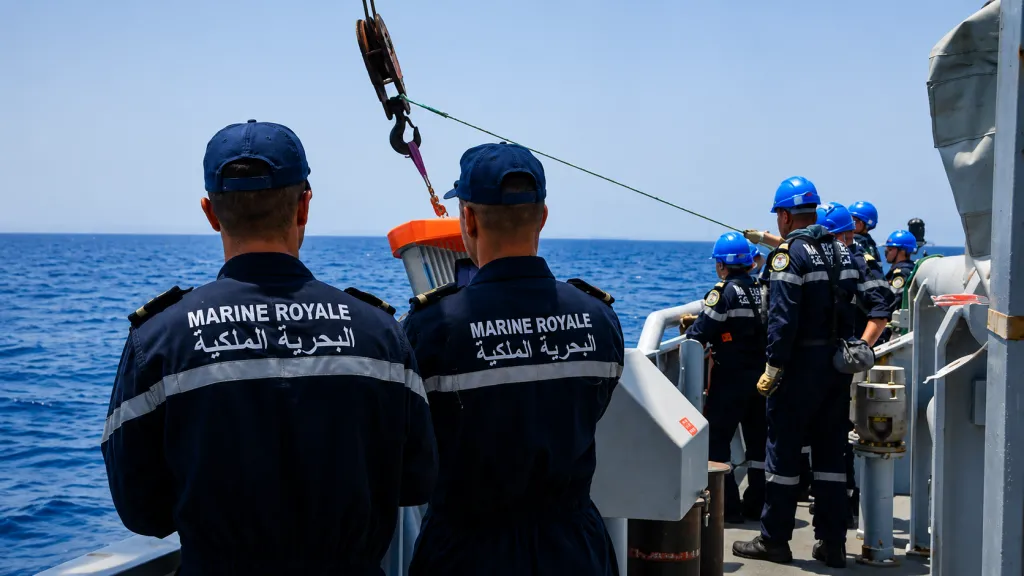

Between May 1 and July 31, Morocco made significant updates to the contact details of its two designated points responsible for receiving alerts regarding pollution caused by ships. This information comes from the latest list provided by the International Maritime Organization (IMO), as reported by barlamane.com. These units, part of the merchant marine authority, are tasked with receiving, transmitting, and processing urgent reports concerning incidents involving harmful substances, particularly hydrocarbons, that may affect the waters and coastlines of the kingdom.
The Moroccan response mechanism is centered around two units located at 1, Place Zellaqa in Casablanca. The first unit, referred to as DSNMPPN, is equipped to handle communications in Arabic and French. The second unit, known as DSM, has the capability to process information in Arabic, English, and French. The recent circular also provides email addresses for both units but does not specify individual responsibilities or roles, which raises some questions about accountability within these services.
This update aligns with the requirements set forth by the International Convention for the Prevention of Pollution from Ships (MARPOL). According to Annex I of the convention, the ship's emergency plan for hydrocarbon pollution (SOPEP) must include 'a list of authorities or persons to contact when an incident of pollution involves such substances.' Annex II extends this obligation to cover hydrocarbons and other harmful liquid substances carried by ships, demonstrating Morocco's commitment to international maritime standards.
Enhanced Communication Capabilities for Maritime Safety
The distribution of responsibilities published by the IMO highlights the first Moroccan unit's accessibility in Arabic and French, while the second contact can receive reports in three languages. This trilingual ability enables foreign crews to relay initial information regarding the nature of the pollutant, the ship's position, the apparent extent of the discharge, and the measures taken on board. However, the circular does not detail the human resources allocated to either service or their internal procedures, which could impact responsiveness during emergencies.
These contact details are crucial and must be included in the emergency plans maintained on board vessels to ensure that alerts can be sent directly to the appropriate coastal administration. If the designated national point is unreachable or if communication is significantly delayed, IMO guidelines recommend that the ship's captain contact 'the nearest coastal radio station, the designated vessel movement reporting station, or the search and rescue coordination center using the fastest means available.'
The electronic directory is revised quarterly within the Global Integrated Shipping Information System (GISIS) as per the IMO's protocols, with a comprehensive update occurring at the end of each calendar year. The record as of July 31 replaces and updates the previous version from January 31. The organization urges member states to verify their information and to make necessary corrections directly within the contact point module.
International Cooperation in Maritime Pollution Reporting
Morocco is one of 25 countries and territories that notified the IMO of additions, changes, or corrections to their contact details between May 1 and July 31. The list of nations includes Algeria, the Bahamas, Bermuda (a British territory), the Democratic People's Republic of Korea, Ethiopia, the Faroe Islands (part of Denmark), Ghana, Guyana, Hong Kong, Israel, Jamaica, Kazakhstan, Kuwait, Kyrgyzstan, Luxembourg, Mexico, Morocco, Nigeria, Niue, Oman, Panama, the Syrian Arab Republic, Tonga, Trinidad and Tobago, and the United Republic of Tanzania.
The circular does not report any maritime accidents during this period nor does it provide an assessment of hydrocarbons or harmful substances released into the sea. Instead, it serves as a crisis directory for vessels and coastal administrations, with each reported modification addressing authorities, addresses, emails, or communication languages declared by the respective states. This mechanism arises from Article 8 and Protocol I of the MARPOL convention, which mandates each party to communicate complete contact information for competent authorities to receive incident reports. Additionally, notification procedures are based on Articles 3 and 4 of the 1990 International Convention on Oil Pollution Preparedness, Response and Cooperation, which has been further supplemented for hazardous and noxious substances by the 2000 adopted protocol.