The Tower Mohammed VI: A Symbol of Modernity and Growth
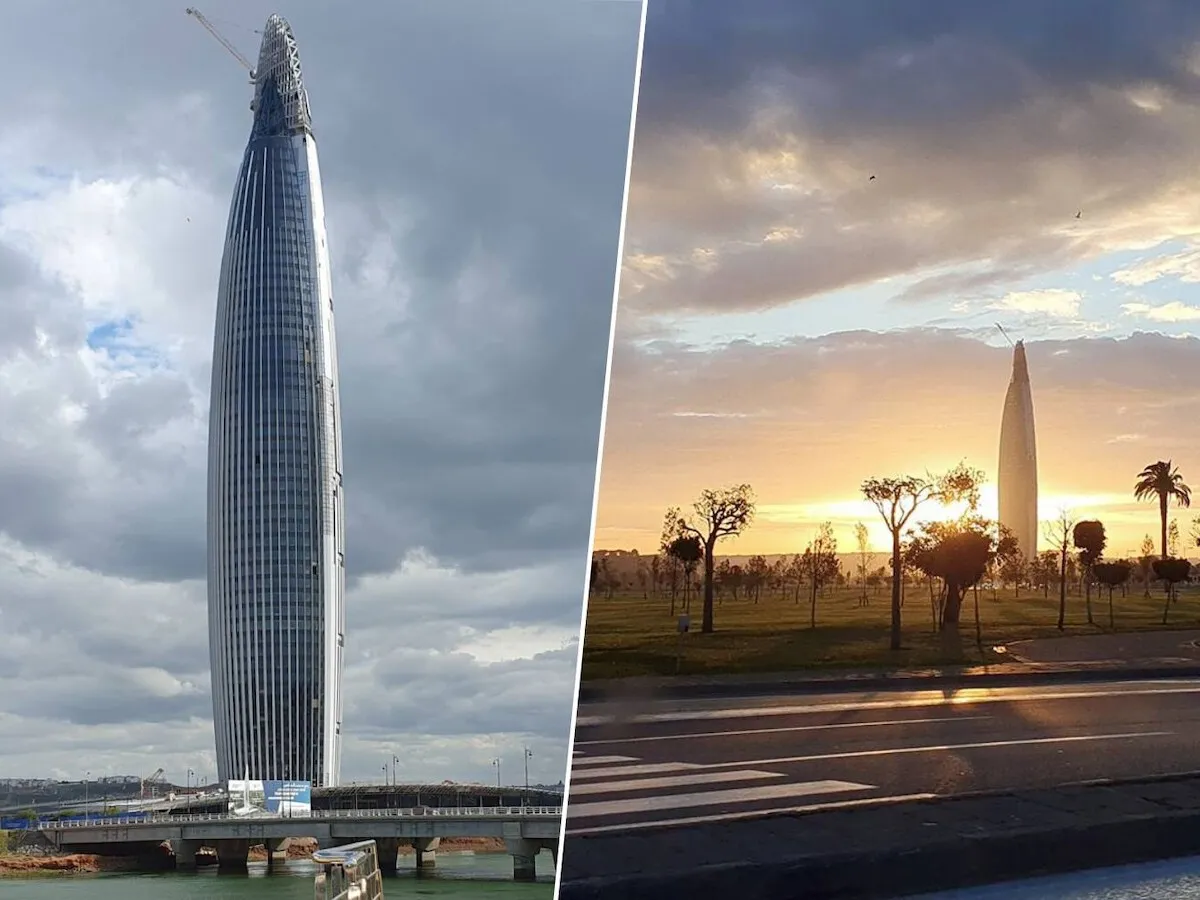
Skyscrapers are not merely constructed to provide office spaces or residential apartments; they embody a bold declaration of intent. When a city erects a towering structure, it sends a clear message to the world: it exists, it is evolving, and it is ready to compete on a global stage. Morocco has embraced this philosophy with the inauguration of the Tower Mohammed VI in Rabat, which stands as the tallest skyscraper in the country and ranks third across the African continent, surpassed only by Egypt's Iconic Tower in its new capital.
This striking edifice not only commands attention at the confluence of the Bouregreg River but also significantly alters the skyline of the historic and traditional city of Rabat. Designed by renowned Moroccan architect Hakim Benjelloun in collaboration with the esteemed Spanish firm Rafael de La Hoz, known for its international prowess in tall architecture and for iconic projects like the headquarters of Endesa, Repsol, and Telefónica, the building exemplifies a futuristic vision.
A Multifunctional Architectural Gem
According to a statement from Rafael de La Hoz's office, the Tower Mohammed VI rises 55 stories atop a four-level podium along the banks of the Bouregreg, encompassing a total constructed area of 102,800 square meters. The architectural style is described as 'afrofuturistic' by the architect himself, symbolizing a shared movement among African societies striving to make their mark on the contemporary map.
Inside, the building will feature a luxurious Waldorf Astoria hotel, high-end offices, upscale apartments, a panoramic observation deck offering breathtaking views of Rabat and Salé, as well as commercial spaces and restaurants. To facilitate access to these diverse amenities, the skyscraper is equipped with 36 elevators distributed between the tower and the podium.
The importance of this project cannot be overstated. During a presentation at the Instituto Cervantes in Rabat in 2019, Rafael de La Hoz explained that the tower serves as a metaphor for the aspiration of African societies to assert their presence in the modern world. The silhouette of the Tower is visible from over 50 kilometers away, reshaping the urban landscape of both Rabat and Salé.
Furthermore, the Tower Mohammed VI aims to establish itself as a metropolitan identity anchor, emerging as a new architectural icon that enhances Morocco's international visibility within a framework that harmonizes tradition and modernity under the umbrella of sustainability.
Contextually, the inauguration of the Tower Mohammed VI represents a significant step in Morocco's strategy to position itself as a growing and innovative nation. The development of the Bouregreg Valley stands as one of its most ambitious initiatives, with recent enhancements including a marina, a residential area, a theater, and the Rabat-Salé tramway.
This ambitious project is integrated into the 'Rabat City of Lights, Moroccan Capital of Culture' plan, which aims to blend the rehabilitation of historical heritage with the creation of contemporary spaces while promoting cultural activities. The clear objective is to transform the Moroccan capital into a cultural hub that bridges tradition and modernity with sustainable principles.
In terms of structural integrity, the building boasts 60-meter deep foundations designed to withstand seismic activity and flooding, an advanced harmonic damper to counteract wind and vibrations, dynamic lighting facades, photovoltaic panels, and systems for energy recovery and rainwater harvesting. De La Hoz noted that the tower incorporates 4,700 square meters of solar panels, representing a revolutionary approach to high-rise construction, alongside international sustainability certifications such as LEED Gold from the United States and HQE from France.
However, the project has not been without controversy. UNESCO expressed its disapproval of the tower's location at the Bouregreg estuary, an area that has historically not hosted buildings exceeding three stories. This is significant in a city like Rabat, which was designated a UNESCO World Heritage site in 2012 precisely for the visual integrity of its historical landscape. The towering 250-meter structure irreversibly alters this landscape.
Moreover, while the tower stands as a remarkable technical achievement that places Rabat and Morocco on the architectural map, the concentration of premium uses within a single complex may trigger processes of gentrification around the Bouregreg, potentially displacing existing activities and residents. This phenomenon is a less visible aspect of the so-called 'Bilbao Effect,' which has been extensively analyzed in academic literature on urban regeneration.
As reported by xataka.com.