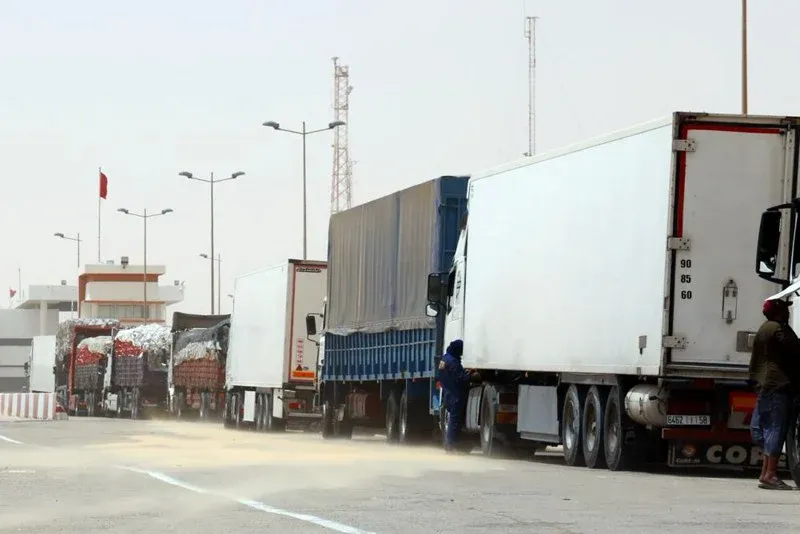

Ongoing Delays and Discrimination at the Rosso Crossing
Moroccan international freight operators are grappling with persistent challenges at the Rosso border crossing, which lies between Mauritania and Senegal. Despite earlier efforts by Morocco’s embassy in Nouakchott to alleviate these issues, reports indicate that local customs authorities continue to exhibit preferential treatment toward domestic trucks over their Moroccan counterparts. The General Union of International and National Transport Professionals has highlighted that these complications have resurfaced, undermining previous improvements in border crossing efficiency.
Professional sources within the union have revealed that Mauritanian and Senegalese customs officials are prioritizing local trucks, even when Moroccan vehicles arrive at the crossing first. This persistent issue has compounded the difficulties already faced by Moroccan truckers, particularly following the closure of the Mali route due to ongoing security concerns. The union’s national secretary-general, Cherki El Hashemi, expressed the frustration of transport professionals, emphasizing their demand for uninterrupted traffic flow through the Rosso crossing.
Increased Risks and Financial Burdens
El Hashemi voiced concerns regarding the significant challenges encountered at the Mauritania-Senegal border, particularly in light of the Mali route’s closure and the perceived targeting of Moroccan truck drivers. Consequently, many drivers have been compelled to take the Bonsoula route from Senegal, a path notorious for its dangers and a recent history of traffic accidents involving Moroccan vehicles. The closure of the Mali route has left Moroccan operators effectively stranded, exacerbating their reliance on the less safe Bonsoula route.
The situation has led to protests from transport professionals, who find themselves having to advocate for their rightful place in the queue amidst what they describe as discriminatory practices. El Hashemi pointed out that security along the Mali route has deteriorated, with armed groups engaging in direct attacks rather than conventional warfare tactics, specifically targeting trucks with foreign license plates. This alarming trend has prompted Moroccan operators to steer clear of the Mali route to minimize the risk of casualties, adding to their logistical headaches.
Moreover, the diversion to alternative routes has resulted in increased operational costs for transport operators, as these detours impose a heavier financial burden on cross-border freight activities. Compounding these challenges is the difficulty in obtaining Mauritanian visas, which have seen processing times extend from approximately 24 hours to a staggering four to seven days. This delay not only hampers the efficiency of transport operations but also adds another layer of complexity to the already fraught logistics of Moroccan transport professionals navigating the West African region.
As reported by en.hespress.com.