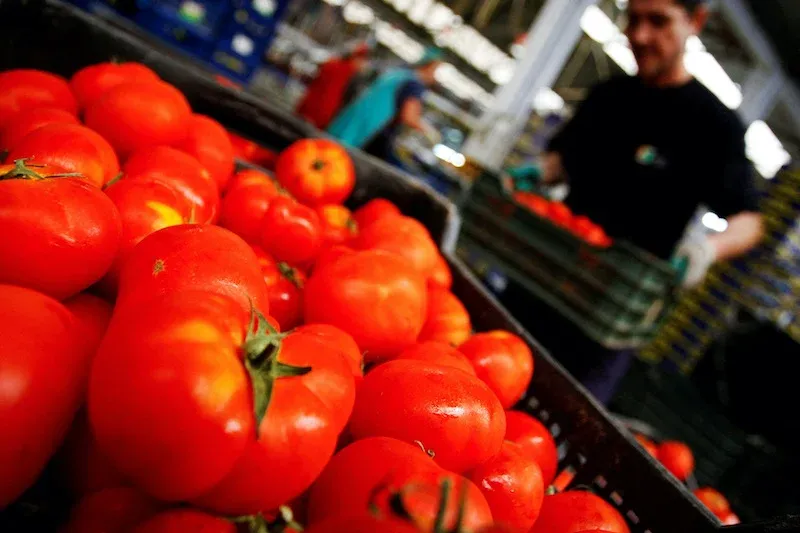
Moroccan Tomatoes Play a Crucial Role in Russian Vegetable Supply
In light of recent restrictions on agricultural product supplies from Armenia to Russia, Stanislav Bogdanov, the Vice President of the Association of Multichannel Retail Companies in Russia (AKORT), has assured that there will be no shortage of vegetables and fruits in Russian trade networks. He emphasized that the supply structure in the Russian market is capable of compensating for any potential decline in imports by relying on alternative countries, including Morocco. Bogdanov stated in an interview with the RIA Novosti news agency that there are no indicators of shortages for products such as cucumbers, tomatoes, peppers, or strawberries within retail chains. He noted that major networks have a well-distributed and diverse supply system in place.
According to Bogdanov, Russia imports approximately 30% of its tomato consumption, primarily sourced from Morocco, Azerbaijan, and North Macedonia. Additionally, around 15% of cucumber consumption and 39% of pepper consumption are imported, with these products mainly coming from Guinea, Israel, Iran, and Turkey. As for strawberries, the current supply is predominantly from Russian farms, as the local harvest season has just begun. However, external supplies account for about 25%, with retailers continuing to collaborate with local producers to ensure price stability and product availability across markets.
Earlier, the Federal Veterinary and Phytosanitary Surveillance Service of Russia (Rosselkhoznadzor) announced temporary restrictions on the import of tomatoes, cucumbers, peppers, green herbs, and strawberries from Armenia until mechanisms are developed to ensure the safety of products imported from that country. This decision has inadvertently positioned Moroccan tomatoes as a key player in meeting Russian demands for fresh produce during this transitional period.
As reported by hespress.com.