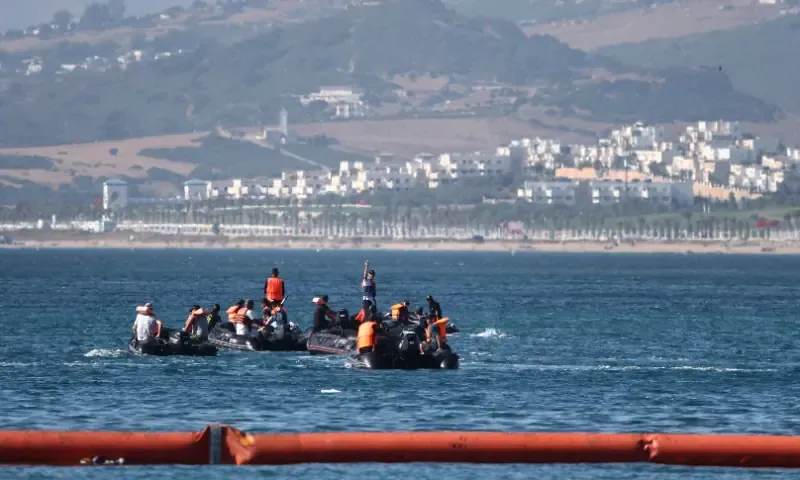

On August 1, 2026, Spain reported significant developments regarding the recent surge of migrants attempting to enter the Spanish enclave of Ceuta, located in North Africa. In a swift response to the crisis, the Spanish government announced that a large number of the over 50,000 individuals who crossed the border by land and sea were already returning voluntarily to Morocco. The representative of the Spanish government in Ceuta confirmed that 57 bodies had been recovered on the Spanish side of the border, with fears of additional casualties across the border in Morocco. These tragic losses included individuals who drowned and others who were crushed while attempting to navigate the breakwater that holds the border fence.
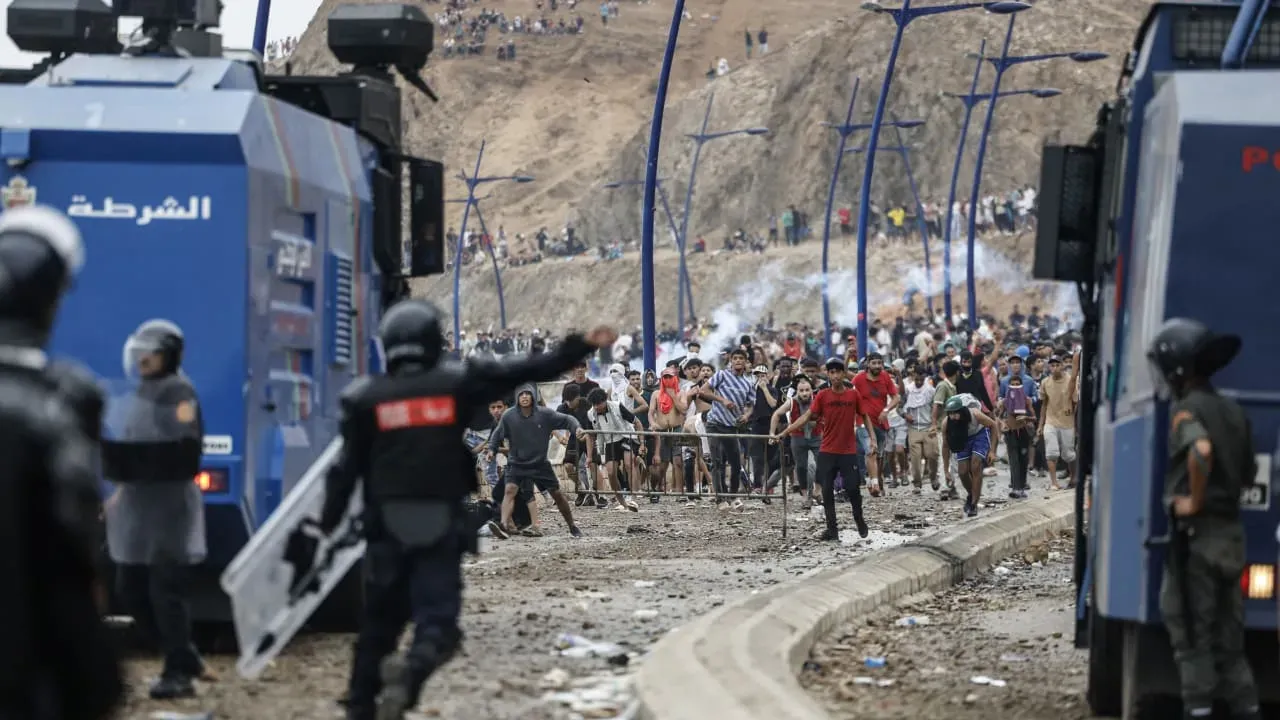
The Spanish Interior Ministry disclosed that approximately 50,000 people had crossed the border since Thursday morning, with an estimated 48,300 having returned by 6 p.m. on Friday. Juan Jesus Vivas, the head of Ceuta's local government, noted that the number of migrants pushing across the border could have reached as high as 60,000 over the preceding days. In response to this unprecedented situation, Moroccan forces employed batons and tear gas at the gates leading to Ceuta in an effort to prevent additional entries into this small Spanish territory, which protrudes into the Mediterranean from Morocco.
The mass migration event has caused divisions within Europe, prompting leaders from other EU member states to urge Spain to manage the situation effectively. Italy, in particular, announced it would suspend the European Union's Schengen agreements with Spain, a move that will impact travel between the two countries by air and sea. Madrid criticized this decision as a violation of EU treaties.
Eyewitnesses, including reporters from Reuters, observed Moroccan police in riot gear utilizing tear gas to disperse crowds gathered near the border fences. Water cannon trucks were deployed, and remnants of vehicles burned during clashes with the crowds were visible. On the Spanish side, military vehicles were stationed along various sections of the border while dozens of migrants watched from a hilltop in Morocco, unable to cross into Ceuta.
Several hundred individuals were seen making their way back to Morocco through border posts and gaps in the fence, many citing the lack of food and shelter in Ceuta as the reason for their return. A young Moroccan man from Tangier expressed his disillusionment, stating, "Honestly, I don't even know why I came, and now I'm going back. I haven't eaten since lunch yesterday, even though I brought some money with me ... What we're doing is neither good nor enjoyable." In a similar vein, a 20-year-old hairdresser from Larache recounted his harrowing experience of crossing into Ceuta after a five-hour swim, lamenting the lack of food and the harsh treatment by the Spanish military.
Spanish Prime Minister Pedro Sanchez visited Ceuta amid protests and condemned the mass crossing, labeling it a violation of Spain's territorial sovereignty. He announced that authorities were expediting the repatriation of those who had entered the enclave illegally, working in conjunction with Moroccan authorities. Ceuta and Melilla, the only two land borders that the European Union shares with Africa, often witness surges in attempted crossings, but the scale of this latest incident is marked as unprecedented.
Right-wing political factions across Europe have placed blame on Spain's relatively lenient immigration policies, including a recent amnesty that benefitted hundreds of thousands of undocumented migrants. The Spanish government summoned the Italian ambassador in response to comments from Italian Foreign Minister Antonio Tajani, who suggested that Spain's policies had fostered human trafficking. US President Donald Trump characterized the situation as an invasion, warning of similar occurrences if Republicans do not secure victory in the upcoming midterm elections. The US State Department pointed to the Spanish government's migration policies as a direct contributor to the crisis, emphasizing the need for proactive measures to address the situation.
In light of the chaos, French Interior Minister Laurent Nunez announced a significant increase in police presence along the Spanish border, with plans to enhance aerial surveillance and patrols on trains. While EU regulations generally prohibit checks at internal borders of the Schengen zone, they can be reinstated under exceptional circumstances. Spain's Guardia Civil police association AUGC reported a shortage of personnel at the fence during the surge, which hindered their ability to manage the crossing effectively. Additionally, a recent ruling by Spain's Supreme Court, stating that migrants intercepted at sea cannot be summarily rejected at the border, may have contributed to the surge in crossings, though experts note this does not preclude their eventual expulsion.
On the Moroccan side, thousands of migrants flocked to the town of Fnideq overnight, despite enhanced security measures that thwarted most attempts to cross over. Some migrants began leaving again later in the day, while others sought alternative routes along the coast to bypass the fortified fence. A 32-year-old man named Brahim expressed his frustration at arriving too late to cross through the gates, which he found effectively closed.
As reported by jpost.com.