
In July 2002, tensions escalated to the brink of war between Morocco and Spain when a group of Moroccan gendarmerie forces attempted to 'invade' a small uninhabited island known as 'Isla Perejil' in Spanish and 'Leila Island' in Arabic. Spain responded decisively by dispatching a military commando unit that disarmed the Moroccan group and returned them to their homeland. The Moroccan government argued that the island rightfully belongs to Moroccan territory due to its proximity to the Moroccan coast. Conversely, Spain asserted its sovereignty over the island, akin to its claims over Ceuta and Melilla, two territories that Morocco also considers its own, yet Madrid has maintained its rule over these areas for over 500 years.
The situation intensified as Spanish officials in London called for an end to the colonial status of these two islands. Ignacio Molina, the director of research at the Royal Elcano Institute in Madrid, emphasized that these territories are recognized as Spanish under international law and are deeply rooted in history, just like Spain itself. He further articulated that calls for decolonization are as absurd as suggesting that France should assert sovereignty over the British islands of Jersey and Guernsey, which lie off the French Atlantic coast.
The historical dimension of the sovereignty disputes between the neighboring nations plays a crucial role in their relations, often serving as a political lever for Rabat, as seen in 2021. The underlying principle suggests that when relations across the Strait of Gibraltar are amicable—especially when Madrid adopts a Moroccan perspective on the Western Sahara issue—this territorial dispute recedes. However, it resurfaces when Spain's stance deviates, which was evident during the 2021 crisis. The recent developments reflect a similar pattern, with outcomes and repercussions that are just as critical as those witnessed in 2002 and 2021.
The Responsibility of Spain
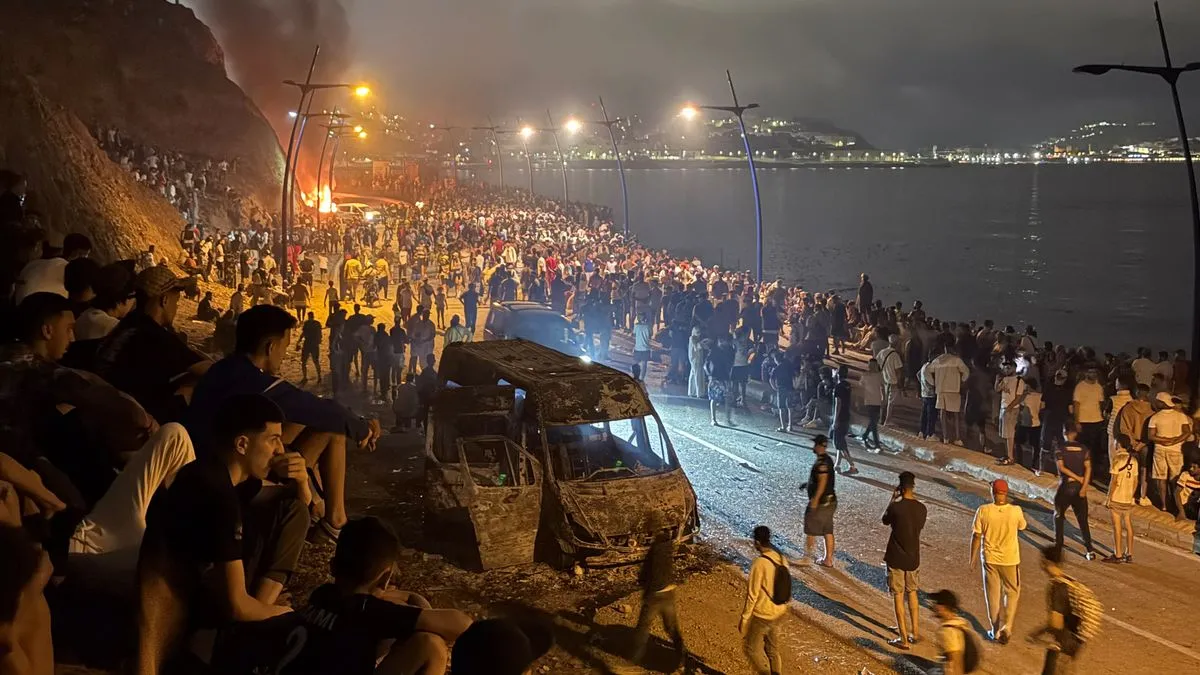
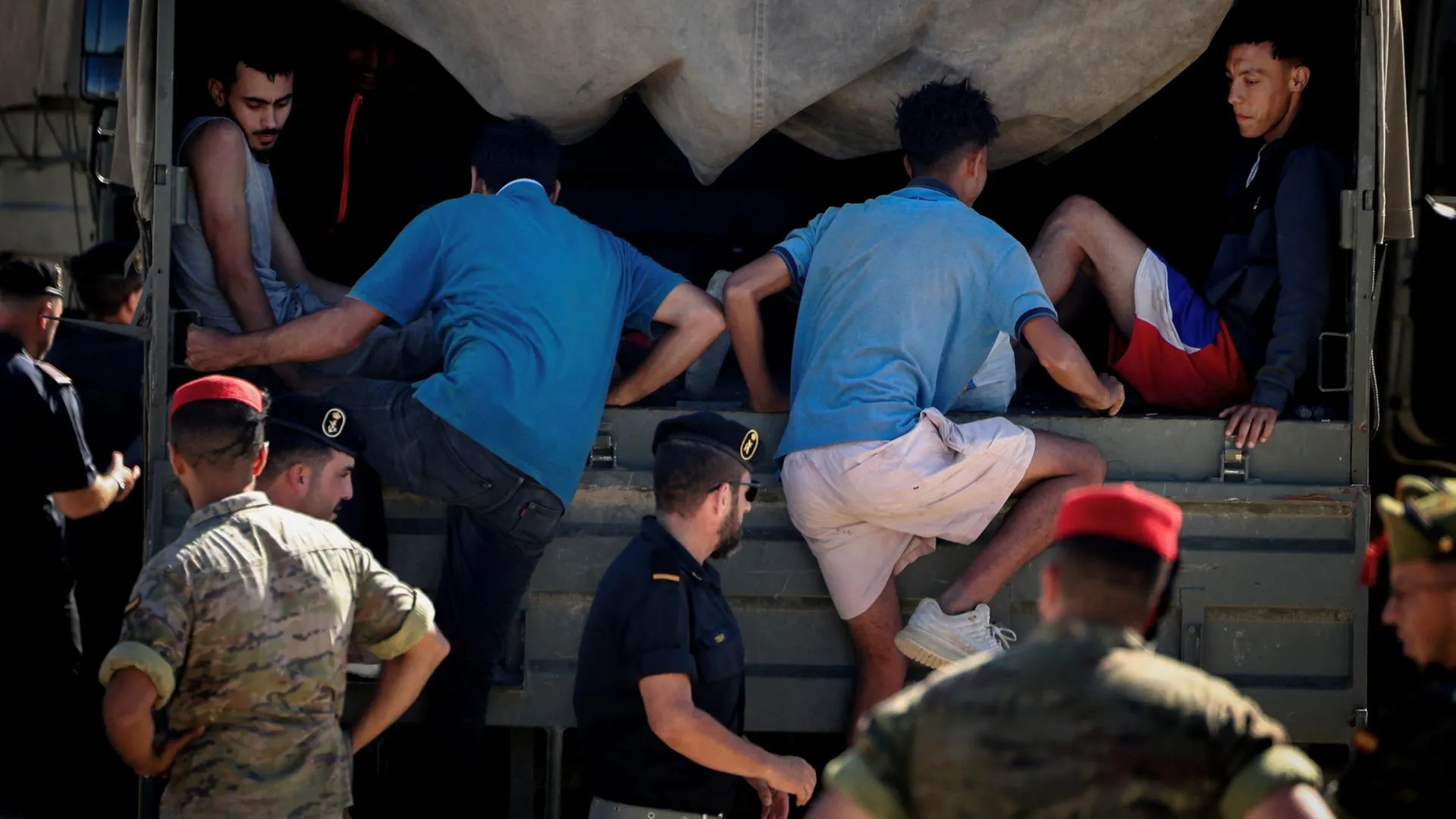
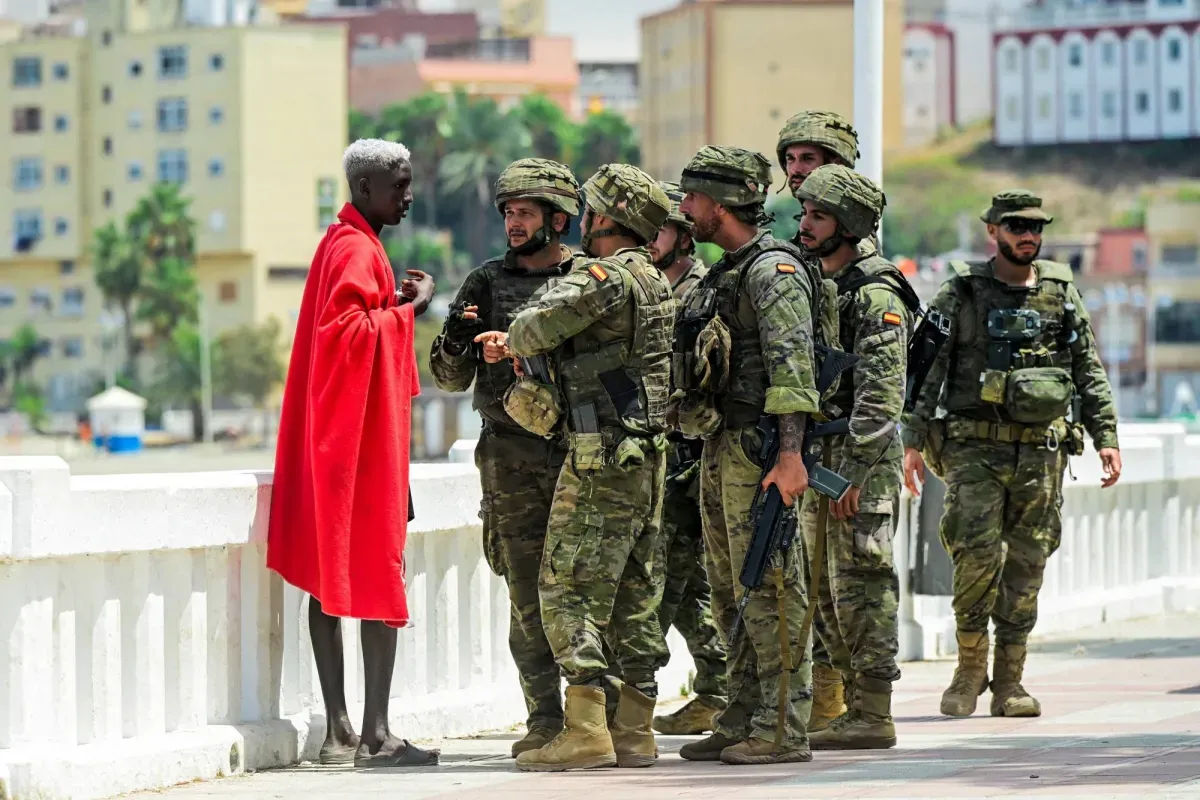
The first notable consequence of this crisis has been the intense political pressure from both individual and collective European partners, who hold Spain accountable for the situation. As a response, an open letter was issued by 22 countries from the European club, calling for an urgent meeting of EU interior ministers to coordinate positions and agree on a 'roadmap' to address any future waves of migration. Interestingly, Madrid itself was among those advocating for such a meeting. A diplomatic source in Paris noted that Madrid aims to achieve two goals: first, to reassure its EU partners and demonstrate its swift control over the situation—evidenced by claims that nearly 48,000 undocumented migrants were returned to Morocco, according to Spanish Interior Minister Fernando Grande-Marlaska. However, this figure requires verification and does not guarantee that all who breached the fence in Ceuta have returned, with estimates suggesting the number could reach 60,000.
The second aim for Madrid is to defend its immigration policy. Consequently, Prime Minister Pedro Sánchez quickly issued a warning stating that the hostile positions of some Europeans threaten the collective objectives of the EU in the long term. Sánchez provided data from the European Border and Coast Guard Agency (Frontex), illustrating migration statistics from 2021 to 2026: 478,600 migrants reached Italy, 340,600 arrived in the Western Balkans, compared to only 234,760 arriving in Spain. This was a clear rebuttal aimed at the Italian Prime Minister's call to temporarily exclude Spain from the Schengen Agreement allowing free movement for visa holders.
There has been a palpable sense of 'concern' across European capitals following the sight of thousands of young people scaling the barbed wire fences of Ceuta. In response, both France and Italy have hastily reinstated border controls, with Paris increasing its security forces on the Spain border fivefold, a move mirrored by Italy at its ports and airports.
However, reactions have varied by country; while Finland and Denmark expressed solidarity with Italy regarding Schengen, French Interior Minister Laurent Nunez dismissed the idea of Spain's exit from Schengen, stating that such a matter is not on the table at all. Legal analyses suggest that suspending Spain's membership is not straightforward, particularly as such a scenario has not been raised since the inception of Schengen.
Political Implications
Another critical aspect of the repercussions pertains to domestic policies within Europe. Numerous European countries are witnessing a rise in the popularity of far-right parties, evident in nations such as France, Germany, and the UK. Additionally, countries like Italy, Austria, and Denmark are currently governed by far-right leaders. Mainstream or traditional parties recognize that images of a 'mass invasion' on the shores of Ceuta can provide justification for the far-right, which has long warned against the influx of non-European migrants into the continent.
Notably, there has been a striking absence of any European or non-European nation attributing responsibility—or even a portion of it—to Morocco regarding recent events. A clear indication of this was the statement by the Spanish Interior Minister, who affirmed in a press conference that 'Morocco does not pose a threat to Ceuta or the rest of Spain, as it is a reliable partner.'
Fernando Grande-Marlaska further noted, 'The events require an evaluation by both Spain and Morocco. However, cooperation with neighbors has allowed Spain to regain control of the situation within 24 hours.'
Yet, the governor of Ceuta, Jesús Vivas, adopted a more cautious stance, stating that 'the city has not yet returned to normal.' To prevent a recurrence of such events, Madrid has installed a containment barrier along the breakwater that extends into the sea, following the unprecedented influx of tens of thousands of migrants breaching the borders of the small Spanish enclave.
As reported by aawsat.com.