
The harrowing experiences of two Sudanese individuals, Abdulaziz Adam and Bahr El Din Ali, who were recently deported from Ceuta to Morocco, highlight a profound lack of understanding among the affected migrants. They had fled their war-torn homeland in search of safety and protection in Spain, only to find their aspirations thwarted upon arrival. Now back in Morocco, they remain perplexed about the reasons behind their expulsion, voicing concerns over the lack of clarity surrounding their situation.
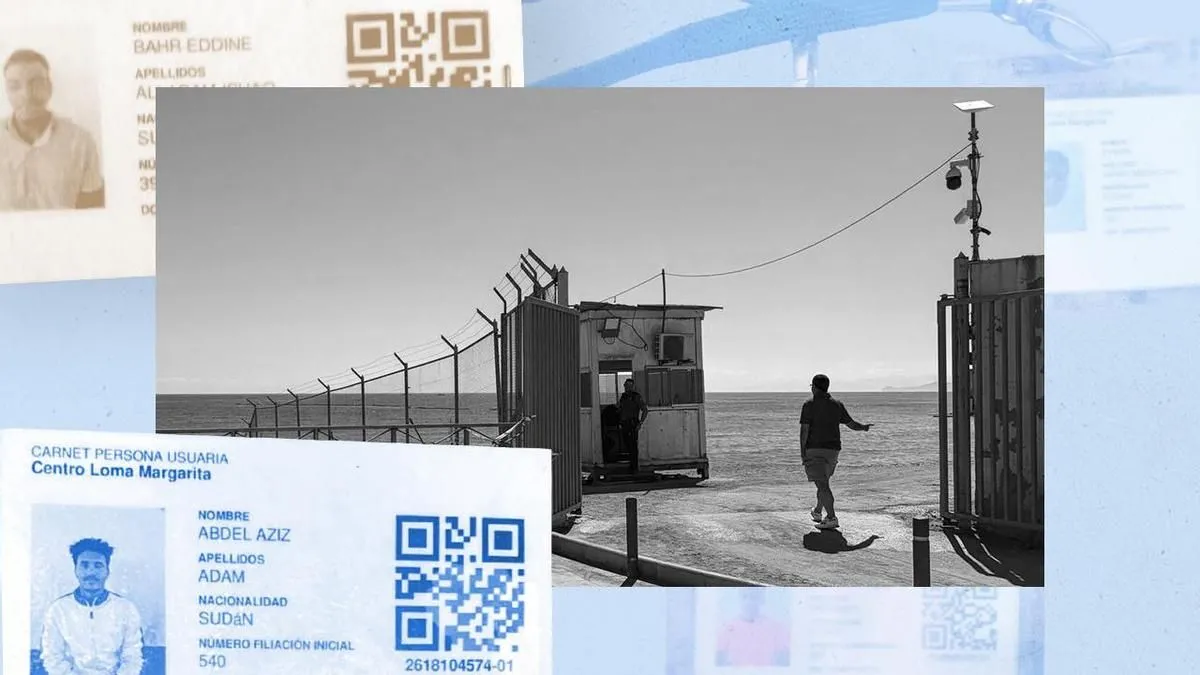
Abdulaziz, who left Sudan in February 2024 at the age of 19, departed from El Obeid in North Kordofan, a region severely impacted by the conflict that erupted in the African nation in 2023. After navigating a perilous journey, he arrived in Ceuta on July 31, where he initially slept on the beach before being moved to the Loma Margarita camp. He spent time there with other migrants until he received an appointment with the police nearly two months later.
His companion, Bahr El Din, recounted a similar experience. Both spent 22 days on the beach before being relocated to a reception center. On September 14, Abdulaziz left the center believing he was merely going through routine paperwork, but just nine days later, he found himself back in Morocco. He recounted, “They told us not to be afraid,” during his time in Rabat. Along with Bahr El Din, they are part of the group of 23 Sudanese nationals recently returned to Morocco by Spanish authorities. The Ministry of Interior confirmed these returns, claiming that all individuals had been sent back after refusing to seek international protection, with the provision of legal assistance and interpreters, and with “all guarantees” in place.
Documents obtained by elDiario.es revealed Abdulaziz’s administrative and police files, shedding light on the information available to Spanish authorities prior to executing his deportation. The police had officially noted that Abdulaziz was a vulnerable individual who had endured “torture, rape, or violence” before arriving in Ceuta and that his journey was linked to the “armed conflict in his country of residence.” Despite this, another section of the same file indicated that he had not requested international protection, leading to a “return” procedure. This raises the question of whether the decision to forgo asylum was fully understood by Abdulaziz and others in similar situations.
Abdulaziz acknowledged that during an initial interview in mid-September, discussions about international protection took place. However, he maintained that he never grasped the implications of the options presented to him. “They asked us, ‘Do you want to cross [to the Peninsula] or asylum?’ I didn’t know that crossing was prohibited,” he stated. “I have no problem asking for asylum in Spain,” he added, underscoring the misleading nature of the options offered.
Legal experts, such as Patricia Vicens, who specializes in immigration law, warned that such phrasing could lead to misunderstandings. Sudanese migrants may have interpreted “crossing” as a chance to continue their journey to the Peninsula rather than a prelude to deportation. Abdulaziz’s file indicates that no request for international protection was made during the triage process. According to the Ministry of Interior, this documentation is intended to establish that the affected individuals voluntarily declined to seek asylum. However, Abdulaziz contends that they were not informed they had not requested international protection or that their choice could lead to their return to Morocco.
Bahr El Din echoed these sentiments, explaining, “At that moment, we didn’t understand that the procedure being initiated could end with our deportation and handover to Moroccan authorities.” The initial interview, which lasted less than five minutes, involved the recording of personal details, their country of origin, reasons for leaving Sudan, experiences of vulnerability, and whether they sought international protection.
Abdulaziz recounted the first interview as a brief formality: “They only asked for my name, my mother’s and father’s names, where I live, and why I left Sudan.” He had indicated that he fled due to the war. Bahr El Din described similar experiences during the interviews, noting they had their fingerprints taken and were asked basic identity questions, yet lacked legal representation to explain the nature of the process or their rights.
After a second appointment scheduled for September 23, Abdulaziz left the police station without any indication of an impending issue. “These are the same procedures that everyone before us went through at the police station and returned to the camp normally,” he recalled. However, during the subsequent appointment, he began to feel uneasy as the purpose of the procedure became unclear. “When we went back for the second appointment, they took our papers, and we started the process. We asked the translator what procedures these were, and she didn’t explain anything to us,” he recounted.
On that day, the Ceuta Government Delegation issued a deportation order against Abdulaziz, declaring his entry into Spain as irregular. He insists he never understood that the second appointment would culminate in his exit from the country, stating, “They didn’t explain to us that we were going to be returned to Morocco.” The discrepancies between the two sides continue to focus on the same issue. The Ministry of Interior maintains that the 23 Sudanese individuals rejected the option of seeking international protection and that the returns were executed with all due guarantees, while Abdulaziz insists that he never comprehended that he had waived his asylum request or that the ongoing procedure could lead to his handover to Morocco.
After being returned to Morocco, Bahr El Din recounted that personal belongings were confiscated upon their handover to Moroccan authorities, including mobile phones, headphones, chargers, and identification documents. He was also coerced into recording a video in which he claimed to be from Sub-Saharan Africa and stated that he had entered Morocco and Ceuta irregularly.
Following their return, the group was taken to a temporary detention center and later transported by bus deeper into Morocco, arriving in Errachidia. However, during this transfer, they were separated from each other. Both Abdulaziz and Bahr El Din noted that four Sudanese individuals who had been deported alongside them did not arrive in Errachidia. “They were taken down at another detention center and transported in separate vehicles,” explained Abdulaziz. Since then, they have had no communication with those individuals and remain unaware of their whereabouts.
Now residing in Rabat, Abdulaziz is surrounded by other Sudanese who experienced similar returns. “Honestly, we are in an extremely difficult situation. I can’t even describe it,” he lamented. The deportation has forced them back to a country they had managed to escape, yet not to their homeland. Having left Sudan over two years ago, Abdulaziz emphasized that his displacement was directly connected to the armed conflict. “We want our rights as refugees from Sudan,” he asserted, repeatedly emphasizing that they were never informed about their lack of protection requests, nor were they told about their impending return. “They told us not to be afraid,” he concluded.
As reported by eldiario.es.