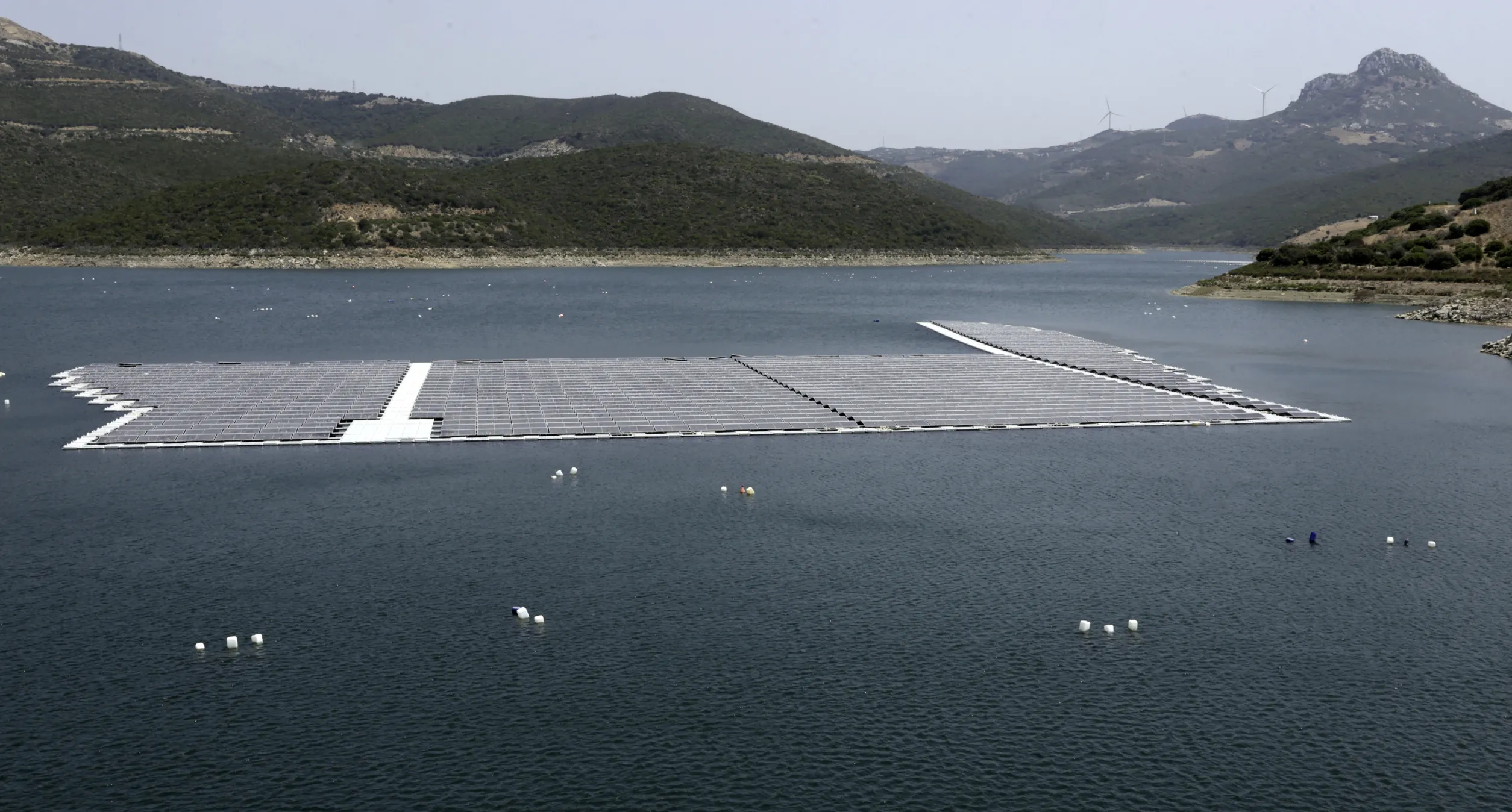
A recent scientific study has revealed that the installation of floating solar panels on the surface of Moroccan dams could simultaneously yield two strategic benefits: significantly reducing water loss due to evaporation and enhancing the production of clean electricity. This initiative has the potential to transform the country’s water infrastructure into a vital component of its energy transition.
This study is part of a broader context in which Morocco is witnessing rapid advancements in its water and energy programs, continuing to invest in innovative solutions that balance water conservation with the expansion of renewable energy sources. Published in a scientific journal, the study assessed the technical and economic feasibility of floating photovoltaic solar systems on 58 Moroccan dams by analyzing various data points, including available water surfaces, evaporation rates, energy production capabilities, panel tilt angles, installation costs, and floating platform designs.
According to the findings, the total surface area of the reservoirs studied is approximately 433 square kilometers, which annually loses around 909 million cubic meters of water due to evaporation—a figure that has significant implications in light of recurring climate events. The study concluded that floating solar systems present an effective response to this challenge, as the panels reduce direct exposure to sunlight and heat, thereby limiting evaporation while simultaneously generating renewable electricity.
The study indicates that a tilt angle of about 31 degrees may provide optimal energy performance; however, lower angles, such as 11 degrees, could be more suitable in certain contexts, particularly as they allow for greater water retention and ensure higher stability for the floating platforms. One of the most significant findings was that covering just 1% of the total area of these dams with floating solar panels could substantially contribute to meeting Morocco's electricity needs while ensuring a quick return on investment.
The advantages of this technology extend beyond energy production to encompass important environmental and economic dimensions. Unlike traditional solar power stations built on land, floating systems do not require additional land use—an increasingly crucial consideration in areas where urban and agricultural demands compete for space. Furthermore, the cooling effect resulting from the panels' contact with the water surface enhances their efficiency compared to land-based systems exposed to higher temperatures.
This scientific approach aligns with Morocco's initiatives in this field, including pioneering projects such as the Sidi Slimane floating solar power plant and the Tangier Med Dam project (Wadi Rmel) near Tangier, which is expected to help meet part of the energy needs of the Tangier Med Port. These initiatives are part of Morocco's journey toward achieving a target of 52% renewable energy share in its national energy mix by 2030.
This pathway opens up vast opportunities for Morocco, as researchers believe that the availability of over 3,000 hours of sunlight annually provides the country with exceptional qualifications for regional leadership in the floating solar energy sector. The intersection of these capabilities with the country’s hydraulic system forms a comprehensive equation that positions dams not only as a pillar of water security but also as a contributor to a clean and sustainable energy future.
As reported by maadialna.ma.