
The Complex Identity of Moroccan Jews
For over half a century, the notion of identity pluralism has remained a contentious and often suppressed topic in Morocco. The nation’s first constitution, enacted in 1962—just six years after Morocco’s independence—defined national identity as exclusively Arab-Muslim. This narrow conception of national identity did not raise eyebrows during an era focused on anti-colonial struggle and Morocco's integration into the Arab-Muslim world. However, the essence of Moroccan pluralism, encompassing linguistic, cultural, ethnic, and religious dimensions, has always been present. It wasn't until 2011, spurred by the demands of the February 20 Movement amid the backdrop of the Arab Spring, that the constitution was amended to include a more inclusive definition of Moroccan identity.
According to the revised constitutional preamble, Morocco is characterized as a "sovereign Muslim state, committed to its national unity and territorial integrity, aiming to preserve in its entirety and diversity its national identity, which is one and indivisible. Its unity, forged by the convergence of its Arab-Islamic, Amazigh, and Saharan-Hassani components, has been nourished and enriched by its African, Andalusian, Hebrew, and Mediterranean tributaries." This acknowledgment of the Hebrew component of Moroccan identity marks a significant shift, yet the Jewish community still struggles for representation in its diverse human expressions.
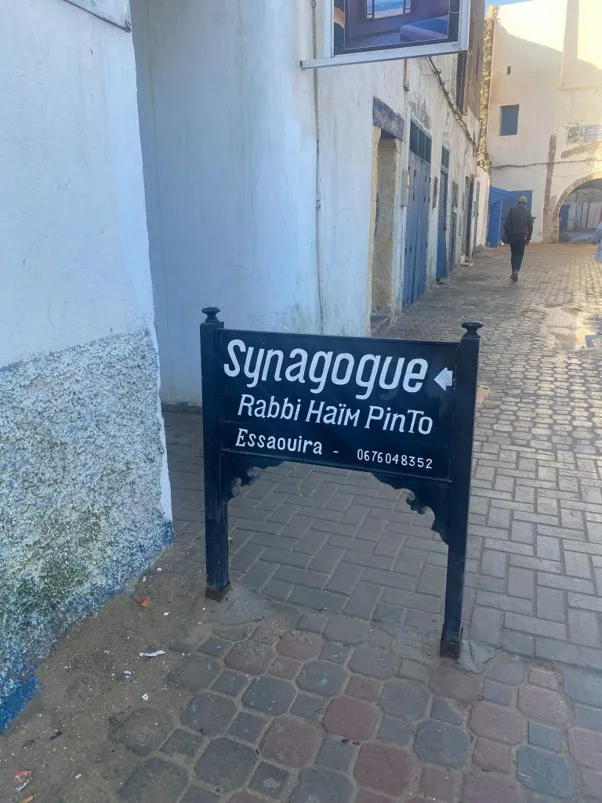
At its peak in 1949, Morocco's Jewish community boasted nearly 300,000 members, constituting over 3% of the Moroccan population at the time. This community, which remains the largest in the Arab world, was primarily concentrated in coastal cities such as Casablanca, Rabat, Tangier, and Essaouira, as well as in Fes. Before the urban migration of Jews, significant communities thrived in many Moroccan villages. Today, remnants of this vibrant past are evident in the form of dilapidated synagogues, crumbling Jewish cemeteries, and homes remembered by local villagers as once belonging to Jewish families. A poignant illustration of this legacy can be found in the documentary by French-Moroccan filmmaker Kamal Hachkar, showcasing the return of Israeli artists to their ancestral village in the Toubkal valley.
Today, the Jewish population of Morocco has largely migrated to Casablanca, with smaller communities remaining in Marrakech, Fes, Rabat, and Tangier. Casablanca not only hosts the majority of the Jewish population but also serves as the center for its religious institutions, including the Council of Jewish Communities of Morocco and various community centers, leisure clubs, and kosher restaurants. However, many Moroccan Jews have emigrated between the 1950s and 1980s to Israel, France, Canada, and the United States, and while some families occasionally return, many young Jews of Moroccan descent have never visited Morocco. Their perceptions of their homeland are often colored by nostalgia or romanticized notions of a past that may no longer exist. Some make pilgrimages to Morocco for the hillulot of the numerous Moroccan Jewish saints, while others, especially those from Israel, visited the country and the cities of their ancestors prior to October 7, 2023. The reasons for their departures are multifaceted, including Morocco's alignment with pan-Arabism, growing insecurity, and the allure of life in Israel promoted by Zionist movements offering dreams of unexploited lands.
Staying, Returning, Leaving
Representing the myriad contexts of diasporic and local experiences is no simple task. The constitutional recognition of the "Hebrew affluent" within Moroccan identity appears inadequate in reflecting the rich and diverse history carried by Moroccan Jews, particularly those who chose to remain in the country despite numerous challenges. Why have some chosen to stay? This question arose during my field research for my thesis, where I spoke with several Jewish individuals who remained in Morocco. One of the individuals I encountered, Mrs. F., shared her story with me one evening in October 2021. Born in the medina of Casablanca in 1944, she, like many of her peers, did not always reside in Morocco. It was only in 1993 that she returned with her daughter, D., who had settled in Marrakech.
As a teenager, Mrs. F. was involved in a Casablanca-based Zionist movement that facilitated Jewish emigration to Israel. She recounted her experiences accompanying families to the port, where tears flowed freely from both those departing and those remaining behind, all aware that those leaving would likely never return. In 1967, she made the decision to immigrate to a kibbutz in Israel, where she lived through the Six-Day War: "I thought I was going to die. The Zionists warned us that the Arabs and Nasser were going to consume us whole... I also came to understand what Zionism truly was: a colonial project for the Jewish people," she confided. Eventually, she emigrated to Paris, where she became active in communist and anti-Zionist movements, collaborating with André Azoulay on the publication "Combat de la diaspora." When asked about the departure of Jews from Morocco, Mrs. F. referred to it as a "population transfer," viewing those who remained, like her parents, as heroes for enabling her return.
In contrast, Mrs. A., my elderly neighbor on Boulevard de Paris in Casablanca, offered a different perspective when I posed the same question about her decision to stay. She recounted a time when Arabs were unkind, but expressed that today, with their assistance in her daily life, she has found kindness: "You just have to know how to talk to them; here we say 'choukrane' to express thanks. But if you say 'Allah yrham al walidin,' they are much happier."
For many Jewish individuals who remain in Morocco, life seems to continue as normal. Some have returned after living abroad to care for aging relatives, while others seek to start businesses or revive family enterprises. Yet, they inhabit a country where, until 2011, their identity—their history, culture, and religion—was not acknowledged as part of the national identity, and where their once-flourishing community is now reduced to a handful of individuals, many of whom contemplate leaving. Nostalgically, S., the director of the Maimonide High School in Casablanca, encapsulates the sentiment of the fading Jewish story in Morocco: "I had this illusion of always being able to continue Jewish life in Morocco, coexisting peacefully with Muslims, but that is an illusion because there are no more encounters, and there are no more Jews."
Given the dwindling size of this community, what does the recent constitutional recognition truly signify? Does it imply that the state acknowledges the historical contributions of the Jewish community to the construction of Moroccan identity? Or does it suggest that "Hebraism" is an identity legacy shared by all Moroccans, as increasingly advocated by younger generations embracing a secular vision of national identity?
Since 2011, Judaism has not only gained prominence within the constitution but has also been increasingly celebrated through cultural projects spearheaded by King Mohammed VI in collaboration with representatives of the country’s Jewish institutions. One of the most significant expressions of this cultural valorization is undoubtedly the restoration of Jewish cemeteries throughout the Kingdom. Under the king's patronage, this renovation project focused on 167 "houses of the living"—as they are referred to in Hebrew—out of the 200 cemeteries currently existing in Morocco, and took place from 2010 to 2014. This effort was discussed during a conference at the Arab World Institute (IMA) in Paris in February 2015, attended by Serge Berdugo, Secretary General of the Council of Jewish Communities in Morocco, and Ahmed Taoufiq, Minister of Islamic Affairs. The IMA, a museum and think tank in Paris, maintains a special relationship with Morocco, bolstered by the significant involvement of Moroccan patrons in the institute's decisions. Exhibitions dedicated to Morocco have been integral to the institute’s program since its inception, and the conference on restorations fits within a broader agenda of promoting Morocco as a model of interreligious coexistence. As Jack Lang, the institute's president in 2021, reiterated, "Morocco, an exceptional country, deserves an exceptional relationship with the Arab World Institute." These cooperative projects are made possible by historical ties between Morocco and the Parisian institute, which have been strengthened by the substantial participation of Moroccan actors in the exhibition "Jews of the East: A Millennia-Old Story." The prominence of Judaism in the cultural exchanges between Moroccan and French communities underscores the central role of Moroccan management of Jewish religious affairs on an international scale. In February 2021, the president of the institute emphasized Morocco's uniqueness: "Morocco is an exception in that it claims... the Hebrew heritage."
As reported by k-larevue.com.