Groundbreaking Discussions on Offshore Wind Energy
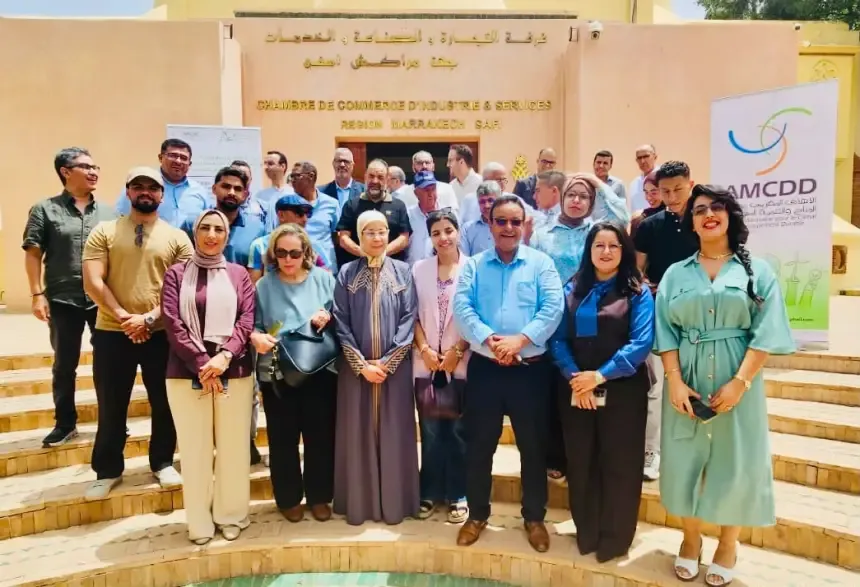
On Thursday, July 16, 2026, the Chamber of Commerce and Industry in Marrakech hosted the first regional meeting focused on offshore wind energy in the Marrakech-Safi region. This significant event was organized in partnership with the Moroccan Coalition for Climate and Sustainable Development and Energy Pool International (EPI Fund). The meeting was marked by its impressive organization, high-quality participation, and rich discussions, making it the inaugural regional gathering organized by the coalition on this crucial topic following the national meeting held in Tangier and a series of training sessions aimed at empowering various stakeholders at the national level. The objective of these initiatives is to enhance capacities and knowledge in the field of offshore wind energy.
Insights from Key Stakeholders
The meeting commenced with opening remarks from key figures including Mr. Abdelaziz Jenati, President of the Moroccan Coalition for Climate and Sustainable Development; Ms. Khadija Bouharashi, Vice President of the Marrakech Municipal Council; and Ms. Hanane El Ghafari, representative of the consulting office. In his opening speech, Mr. Jenati emphasized that the organization of this meeting aligns with the coalition's ongoing program to support national efforts related to energy transition and to enhance multilateral dialogue regarding offshore wind energy. He highlighted the context of this gathering, being the first regional meeting held after the national event in Tangier and a series of training sessions conducted for various stakeholders. He underscored the meeting's aim to bolster scientific and technical knowledge in this promising sector, mobilize various stakeholders, and initiate responsible discussions on investment opportunities and challenges in the development of offshore wind energy. This aligns with the coalition's principles and values, which are grounded in participatory dialogue, openness, scientific advocacy, and contribution to the formulation of sustainable public policies, all in line with its vision and strategy aimed at supporting the energy transition and sustainable development in Morocco.
Ms. Khadija Bouharashi, in her address, emphasized the growing awareness among local stakeholders of the importance of investing in energy transition-related projects as a strategic choice for achieving sustainable territorial development and enhancing the attractiveness of regions for green investments. She stressed the necessity of integrating energy transition programs and projects into local development documents and plans, aligning with the Kingdom's national commitments to confront the impacts of climate change and achieve sustainable development goals.
Furthermore, Ms. Hanane El Ghafari highlighted the importance of scientific and technical studies in supporting offshore wind energy projects, affirming that the success of this strategic endeavor requires a scientific and participatory approach that considers technical, environmental, economic, and social dimensions. This approach is essential for developing sustainable projects that meet international standards and align with national ambitions in energy transition.
The meeting witnessed substantial participation from representatives of various governmental sectors, elected councils, and a group of experts and academic researchers from different faculties of Cadi Ayyad University, along with representatives from the General Confederation of Moroccan Enterprises in the Marrakech-Safi region, and civil society actors. This diverse participation contributed to enriching the discussions and exchanging insights regarding the prospects for developing this promising national initiative.
The program included a detailed scientific and technical presentation on offshore wind energy, showcasing key developments in this sector globally and the opportunities it presents as a significant pathway for diversifying Morocco's energy mix and enhancing energy sovereignty. The discussion also highlighted Morocco's natural and strategic potential, positioning it as a leading country in offshore wind energy production due to its abundant natural resources, infrastructure, and pioneering experience in renewable energy. The city of Essaouira was specifically mentioned as the site for the first national offshore wind energy project, benefiting from its natural, climatic, and marine attributes that meet the necessary technical conditions for the success of such projects and the potential environmental, economic, and social benefits it could bring through promoting green investment, creating job opportunities, supporting territorial development, and contributing to achieving the Kingdom's energy transition objectives.
The meeting served as a platform for exchanging views and experiences among representatives from public administrations, local governments, academia, the private sector, and civil society. It was emphasized that adopting a participatory approach is crucial for the success of offshore wind energy projects while considering environmental, social, and economic dimensions to strike a balance between development needs and the protection of natural resources.
In conclusion, the participants issued a series of recommendations, which included:
- Leveraging Morocco's political will to diversify energy sources by adopting offshore wind energy.
- Strengthening the capacities of various stakeholders and institutions involved in this field.
- Establishing specialized university programs in offshore wind energy.
- Creating vocational training paths related to offshore wind energy professions.
- Encouraging and supporting national companies to invest in this promising sector.
- Mobilizing and raising awareness among economic actors about the investment opportunities offered by offshore wind energy projects.
- Conducting scientific and technical studies on the environmental impact of technologies used in offshore wind energy projects.
- Considering the social impact of these projects, particularly on traditional fishing activities and small fishermen.
- Encouraging elected councils to integrate the energy transition dimension into planning documents and local development programs.
As reported by akhbarona.com.