The Maghreb region presents a vibrant marketplace for businesses from the Murcia region, particularly in Morocco and Algeria, which have established a preferential position in international trade that continues to strengthen despite fluctuating economic conditions. Recently, two commercial missions to these territories highlighted this trend, revealing that export volumes to Morocco reached an impressive €897.76 million in 2025, marking a substantial increase of 16.6% over the past five years. Meanwhile, trade with Algeria has surged to €154.25 million, a figure that reflects a fivefold increase compared to the previous year's sales.
Murcia ranks as the sixth largest province in Spain in terms of export volume to Morocco, emphasizing its significance as a major African market for regional companies. According to the Institute of Development (Info), the Moroccan market is characterized by its vast potential. It is noteworthy that alongside the energy sector, there is a diversified export base that includes live animals, fats and oils, minerals, construction materials, plastics, steel products, machinery, and processed food and beverages.
In relation to Algeria, exports increased by 29.6% from 2021 to 2025, indicating not just linear growth but a rapid reconstruction of trade relations that had previously been nearly severed. However, the structure of trade with Algeria differs significantly from that of Morocco. The recovery in Algeria is primarily supported by the agri-food sector, with live animals and meat products accounting for €93.38 million, which constitutes over 60% of the total exports. Murcia is the third-largest province exporting to Algeria, following Pontevedra and Barcelona.
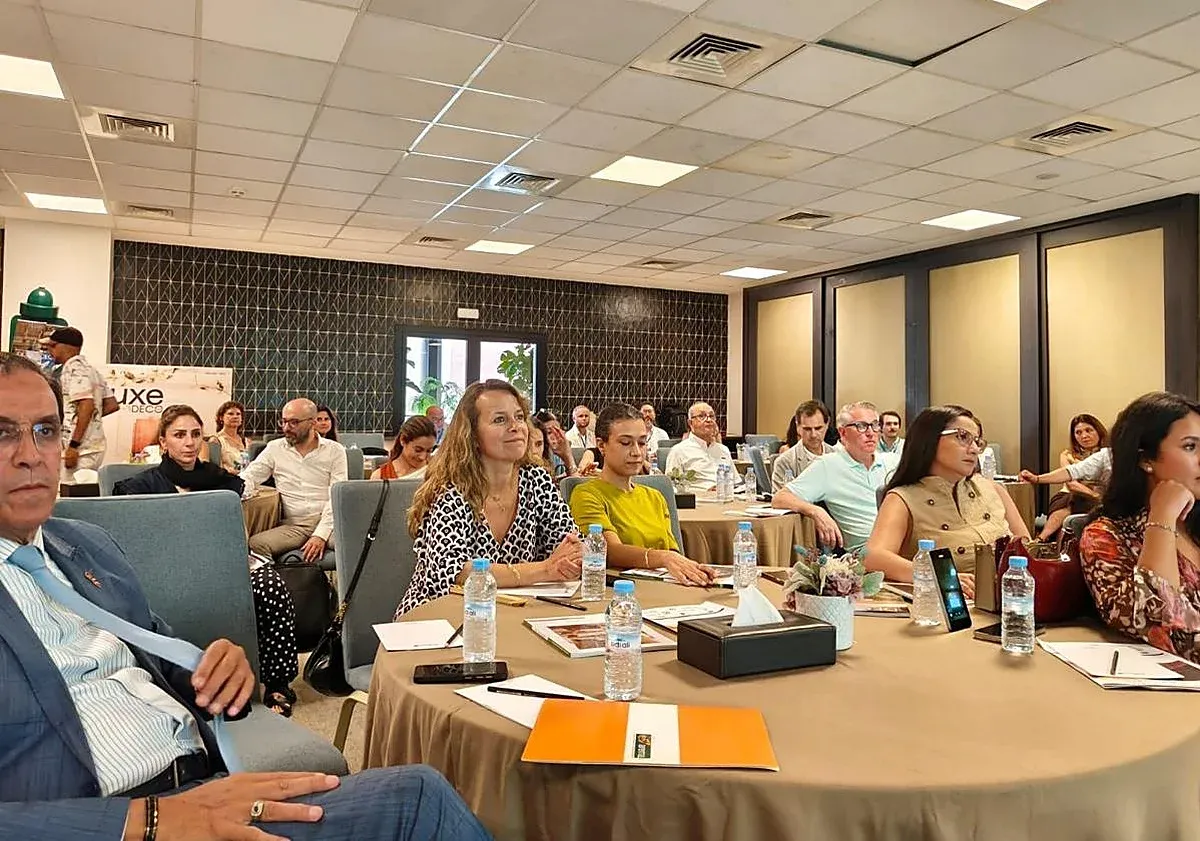
The potential for business in these countries extends far beyond the aforementioned sectors, as evidenced by the recent habitat sector mission to Morocco aimed at the 'contract' channel, which encompasses furniture, lighting, and solutions for equipping hotels, offices, and collective facilities. Eight companies participated in this mission, engaging in over a hundred meetings with local operators, influencers, and prospective partners.
The recent commercial missions to both countries, one focusing on the 'contract' channel and the other being multi-sectoral, reaffirm new opportunities for Murcia-based firms. Luis Alberto Marín, the Counselor of Business, Employment, and Social Economy, emphasizes that Morocco offers “an especially attractive combination of proximity, investment dynamism, and demand for solutions for new tourism, urban, and business projects.” For instance, in the 'contract' market, “the region's specialization can translate into very concrete commercial opportunities.” Nevertheless, the overall trajectory over the past five years reveals two distinct phases: a period of strong expansion from 2021 to 2024, during which sales grew by 57% and exceeded €1.2 billion, followed by a corrective phase in 2025, though still maintaining export levels above those of 2021.
In terms of key products, in 2025, mineral fuels and oils account for 57.2% of regional exports to Morocco, followed by live animals at 9.1% and animal or vegetable fats and oils at 5.5%. In Algeria, live animals make up a significant 39.2% of exports, trailed by meat and edible offal at 21.4%, and iron and steel castings at 10.3%. Between January and April 2026, sales to Morocco amounted to €222.98 million, representing a 17.8% decrease compared to the same period last year. However, despite these fluctuations, the trade relationship remains robust, maintaining a volume significantly higher than at the beginning of the analyzed period, and reinforcing Murcia's position as the seventh largest exporting province.
Marín notes that Algeria is undergoing a recovery phase and has clear needs in areas where our companies have proven expertise, such as agri-food industry, automation, packaging, efficient water management, and plant nutrition. Therefore, the recent multi-sectoral mission organized by the Chamber of Commerce facilitates timely engagement, allowing for the rebuilding of commercial relationships and positioning the region as a capable partner that can provide not only products but also technology and solutions to modernize their production chains.
Regarding products sold to Algeria, live animals generated €60.43 million; meat and edible offal amounted to €32.95 million; manufactured castings, iron, and steel contributed €15.83 million; essential oils and perfumery brought in €11.95 million; and various food preparations accounted for €10.14 million. Conversely, the top five products exported to Morocco (making up 79.1% of the total) include mineral fuels and oils at €513.44 million; live animals at €81.83 million; animal or vegetable fats and oils at €49.22 million; salt, gypsum, and unworked stones at €38.74 million; and plastics and their manufactured goods at €26.45 million.
It is also important to note that the recent Moroccan adjustment is heavily influenced by the energy sector, which tends to be more volatile due to geopolitical tensions. Fuel exports in the first four months were recorded at €105.22 million, reflecting a decline of 24.2%. However, fats and oils saw a significant increase of 128.6%; salt, gypsum, and unworked stones surged by 210.1%; and iron and steel exports rose by 39%.
As reported by laverdad.es.