Understanding the Transformation of Franco-Moroccan Relations
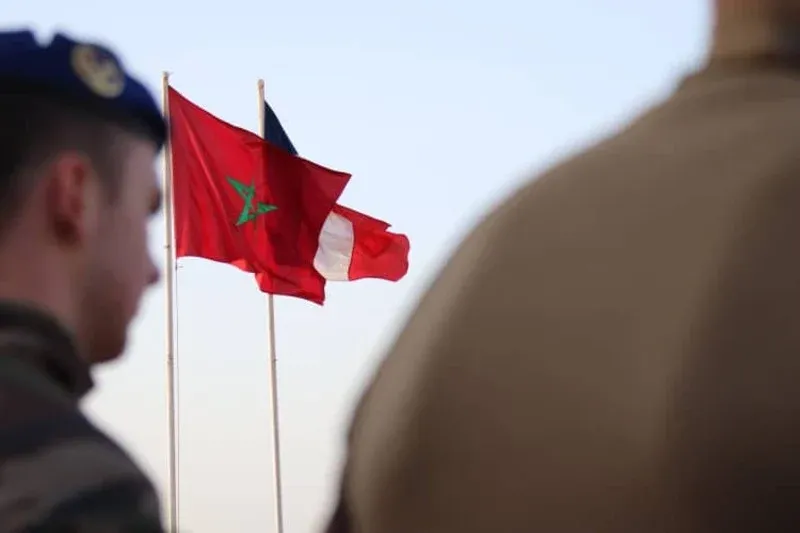
To fully comprehend the future trajectory of Franco-Moroccan relations, one must go beyond the shared history of the two nations, despite their deep-rooted political, economic, cultural, and human ties. The sustainability of international relationships is not solely dependent on historical memories; rather, it hinges on their ability to adapt to shifts in power dynamics, sources of influence, and national security priorities. Consequently, the current rapprochement between Rabat and Paris is not merely a matter of moving past a phase of diplomatic tension; it entails redefining the role of this relationship in a global environment that significantly differs from the one in which the traditional partnership model between these two countries was established. This transformation is emblematic of what can be termed the 'Atlantic Century,' a geopolitical and geoeconomic framework within which power dynamics are being reshaped in the twenty-first century.
In this new era, international competition has evolved beyond territorial control to focus on the ability to manage trade, energy, industrial, and digital flows that connect continents. As such, the regional and global standing of nations is increasingly contingent upon their capacity to oversee and secure these networks, leveraging their geographical positions to enhance their roles in the international economy. Over the past few decades, Morocco has undergone significant changes, as has France's position within Europe and Africa. No longer does the Kingdom act merely as a country situated in the southern expanse of Europe; it is now recognized as an active player that organizes its relations from a strategic position at the crossroads of the Mediterranean Sea, the Atlantic Ocean, and the African continent. Conversely, France is experiencing a relative decline in certain areas of its traditional influence, particularly in Africa, prompting it to seek new forms of engagement that align with the rise of more independent and diversified African nations.
Historically, France and Europe have viewed Morocco through a Mediterranean lens; however, the current geostrategic shifts necessitate a transition from this perspective to an Atlantic interpretation of Morocco's position and function. The Kingdom has emerged as a pivotal point in a space that connects Europe with Africa, intertwining trade routes, energy pathways, and maritime passages with continental networks. This concurrent transformation underscores the significance of the present rapprochement. Morocco no longer relies on France under the terms that governed their relationship in the past century, just as Paris can no longer maintain its position in the Kingdom and across Africa based solely on historical ties. Therefore, the relationship is evolving towards a framework founded on mutual interests and an acknowledgment of each party's changing status within their respective regional and international contexts.
Geography as a Strategic Asset
Classical geopolitical thinking aids in grasping this transformation. Halford Mackinder emphasized that a location becomes a source of power only when a state successfully utilizes it within the competition among major powers. His focus was not merely on land as a static space but rather on its ability to connect regions and direct the movement of power between them. From this perspective, Morocco derives its value from its position as a nexus between Europe and Africa, as well as its oversight of two maritime domains that constitute a significant portion of global trade flows. However, geography does not dictate a specific role for a state; a location can become a liability if it is not supported by effective infrastructure, political stability, and institutional capacity to manage surrounding relations. Over the last few decades, Morocco has worked diligently to transform its geographical advantages into functional benefits through the development of major ports, airports, transportation networks, export industries, financial institutions, energy projects, and increasing engagement within Africa. This evolution has allowed Morocco to shift from being a mere transit point between different spaces to a state that actively contributes to organizing relations among them.
This functional role is further clarified when examining Morocco's transformation through Alfred Thayer Mahan's concepts of maritime power. Mahan did not restrict this power to naval fleets; rather, he associated it with ports, trade, location, industrial capacity, and the protection of shipping routes. In light of this perspective, one cannot consider the Tangier Med, Nador West Med, and Dakhla Atlantic ports as isolated economic projects; they should be viewed as components of an integrated maritime interface that enhances Morocco's presence in international supply chains while opening new extensions toward West Africa and the Sahel. Ports have become integral to the foreign policies of nations, as they determine their capacity to receive, direct, and protect flows. Moreover, energy, submarine cables, industrial zones, and electricity networks have become directly related to national security. The crisis in the Strait of Hormuz revealed that disruptions in narrow maritime passages could impact energy markets, transportation, insurance, and supply chains globally. In 2025, approximately twenty million barrels of oil and derivatives traversed the strait daily, accounting for about a quarter of the maritime oil trade, along with a significant portion of liquefied natural gas commerce.
This crisis underscored that the strategic value of a maritime corridor is not solely linked to its complete closure; even a heightened threat level or attacks on vessels and coastal facilities can prompt tankers to halt operations or alter their routes, driving up insurance and shipping costs while disrupting port and export facility operations. In July 2026, shipping traffic through Hormuz sharply declined amid escalating U.S.-Iranian tensions, demonstrating that influencing flows can be achieved through deterrence, threats, and eroding commercial trust without the need for physical occupation or permanent closure of the corridor.
This analysis is directly relevant to Franco-Moroccan relations, as the partnership both nations aspire to build is no longer limited to expanding economic exchanges; it is also linked to their ability to develop more resilient energy, industrial, and logistical networks in the face of potential disruptions to international maritime corridors. Within this framework, sovereignty extends beyond control over national territory; it encompasses the capability to manage transportation, energy networks, infrastructure, and ensure continuity when any component encounters disruption. Here, the concept of "StraitBelt" emerges as a reading that connects straits, ports, and land corridors into a unified system. The crisis in Hormuz demonstrated that concentrating a large portion of flows in a narrow corridor grants it exceptional strategic value, but it also transforms it into a vulnerability. Therefore, power is now associated with diversifying routes, linking ports with land, energy, and industrial networks, and developing alternatives that allow for the rerouting of trade when one corridor is compromised.
In this context, Morocco's port infrastructure gains particular importance. The Kingdom's expanse along the Mediterranean and Atlantic Oceans, its strategic position at the entrance to the Strait of Gibraltar, and the integration of the Tangier Med, Nador West Med, and Dakhla Atlantic ports provide it with the ability to operate across multiple maritime fronts. The comparison between Gibraltar and Hormuz does not suggest that they serve identical functions or experience the same volume of flows; rather, it highlights that nations that diversify their outlets and connect them to transportation, energy, and industrial networks are better equipped to adapt to changes in international trade dynamics.
This brings to light the importance of the concept of connectivity sovereignty, which complements territorial sovereignty by adding a functional dimension related to the management of movement and communication networks. A state may be legally independent but remains susceptible to pressure if it cannot protect its energy supplies, data, trade, or supply chains. In contrast, a state with efficient ports, advanced transportation networks, and the ability to diversify its partners and routes expands its strategic autonomy and enhances its adaptability in the face of crises.
These transformations grant the relationship with France a different substance. Paris possesses advanced industrial, technological, financial, and military capabilities, yet it seeks new areas for growth and influence. Morocco, for its part, offers location, stability, African networks, and logistical infrastructure, but it requires industrial and technological partnerships that expedite its transition from being an investment-receiving economy to one actively participating in technology and value production. Therefore, the efficacy of the forthcoming partnership should not be measured solely by the volume of trade exchanges, but rather by the ability of both parties to construct joint production chains, finance cross-border projects, and develop a coordinated presence within Africa.
The significance of the partnership with Morocco for France extends beyond merely maintaining its presence in Africa; it also reflects Paris's desire to broaden its operational scope at a time when its foreign options are increasingly influenced by European balances and the Atlantic security system. While France retains important industrial, military, and diplomatic capabilities, its ability to act independently is now more closely tied to the European Union framework and the American role in European security. Thus, the rapprochement with Morocco does not signify a departure from the European or Atlantic frameworks, but rather provides Paris with an additional avenue for action through a partner that combines proximity to Europe with African outreach, Atlantic openness, and advanced relations with the United States, Gulf states, and several emerging powers. Furthermore, Morocco possesses economic and institutional networks, as well as field expertise, in increasingly complex environments for European powers.
Morocco's value to France lies not just in being a geographical gateway to Africa, but in its capacity to contribute to building a shared space for industrial production, logistical connectivity, and energy cooperation. This partnership not only broadens France's operational scope but also assists Morocco in accelerating its industrial and technological transition, while enhancing its integration into European and international value chains.
As reported by hespress.com.