
The air in Floreffe carried a distinct flavor of liberation this past Friday, a refreshing taste following a turbulent period. Behind the scenes, the days leading up to the event were anything but calm for the organizing team. They faced an unexpected parking ban along the N90, which forced the festival to urgently secure 900 parking spaces at a cost of 10,000 euros. Adding to the tension were the strong reservations expressed by the local council regarding the attendance of Mali's renowned singer Rokia Traoré, making the pre-festival atmosphere exceptionally charged.
Sophie Cox, the press officer, readily acknowledges the chaotic preparations. However, as soon as the gates of this ancient venue opened, the reality on the ground shifted dramatically, showcasing the resilience and spirit of the festival.
A Hub of Celebration and Struggle in Namur
The atmosphere at Esperanzah! transcends merely the grandeur of its stages. From the vibrant Children’s Village to the food courts brimming with global flavors, and numerous association stalls actively campaigning against the rise of the far-right, the festival immediately delivers on its promise of a holistic experience. Yet, the true magic of Esperanzah! also unfolds off the beaten path. Amid the crowd, the Brussels brass band _Baraki d’Kermess_ ignited a wave of spontaneous joy. Their energetic renditions of 90s and early 2000s hits, combined with raucous brass and electrifying cumbia, turned a simple stroll across the venue into an exhilarating moment of collective celebration.
This continuous popular fervor stems from a bold vision articulated by the festival's co-director, Arnaud De Brye. He emphasizes, "Our strategy is to make the festival experience the main attraction. We want music to generate collective joy. The emotions we share together possess an absolute power: they reconnect us, energize us, and instill hope as we face the world."
Music as an Act of Political Emancipation
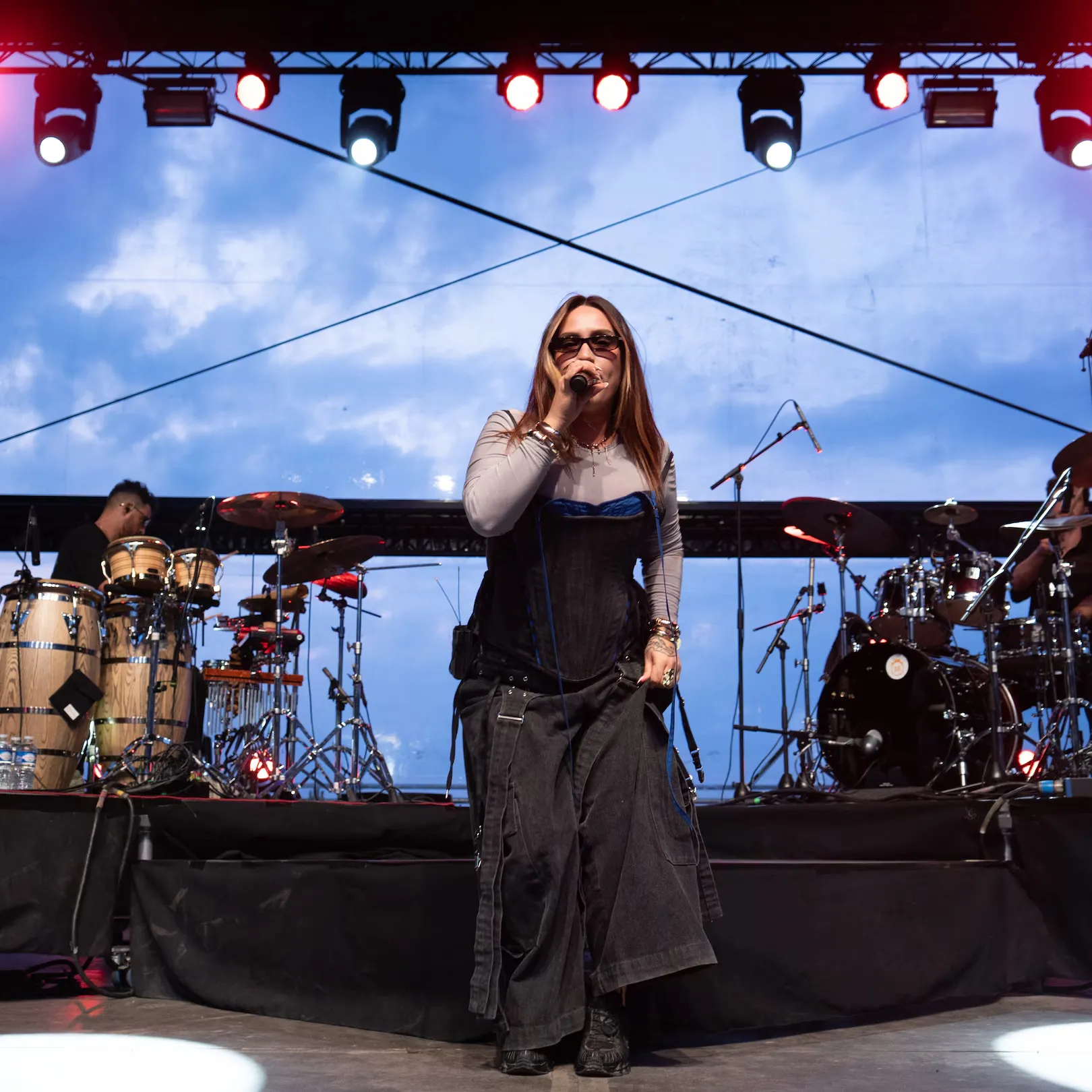
The intensity of the festival escalated on the Jardin stage with the visceral performance of Catalan artist Lia Kali. Surrounded by four exceptional musicians, including two formidable drummers, the Spanish artist, who boasts over 3 million listeners, exuded incredible charisma and a surprising voice that melded soul, rap, and flamenco into a raw energy. Lia Kali’s performance was a carefully selected gem by the programming team, reflecting De Brye's vision of blending diverse sounds and cultures to create unique fusions that are hard to find elsewhere.
However, the emotional peak of the first day undeniably belonged to the iconic figure of the Tunisian revolution, EMEL. Captivating a large audience with her electro-Arabic melodies in front of the Nova stage, she declared, "I have not found a melody that can break the hatred of humankind, but I have found you, and I speak on behalf of those who cannot express themselves." At that moment, a giant Palestinian flag unfurled over the crowd, joined by chants of "Free free Palestine," creating a suspended moment that encapsulated a festival where joy and hope are inseparable from the world's struggles.
On the main Jardin stage, the evening kicked off with one of the year's most anticipated young talents, Ino Casablanca. Initially appearing somewhat shy and nonchalant, the Joséphine Prize winner of 2025 confessed mid-set to suffering from a severe sore throat. Despite this rocky start, the audience responded with overwhelming support. Fueled by this encouragement, the rapper gradually raised the energy, culminating in a standing ovation as he performed his hit _Bissap du 20ème_, which the crowd sang along to as a triumphant anthem, officially launching a weekend of celebration. The artist noted that the Belgian audience is unparalleled, having previously experienced the crowds at Les Nuits Botanique in May, at Dour, and now at Esperanzah!.
As reported by moustique.be.