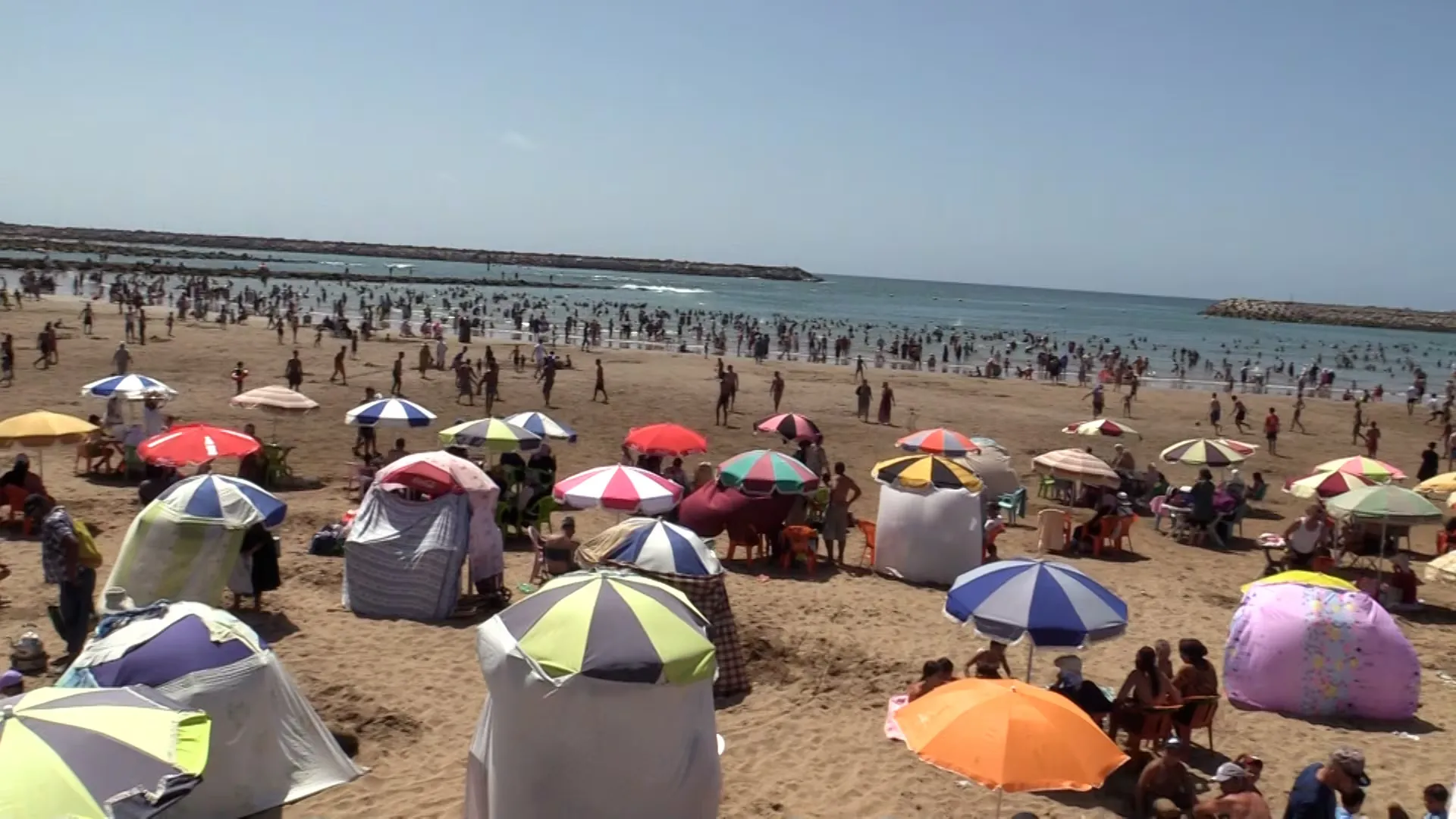
As the summer season approaches, local authorities in Rabat and Salé have ramped up their enforcement efforts on several beaches to combat illegal occupation of public maritime domains. These interventions are designed to put an end to unauthorized installations of umbrellas and chairs intended for rental, thereby ensuring free, open, and equitable access to coastal spaces for all visitors. This article provides an overview derived from the daily publication Al Akhbar.
On June 10, 2026, reports emerged highlighting that local officials had intensified control campaigns on beaches within their jurisdiction to eradicate illegal occupancy of public maritime areas. According to Al Akhbar, "This operation comes just before the summer season, a time marked by a significant influx of visitors and holidaymakers, particularly on the beaches of Rabat and Oued Cherrat, as well as various popular seaside locations in the region." On the Oued Cherrat beach, authorities, supported by auxiliary forces and municipal services, conducted targeted interventions against individuals setting up umbrellas, chairs, and various rental equipment without the necessary permits. Officials stated that "such practices deprive some beachgoers of free and open access to public spaces that must remain available to all," as reported by the daily.
These operations were initiated shortly after the launch of an initiative to provide umbrellas free of charge for visitors on Oued Cherrat beach. This measure received widespread acclaim from beachgoers, who viewed it as "a concrete effort to enhance the hospitality conditions, offer more comfort to families, and alleviate expenses related to summer leisure activities," according to Al Akhbar. The authorities have been given strict instructions to prevent any unauthorized exploitation of the beaches, whether it involves occupying large sandy areas with rows of umbrellas and chairs or imposing fees on users merely wishing to enjoy the coastline. The declared objective is to "preserve the public nature of these spaces and ensure equal access for all."
A similar approach has also been implemented on Salé beach, where the relevant services have carried out comparable campaigns. Al Akhbar explains that "several pieces of equipment used for commercial purposes have been seized, including umbrellas and chairs operated without licenses," adding that "authorities believe these activities constitute an abusive appropriation of a collective asset and infringe upon the rights of holidaymakers to freely enjoy the coastal areas."
Beyond these isolated seizure operations, many local actors involved in NGOs advocate for the continuation of these control operations throughout the summer. They argue that "the success of this initiative will depend on its continuity and its ability to go beyond occasional interventions to establish a genuine strategy for managing the public maritime domain." This mobilization is part of a broader context of reorganizing Moroccan seaside spaces. According to Al Akhbar, "faced with the growing number of visitors and the pressure on coastal infrastructures, local communities are striving to strike a balance between seasonal economic activity and respecting citizens' rights to access beaches freely." Authorities believe that combating chaotic occupation of the coastline not only enhances the tourist appeal of beach resorts but also reinforces a sense of equity among users.
As reported by fr.le360.ma.