ECOWAS Backs Groundbreaking Gas Pipeline Project
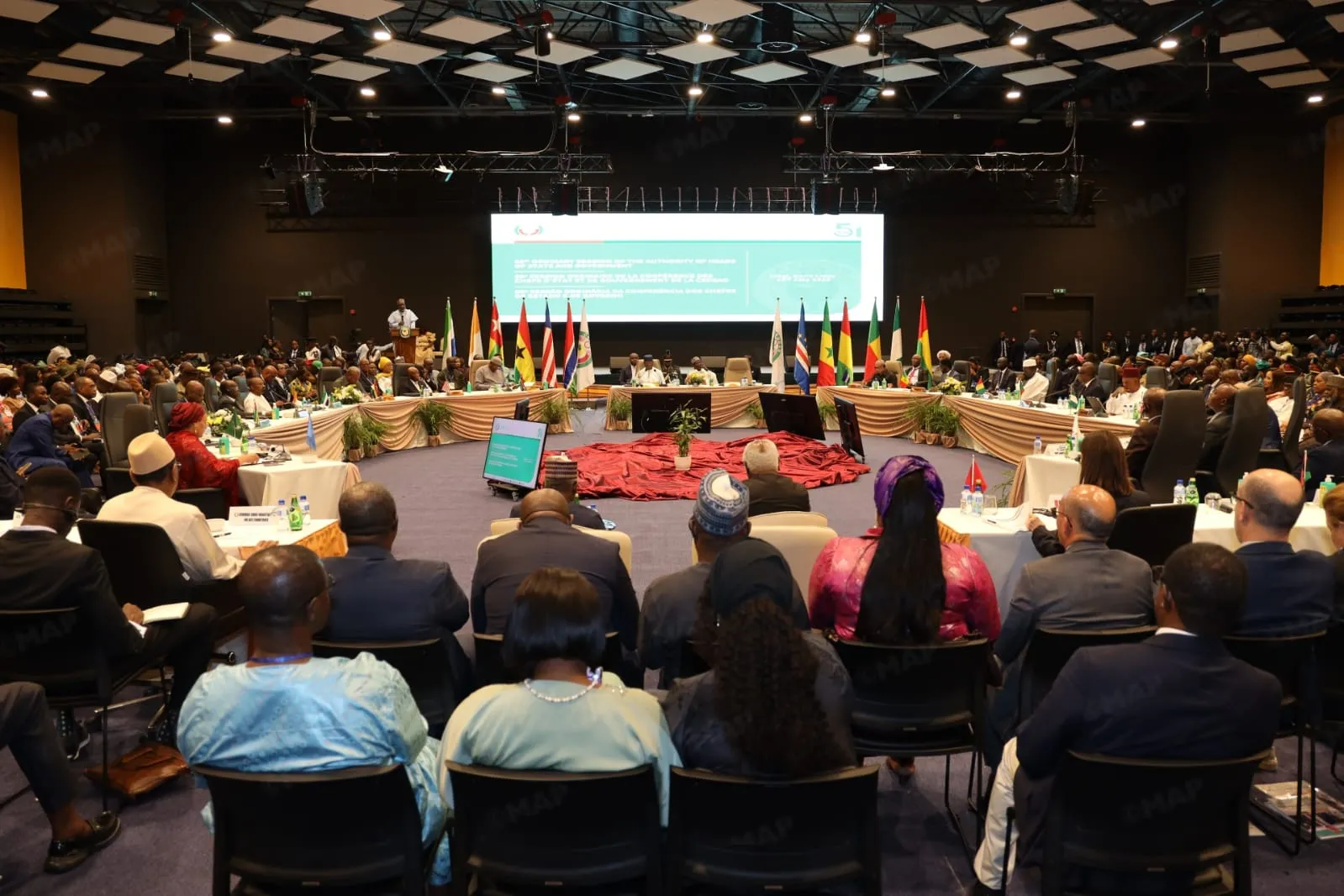
The Economic Community of West African States (ECOWAS) has officially endorsed the Nigeria-Morocco African Atlantic Gas Pipeline (AAGP), a monumental initiative aimed at enhancing regional energy security, fostering economic integration, and extending Africa’s natural gas supply chains to Europe. During the recent ECOWAS Summit of Heads of State and Government, which took place on July 19 in Freetown, Sierra Leone, representatives from member states signed the Intergovernmental Agreement (IGA) that will govern the development of this extensive pipeline, which spans nearly 6,800 kilometers.
This agreement signifies a pivotal moment for the ambitious project initially proposed by His Majesty King Mohammed VI of Morocco and former Nigerian President Muhammadu Buhari, now receiving robust support from the current Nigerian President Bola Ahmed Tinubu. The joint development of this project is being spearheaded by Morocco’s National Office of Hydrocarbons and Mines (ONHYM) in collaboration with the Nigerian National Petroleum Company Limited (NNPC Ltd.).
Strategic Developments and Future Prospects
The ratification of this agreement paves the way for the next phase of the project, which involves the establishment of a project company that will be headquartered in Casablanca, along with a Higher Pipeline Authority that will operate out of Abuja. These newly formed institutions will play crucial roles in mobilizing investors and steering the project towards its Final Investment Decision (FID). Furthermore, Morocco and Mauritania are anticipated to finalize a separate agreement in a ceremonial event in Morocco, which will solidify the project's institutional framework.
Upon its completion, the African Atlantic Gas Pipeline will traverse 13 countries along Africa’s Atlantic coast before linking to the Maghreb-Europe Gas Pipeline in northern Morocco, thus establishing a direct conduit to European gas markets. This pipeline is engineered to transport an impressive volume of up to 30 billion cubic meters of natural gas annually, with approximately 15 billion cubic meters allocated for Morocco and Europe, while the remainder will cater to West African markets.
With an estimated project cost of around US$25 billion, the initiative is set to bolster electricity generation, industrial growth, and broaden energy access throughout West Africa, thereby facilitating the creation of a more interconnected regional natural gas market. According to ONHYM and NNPC Ltd., critical engineering, environmental, and technical studies have been completed, enabling the project to transition into its operational development phase following the signing of the agreement. The initial sections of the pipeline are projected to commence operations at the beginning of the next decade.
Initially conceived as a bilateral endeavor between Morocco and Nigeria, the project has now transformed into a comprehensive regional initiative supported by ECOWAS member states. Advocates of the pipeline assert that it will not only serve as a vital energy infrastructure but also as an economic development corridor, thereby enhancing regional integration, boosting competitiveness, and reinforcing Africa’s long-term goals for energy security and industrialization.
As reported by thephilbiznews.com.