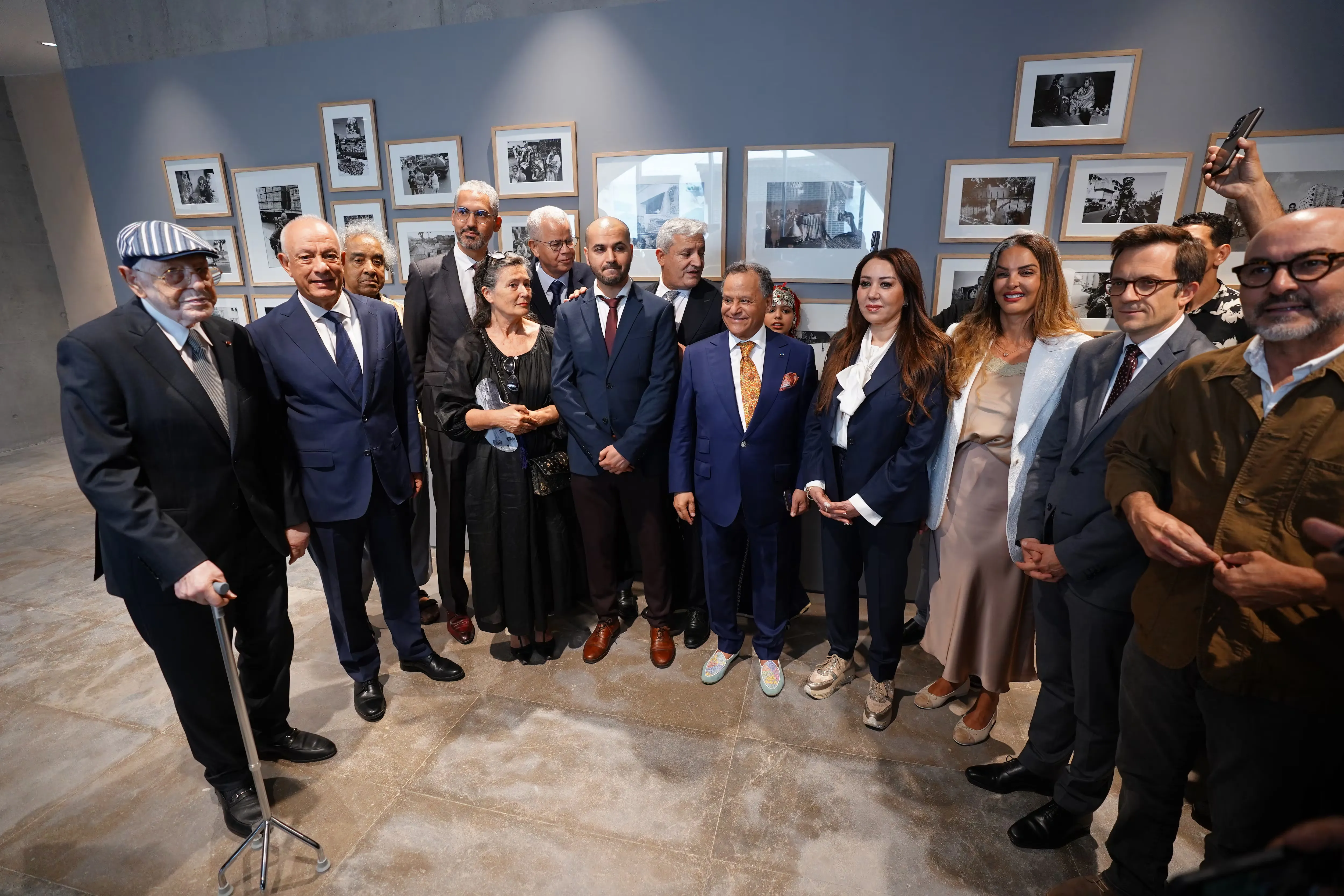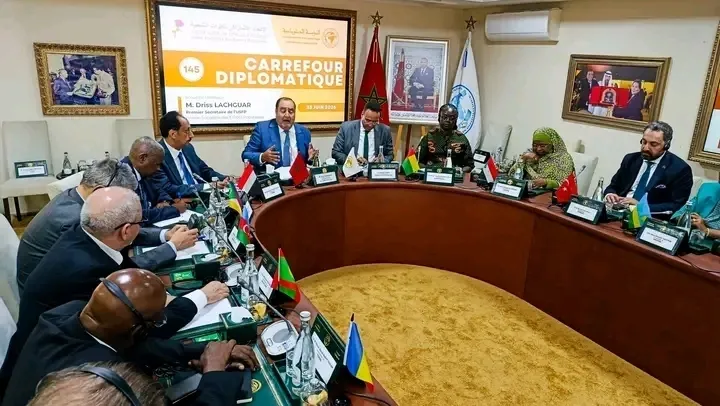
In a significant address to a gathering of ambassadors and foreign diplomats, Driss Lachguar, the First Secretary of the USFP, presented his party's roadmap for the upcoming elections in September. Without resorting to clichéd rhetoric or political posturing, Lachguar engaged in fruitful discussions that intertwined governmental ambitions with a commitment to the party's political legacy and economic realism. His candid interactions shed light on the strategic alliances the Rose Party aims to forge amidst Morocco's evolving political landscape, as diplomats raised pertinent questions about the future of Moroccan politics, the significance of the upcoming elections, and broader themes of democracy, development, and social justice in a rapidly changing regional and international context.
Lachguar underscored a crucial point: the world is experiencing a historical turning point where crises have become borderless. He noted that the war on Europe’s doorstep and geopolitical tensions in the Middle East have direct repercussions on the daily lives of Moroccan households, highlighting our global interdependence. He articulated that energy prices and inflation are destabilizing social equilibrium and fostering public frustrations, which in turn reshape the political landscape. Therefore, he stressed that the defense of peace, international law, economic security, and social democracy cannot be mere theoretical assertions but must become essential imperatives for the resilience of the state and the protection of society.
While acknowledging the significant infrastructure achievements that have transformed Morocco, Lachguar asserted that merely building is no longer enough. The modern government's true responsibility lies in ensuring that every citizen feels the protective actions of the state regarding their purchasing power, enjoys genuine equality of opportunity, and operates within a framework that respects the balance of powers. He emphasized that the USFP does not practice a nihilistic form of opposition but rather a responsible and institutional one, avoiding denial or excessive political rhetoric. The party recognizes the achievements of the current government while maintaining its right to critique, hold accountable, and propose alternatives.
On social issues, Lachguar expressed concern over the government's performance, particularly regarding women's labor participation, which has fallen below expectations. He lamented that the socialists' electoral program is being co-opted by a liberal government, emphasizing that reforms should not be led by those who lack genuine conviction in their implementation. He also discussed the profound and rapid societal changes in Morocco, including rising divorce rates and shifting family dynamics, urging political actors to confront these transformations with realism and openness rather than conservative denial. The USFP aims to advocate for a balanced reformist approach that embraces modernity while preserving positive aspects of Morocco's cultural and social heritage.
As he articulated the party's electoral strategy, Lachguar indicated that the political landscape is fragmented, comprising small leftist parties and influential syndical and associative currents that share a common ideological foundation. He expressed the need for collaboration with this leftist family, despite its limited numerical strength. The guiding principle for any alliance will be a commitment to modern democracy, family law reform, the expansion of freedoms, and the maintenance of power equilibrium. The USFP will not support a coalition that undermines the constitutional rights of the opposition, including the right to form parliamentary inquiry committees.
Looking ahead to the September elections, Lachguar conveyed the USFP's aspirations to lead but emphasized that if that goal is not achieved, the party would only participate in a coalition that guarantees a minimum common program aligned with its social commitments. He also reaffirmed the party's proximity to three major political formations, sharing historical ties with the PI and aligning positions with the RNI and PAM on societal issues, despite some reservations regarding the confusing intersection of power and money.
However, he drew a firm line regarding potential collaboration with the PJD, characterizing it as an intractable red line for USFP members due to the party's stance on political Islam and its adversarial position toward the USFP. Lachguar elaborated that the fragmentation of leftist parties is not unique to Morocco but reflects global trends, asserting that the initial socialist model has undergone significant revisions, leading to the emergence of social democracy that allows leftist thought to evolve beyond its rigidities.
In his closing remarks, Lachguar reiterated the USFP's global anchorage, noting its representation in major progressive international organizations and its commitment to upholding international law principles. He expressed disappointment at the United Nations' failure to drive international relations, particularly regarding the Palestinian plight and the ongoing crises fueled by powerful nations. The USFP remains steadfast in its commitment to the values of freedom, peace, and respect for national integrity, positing socialism as a necessary alternative to contemporary crises. In a warm invitation, he encouraged diplomats to engage with the USFP, emphasizing the party's openness to dialogue and its dedication to fostering mutual understanding and cooperation.
As reported by libe.ma.