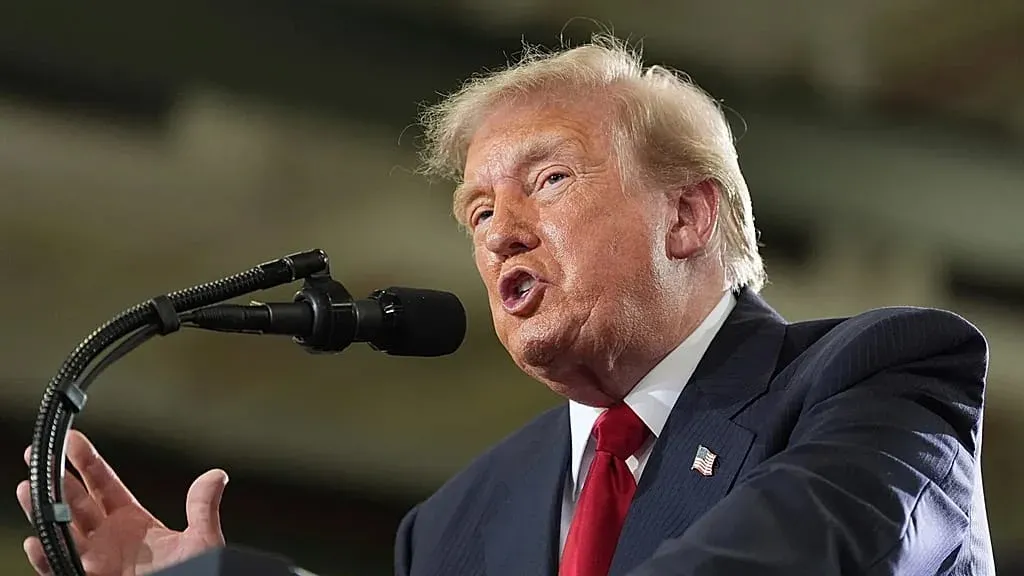

In a message directed to King Mohammed VI, former President Donald Trump reaffirmed Washington's unwavering stance, acknowledging Morocco's sovereignty over Western Sahara and endorsing the autonomy plan proposed by Rabat. He characterized this initiative as "the only serious, realistic, and unique solution capable of resolving the conflict in a fair and sustainable manner." This declaration highlights the United States' commitment to supporting Morocco in its territorial claims and addressing long-standing regional disputes.
Trump emphasized that maintaining the status quo was "unacceptable," arguing that a resolution would foster prosperity and enhance integration among nations on the African continent. He reiterated the United States' determination to expedite efforts toward a swift resolution to the conflict, indicating a proactive approach to international diplomacy.
The diplomatic ties between Morocco and the United States date back to December 2020, when Trump, during the closing weeks of his presidency, officially recognized Morocco's sovereignty over Western Sahara. This recognition was part of a broader agreement aimed at normalizing relations between Morocco and Israel, allowing Rabat to join the signatories of the Abraham Accords. Such moves reflect a strategic alignment in foreign policy that seeks to stabilize the region.
Beyond the diplomatic sphere, the White House has praised Morocco's role in regional security, portraying the kingdom as a crucial ally in the fight against terrorism and other international security challenges. Trump's acknowledgment of King Mohammed VI's "enlightened leadership" in promoting regional peace underscores the importance of Morocco's commitment to combating extremism and ensuring the safety of both American and Moroccan citizens, showcasing the strength of the strategic partnership between the two nations.
In this context, the former president announced an enhancement of operational cooperation between Washington and Rabat in Northwest Africa, affirming that both countries would collaborate to bolster security in the Sahel region. This commitment indicates a growing focus on joint efforts to address security threats that impact both nations.
Roots of the Conflict
The Western Sahara, a territory rich in natural resources such as phosphates and marine resources, remains a focal point of diplomatic tensions in North Africa. It is central to the historical dispute between Morocco and Algeria, the latter of which officially supports the Polisario Front, a group advocating for the independence of this former Spanish colony. Morocco promotes an autonomy plan that grants significant powers to the territory while maintaining it under Moroccan sovereignty. Conversely, the Polisario Front calls for a self-determination referendum allowing the residents of the territory to decide their future.
The conflict traces back to 1975 when Spain ended over 90 years of administration of the territory, then known as "Spanish Sahara." Following Madrid's withdrawal, tensions escalated into war between Morocco and the Polisario Front, culminating in a ceasefire in 1991 under the auspices of the United Nations. Rabat views Western Sahara as an integral part of its territory, relying on historical allegiance ties between Sahrawi tribes and the Alaouite monarchy. Algeria, on the other hand, supports the Polisario Front, which declared the "Sahrawi Republic" in 1976, believing that resolving the conflict requires exercising the right to self-determination and completing the decolonization process.
Last year, marking the 50th anniversary of the Green March, during which approximately 350,000 Moroccan civilians marched in 1975 towards the Sahara while it was under Spanish administration, the UN Security Council adopted a resolution deeming Moroccan sovereignty-based autonomy "the most serious basis" for resolving the conflict. Adopted on October 31 with 11 votes in favor and none against, the resolution calls for the parties to resume negotiations based on the autonomy plan presented by Morocco to the United Nations in 2007. The resolution posits that this proposal could represent "the most realistic solution" and serve as the foundation for future negotiations aimed at ending a conflict that has persisted for nearly half a century.
On this occasion, King Mohammed VI declared that the kingdom was entering "a decisive phase in its contemporary history," adding, "The time for a unified Morocco has come."
As reported by fr.news.yahoo.com.