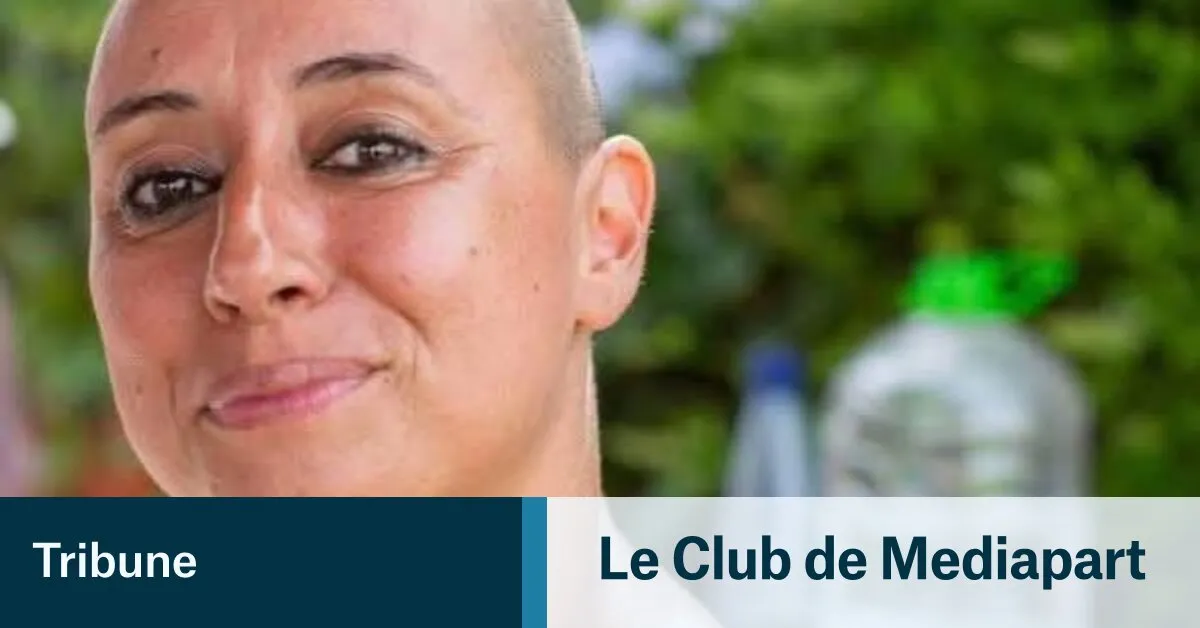

On August 10, 2026, it will mark one year since Betty, whose real name is Ibtissame Lachgar, aged 51, has been in detention. She was sentenced to 30 months in prison for allegedly 'offending Islam', shocking the global community as demonstrated by numerous mobilizations calling for her release on the platform freebetty.org.
What was her 'crime'? She posted a photo on social media wearing a t-shirt emblazoned with the slogan 'Allah is lesbian', an act that the Moroccan judiciary deemed 'blasphemy'. This slogan is a twist on a historic feminist phrase: 'I saw God. She is Black, communist, and lesbian', originating from the Red Dyke Movement in 1971, aimed at making lesbians visible and asserting their right to love. This message, now a global symbol, has also been embraced by movements such as Black Lives Matter and artists like Hugues Aufray, to include marginalized minorities.
In Morocco, Article 267-5 of the Penal Code allows for sentences of up to five years in prison for anyone who offends the Muslim religion electronically, a provision often used to silence human rights defenders. In a country where the rights of women and LGBT+ individuals are virtually non-existent, Ibtissame Lachgar has been an activist for years. She previously shared a photo of the 'Allah is lesbian' t-shirt in 2022 to denounce the execution of two lesbians in Iran, and again in May 2025 to highlight the patriarchal instrumentalization of religion.
The image was republished in late July 2025 by a so-called 'patriotic' internet user and taken out of context (it has since been removed), who later celebrated Betty's arrest. Just hours before her detention, Betty was already denouncing the thousands of rape and death threats she was receiving, mostly from men based on a 'religious reference', threats that now target her supporters: lawyers, friends, and human rights organizations like the AMDH (Moroccan Association for Human Rights).
A clinical psychologist and criminologist, Betty co-founded the Alternative Movement for Individual Liberties (M.A.L.I.) in 2009, which fights for the rights of women and LGBT+ individuals, freedom of conscience, and worship, particularly advocating for the decriminalization of homosexuality, abortion, and atheism, all acts punishable by three to six years in prison in Morocco.
Her spectacular yet non-violent actions aimed at opening debates on societal issues have left a significant impression: a picnic during Ramadan highlighting Law 222 of the Penal Code prohibiting the public breaking of the fast, a 'kiss-in' of forty people in 2013 in front of the Rabat Parliament in support of two teenagers prosecuted for 'offending public morals' over a photo of a kiss posted on Facebook, and dyeing fountains red in Rabat to protest violence against women and their condition.
Images of the kiss-in, in particular, went viral worldwide and led the collective to launch a petition for the repeal of Article 489 of the Penal Code, asserting that 'criminalizing consensual homosexual relationships between adults is to deny a social reality and violate human dignity'.
The situation for LGBT+ individuals in Morocco remains dire. Article 489 punishes sexual relations between same-sex individuals with six months to three years in prison. Additionally, engaging in premarital sex, living as an unmarried couple, having an abortion, or lacking belief in God can also lead to criminal charges.
Consequently, there is no legal recognition for same-sex couples, nor for the legal gender change of transgender individuals. The UN regularly calls on Morocco to reform its legislation, but reforms, such as those of the family code at the end of 2024, remain largely insufficient. In 2016, following the Orlando attack, Betty co-founded Shams-France to assist young LGBT+ Maghrebis in France.
Human Rights Watch has also denounced the leniency of the Moroccan justice system, which fosters the impunity of homophobic aggressors, exacerbating LGBTphobic crimes. 'In Morocco, the victim pays the price of their aggression,' Betty denounced in an interview with Le Monde on April 12, 2016.
Invited around the world, Betty has participated in pride marches across Europe and demonstrations with the FEMEN movement for same-sex marriage. She established the 'International Day Against Homophobia and Transphobia' on May 17 in Morocco. Sometimes compared to FEMEN or Sinéad O'Connor for her shaved head and bravery, she remains a non-violent activist advocating for freedom of conscience and feminism.
However, her commitment extends beyond public actions. In Rabat, she sheltered threatened LGBT+ individuals, migrants, and provided abortion pills to distressed women despite the total ban on abortion. She has also assisted dozens of transgender people in fleeing Morocco for Europe, putting her own freedom and life at risk.
Facing unjust accusations of transphobia or support from far-right circles, her record is clear: she was the first to fly the transgender flag in Morocco, has been advocating for transgender rights for decades, and her struggles are undeniably progressive. She herself highlights the paradox of attacking a migrant activist, a woman of color, from a Muslim background and with a disability. As emphasized by the International Feminist Front, Betty is an essential voice for the defense of individual liberties, sexual and reproductive rights, and freedom of conscience. A #freebetty petition has gathered over 386,000 signatures demanding clemency from King Mohammed VI.
Despite calls from Amnesty International, FIDH, AMDH, the International Feminist Front, and the PCF, all requests for provisional release have been rejected to date, and the royal pardon has not materialized, even as her health has severely deteriorated while in detention.
Indeed, the findings of a medical report published on June 10, 2026, by the International Rehabilitation Council for Torture Victims (IRCT) regarding her health situation are alarming. She suffers from excruciating chronic pain in her left arm, a consequence of an Ewing sarcoma (bone cancer) diagnosed at the age of 20.
Due to a lack of appropriate care, pain management, and especially the placement of a new humeral prosthesis—an operation that can only be performed abroad—her condition is worsening, putting her at risk of amputation or even potentially fatal consequences. According to the IRTC, the acute suffering she endures and the conditions of her detention (paracetamol as the only medication, prolonged isolation, absence of a mattress, and only three ten-minute phone calls per week) constitute cruel, inhuman, and degrading treatment, which is tantamount to torture under the United Nations Convention against Torture.
On the eve of the anniversary of her incarceration on August 10, 2025, we are calling for a gathering on Sunday, August 9 at 3 PM at Trocadéro, Parvis des Droits de l’Homme in Paris, to demand the consideration of a royal pardon for the immediate release of Betty Ibtissame Lachgar, urgent access to the specialized care that her health condition requires, adherence to legal obligations regarding detention conditions, including regular contact with her loved ones, and a dignified treatment and humanitarian solution commensurate with the courage she has shown in her struggles.
As reported by blogs.mediapart.fr.