Exploring the Depths of Aging and Love in 'Malaga Street'
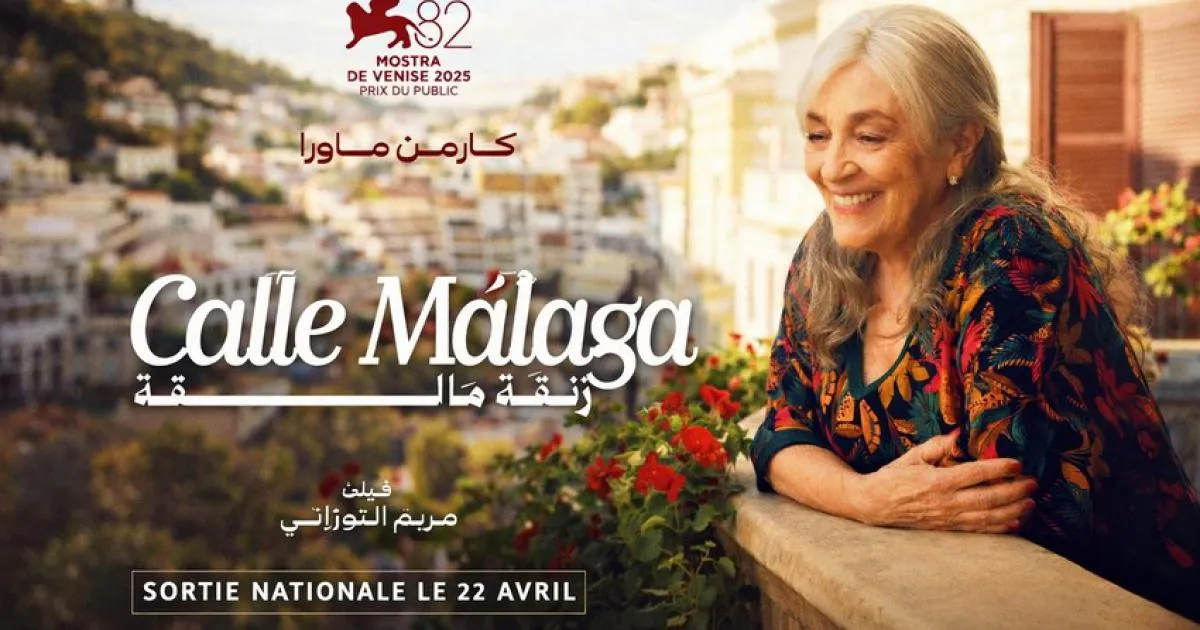
The Moroccan film industry is set to witness a significant event as Maryam Touzani's latest feature film, 'Malaga Street,' is poised for its theatrical release on April 22, 2026. This film, which marks Touzani's third narrative endeavor, is presented in its original Spanish version, accompanied by French subtitles, and features dialogues in Moroccan Darija. This linguistic blend not only highlights the film's cultural richness but also emphasizes the themes of diversity and connection that underpin the storyline.
As the film approaches its debut, it has garnered considerable attention, not solely for its poignant narrative but also due to the controversy surrounding its explicit content. Reports have emerged regarding a bold scene featuring the film's protagonists in a nude portrayal, igniting early discussions on the limits of artistic expression and the nature of the themes presented in the film.
The narrative centers on the character of María Ángeles, born in Tangier amidst the Spanish community's establishment during the tumultuous 1930s, particularly during the Spanish Civil War. María's life in Morocco unfolds as she marries and raises her only daughter, Carla, but is left to navigate her solitude following her husband's death and Carla's relocation to Spain.
Despite her loneliness, María manages to maintain a peaceful and stable lifestyle within her apartment on 'Malaga Street,' the location that inspires the film's title. Surrounded by cherished memories and warm relationships with her neighbors, she continues to honor the memory of her late husband by visiting his grave periodically. However, this delicate equilibrium is disrupted by a surprise visit from Carla, who reveals her dire financial situation following a divorce and her struggle to support her two children alone.
Faced with the harsh reality of her daughter's request to sell their cherished Tangier apartment to alleviate her financial burdens, María experiences profound shock. Although she reluctantly agrees, she adamantly refuses to leave Tangier, the city that holds all her memories. In response to her mother's resistance, Carla resorts to a drastic solution, placing María in a nursing home before returning to Spain to finalize the sale of the apartment.
Struggling to adjust to life in the institution, María ultimately chooses to escape back to her home, initiating a journey to reclaim her former world. Using the money left by Carla, she begins to repurchase pieces of furniture from a local second-hand shop, striving to resurrect the details of her past life. However, as her funds dwindle, María is forced to confront her new reality and seeks to earn a living despite her age, having only briefly worked selling tickets at the Cervantes Theatre in Tangier. At this juncture, she receives support from her empathetic neighbors and forms a special bond with a furniture dealer named Abdel Salam.
This connection gradually evolves into a late-blooming romance, rekindling María's sense of vitality and femininity, and providing her with an opportunity for self-discovery anew. The film conveys the message that life continues beyond a certain age, and the desire for love and existence can be revived at any stage. This journey reaches its climax when María and Abdel Salam travel to Asilah to recover a gramophone that symbolizes significant moments in her life, linking its music to her fondest memories. This element serves as a poignant reminder of María's resurgence, as her smile returns, symbolizing a rekindling of her spirit.
However, this newfound tranquility is short-lived, as Carla discovers her mother has returned to the apartment and is adamantly refusing to leave. This leads to a painful confrontation between mother and daughter, highlighting the clash between material values and emotional ties. In various media interviews, director Maryam Touzani has expressed that the film draws from her personal experiences with the loss of her mother, noting that while the work was born from sorrow, it has transformed into a celebration of life. She also mentioned that María's character is partially inspired by her mother and Andalusian grandmother, adding a deeply personal layer to the narrative.
Touzani further elaborated on her choice of actress Carmen Maura for the lead role, emphasizing that their meeting was pivotal in shaping the character, as Maura embodies the energy and vibrancy that reflect the film's spirit. Additionally, the film tackles societal perceptions of the elderly, critiquing the stereotypes that often marginalize them, and instead presents a narrative that values their experiences and emotional depth.
As reported by middle-east-online.com.