
Political Turmoil and World Cup 2030 Planning
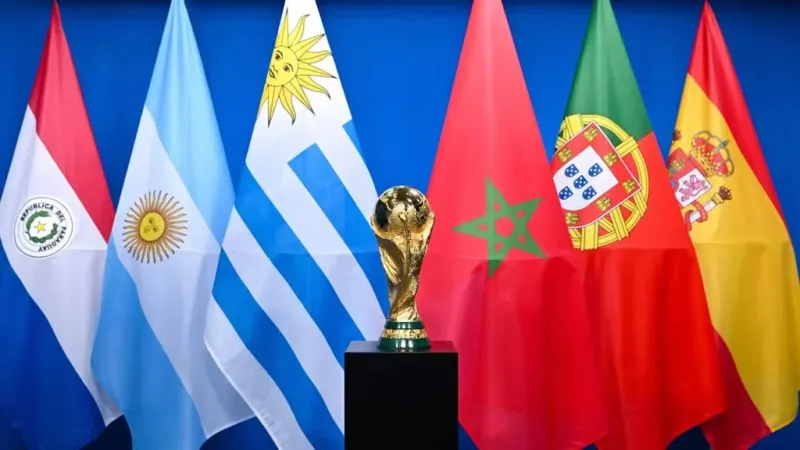
As the political noise surrounding FIFA and its president, Gianni Infantino, began to quiet down, a new controversy has emerged regarding one of the most anticipated events in the coming years: the 2030 FIFA World Cup. Indeed, it was less than two months ago that the final for the 2026 edition took place, yet the upcoming tournament is already generating a flurry of statements, denials, and uncertainty about the most significant match of all. The 2030 World Cup is set to feature a multi-nation hosting arrangement for the third time, following the precedent set by the Korea-Japan World Cup in 2002 and the combined North American event in 2026. This time, Spain, Morocco, and Portugal will take the lead as the primary hosts, taking over from their North American counterparts. In a nod to the centenary of the inaugural World Cup, additional matches will be held in Argentina, Uruguay, and Paraguay, countries that will only host games during the tournament’s debut, honoring the 1930 World Cup, which was organized by CONMEBOL and contested between Uruguay and Argentina. Given the logistical challenges of traveling from South America to Europe and Africa, FIFA has announced that the tournament will kick off with three matches in Argentina, Paraguay, and Uruguay, the order of which has yet to be revealed, even before the official opening ceremony and inaugural match, scheduled to take place approximately five days later at a venue yet to be confirmed.
The Battle for the Final's Host City
The debate surrounding the host city for the World Cup 2030 final is a completely different story, and the stakes are high. Although FIFA has yet to officially announce the location, there are conflicting reports amid ongoing disputes regarding Infantino's presidency. The European football governing body, UEFA, which includes Spain and Portugal, has voiced its opposition to Infantino's continued leadership, largely stemming from the controversy surrounding the FIFA Forward Enterprise (FFE) project. This initiative aimed to sell economic and operational rights of FIFA tournaments to private investors. Discontent has been simmering for some time, further fueled by incidents during the last World Cup, such as the Balogun case involving the American player who was allowed to play in the round of 16 despite being sent off in the previous match, following a call from then-President Donald Trump to Infantino. Although FIFA denied any connection between the red card suspension and the phone call, mistrust loomed large in the football community. As UEFA's discontent grew, which had even resulted in a temporary boycott of FIFA tournaments, rumors circulated indicating that FIFA had promised to award the final to Morocco over Spain and Portugal. FIFA promptly denied these claims.
However, this denial was not echoed by the president of the Royal Moroccan Football Federation, Fouzi Lekjaa, who claimed during a political campaign that "the province of Benslimán—home to the under-construction Grand Stadium Hassan II, which will accommodate 115,000 spectators in Casablanca—will have the honor of hosting the 2030 World Cup final." In response, FIFA reiterated that the final's host city would be determined in due course, with Casablanca as a potential option among two venues proposed by Spain: the Santiago Bernabéu Stadium and Camp Nou. Javier Tebas, president of LaLiga and a vocal critic of Infantino, expressed skepticism about FIFA's denial, stating, "They also denied the red card incident involving the U.S. I don’t believe anything from FIFA. What the Moroccan federation president said is what’s being discussed." Tebas further argued that Spain should be the final's host, emphasizing the country's superior infrastructure and successful history in hosting major events. He even suggested that Spain reconsider its participation in the 2030 World Cup if Morocco were to host the final, indicating that the situation warranted thorough reevaluation.
Conversely, Rafael Louzán, president of the Royal Spanish Football Federation (RFEF), confidently asserted that Spain would host the final, citing strong supporting data and arguments during the World Football Summit in Madrid. While the decision remains unmade, it is anticipated that this topic will be a focal point during Infantino's upcoming visit to Spain, which will include a meeting with Spanish Prime Minister Pedro Sánchez. Louzán mentioned that he would engage in lengthy discussions with Infantino regarding World Cup preparations, emphasizing Spain's commitment to deliver the most successful tournament in history. He urged calm amidst the ongoing political discourse, suggesting that Lekjaa's comments were politically motivated and encouraging a focus on collaboration rather than competition. With four years until the tournament, the discussions surrounding the World Cup final are only just beginning, and the implications of this high-stakes decision will echo throughout the soccer world.
As reported by cnnespanol.cnn.com.