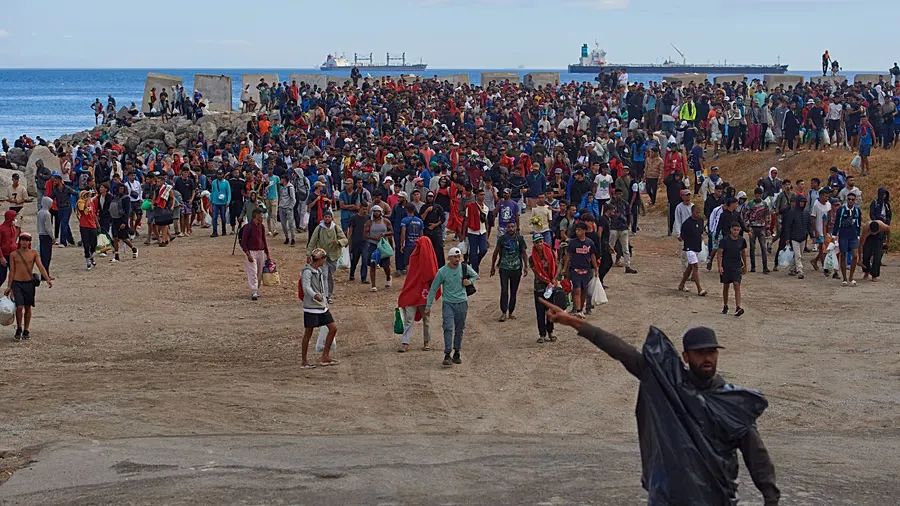

Ceuta's Migrant Crisis: A Government Under Scrutiny
In late July 2026, the Spanish enclave of Ceuta witnessed an unprecedented influx of approximately 80,000 migrants arriving from Morocco, sparking a crisis that has led to intense scrutiny of the Spanish government's response. Nearly a month after this dramatic surge, Prime Minister Pedro Sánchez’s socialist administration is facing mounting criticism for its handling of the situation. The press across Spain, from conservative outlets like El Mundo to left-leaning publications such as El País, has echoed sentiments that the government's efforts have been belated and insufficient.
As the crisis unfolded, it became clear that the government was ill-prepared for such a massive humanitarian challenge. Reports indicate that the Prime Minister, upon returning from what some have described as "generous and endless vacations," convened a national security council to address the issue that has dominated Spanish headlines for weeks. The proposed solution included establishing a special agency to manage the crisis, a measure long demanded by the president of the autonomous city, Juan Jesús Vivas, which had previously gone unaddressed.
Steps Toward Resolution Amidst Criticism
On August 25, Sánchez announced the formation of this new body, with oversight assigned to Ángel Victor Torres, the Minister of Territorial Policy. The creation of this entity is viewed as a necessary step to restore order and address the humanitarian needs of those affected by the surge. However, critics have pointed out that this response comes too late, as the Spanish government has faced backlash for what many are calling a "catastrophic management" of the crisis. The public outcry has not only focused on the logistical failures but also on the ethical implications of such a large-scale humanitarian issue.
The discussions around the migrant crisis in Ceuta are not merely about numbers; they reflect deeper issues related to European immigration policies and the responsibilities of nations in dealing with migrants. As the situation continues to evolve, the focus on effective governance and humane treatment of migrants remains paramount. The Spanish government must not only act swiftly but also ensure that its policies reflect a commitment to human rights and dignity.
As reported by courrierinternational.com.