
Understanding Ceuta's Unique Geopolitical Position
Located on the northern coast of Africa, Ceuta is a Spanish city that has recently garnered significant attention due to the influx of thousands of migrants attempting to reach its shores from Morocco. Spanning just 20 square kilometers, this small enclave serves as a crucial gateway between Europe and Africa, situated directly across from the Iberian Peninsula, adjacent to the eastern entrance of the Strait of Gibraltar. The geographical significance of Ceuta is underscored by its land border with Morocco and its encirclement by the Mediterranean Sea, making it one of the last points of entry into the European Union from the African continent.
Ceuta is not only a point of entry for migrants but also a vital military and commercial hub, which explains its strategic importance. Despite being a part of Spain and the European Union, Ceuta operates under a unique fiscal and customs regime that differentiates it from the rest of the EU territory. Since its establishment under Spanish sovereignty in 1580, it has developed a diverse population that includes Christians, Muslims, Spaniards, and Moroccans, all coexisting relatively peacefully. However, the relationship between Spain and Morocco remains tense, with Morocco refusing to officially recognize Ceuta and Melilla as Spanish territories, often labeling them as occupied lands.
Recent Migration Trends and Challenges
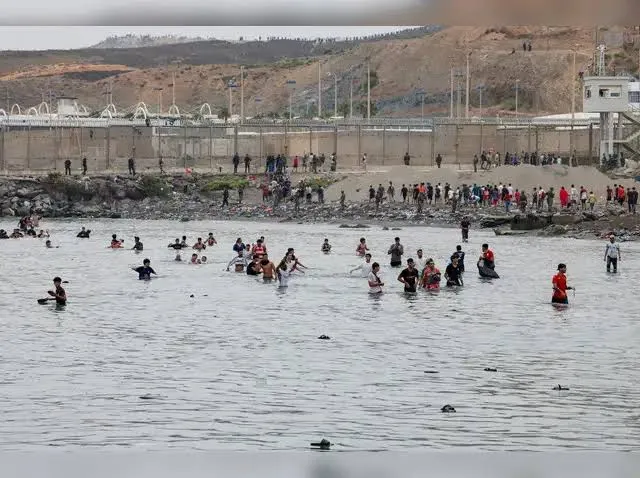
The city of Ceuta, home to approximately 85,000 residents, has become a point of contention in recent diplomatic crises between Madrid and Rabat. Daily, thousands of Moroccan workers cross the border into Ceuta for employment, a practice that underscores the interconnectedness of the two regions. In May 2021, the Moroccan government removed border controls, leading to a sudden surge of around 8,000 migrants from Morocco and sub-Saharan countries entering Ceuta in just two days. This sudden influx was widely interpreted as a retaliatory move by Morocco in response to Spain's decision to grant medical treatment to a Western Sahara independence leader, highlighting the fragile nature of diplomatic relations between the two nations.
Spain has become a significant entry point for migrants seeking better economic opportunities or fleeing violence in their home countries. Though arrivals by sea to Ceuta and Melilla are typically lower than those entering through airports or the Canary Islands, the journey remains perilous. Migrants often swim from the Moroccan town of Castillejos, covering a distance of approximately 5 kilometers to reach Spanish territory. Those who manage to cross often face immediate expulsion, while others are housed in migrant centers where they can process asylum applications. The local economy heavily relies on services, trade, and tourism, with ongoing efforts to diversify into technology and digital sectors to reduce dependence on cross-border commerce with Morocco.
Ceuta's historical significance is reflected in its rich past, having been influenced by various civilizations, including the Phoenicians, Carthaginians, Romans, Byzantines, and Muslim dynasties. Its strategic location made it a focal point for military endeavors, especially following its conquest by Portugal in 1415, marking the beginning of Portuguese expansion beyond Europe. Today, Ceuta stands as an autonomous city with its own governance structures, although it continues to navigate complex relationships with both Spain and Morocco regarding its sovereignty and economic collaboration. Despite the ongoing disputes, cooperation persists in areas such as border management and migration, though crises often lead to immediate repercussions in border control measures.
As reported by lanacion.com.ar.