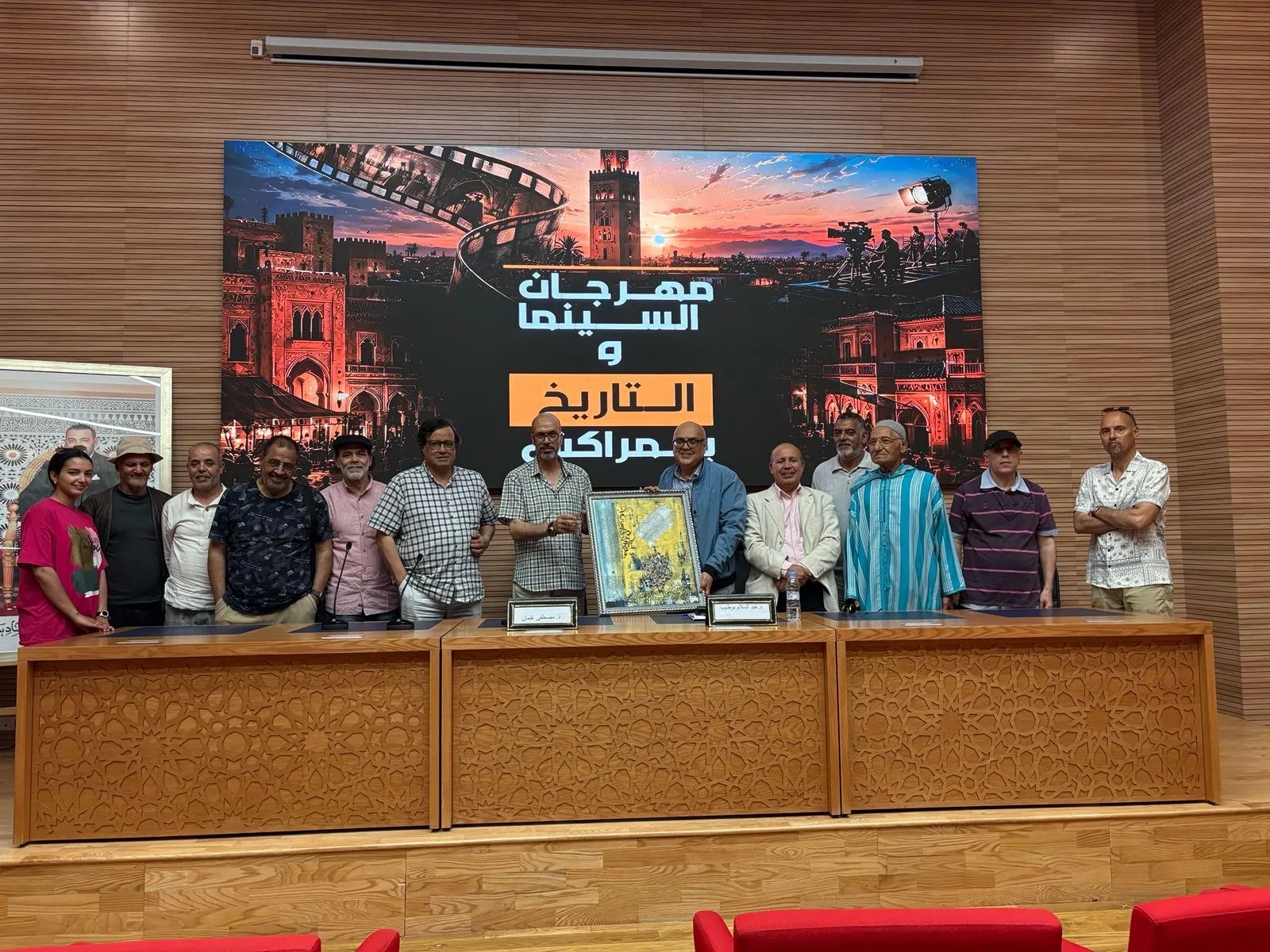
The National Film and History Festival in Marrakech recently concluded its second edition, embracing a cultural moment that celebrated the memory of images and the complexities of place. This year’s theme, "Cinema and the Old City," sought to explore the intricate relationship between the seventh art and historical spaces, as well as the interplay between visual memory and the urban and human transformations occurring in Morocco's ancient cities.
This edition, which was skillfully managed by writer and researcher Amal Abbasi, honored the eminent Moroccan artist Mohamed Miftah, a prominent figure who has shaped Moroccan and Arab cinema and drama for decades. His artistic presence has consistently been marked by intense performances, profound character portrayals, and powerful human expression. This recognition served as a celebration of Miftah's extraordinary artistic journey, which has endowed Moroccan and Arab characters with a unique dramatic and human dimension across cinema, television, and theater.
In a poignant tribute, film critic and journalist Hassan Nraiss reflected on the formative stages of Miftah’s artistic experience, delving into his early personal constructs and creative transformations. Nraiss highlighted Miftah's remarkable ability to craft a multi-layered artistic persona within the history of Moroccan and Arab performance. Furthermore, he emphasized the symbolic power of the roles Miftah has embodied, which have made him one of the most influential figures in contemporary Arab dramatic imagery.
As a complement to this tribute, the festival showcased the film "The Thread of the Soul" by director Hakim Belabbas. This cinematic work engages with themes of self, memory, and identity, revealing a high visual and poetic sensitivity in its exploration of human details and existential anxieties. In the film, Miftah appears to rewrite his artistic features with a profound internal voice, balancing silence, reflection, and human fragility.
The festival commenced with the honoring of another generation of Moroccan screen stars, represented by actor Rabii Kati, who stands out as a prominent face in the new wave of Moroccan cinema, bringing a fresh aesthetic awareness and innovative performance style. On this occasion, the film "The Lovers' Requiem" by director Kamal Kamal was screened, a cinematic piece that celebrates popular memory and collective sentiment, reassembling the relationship between love, music, and social transformations within the Moroccan context.
The festival transcended mere screenings and awards, also focusing on educational and developmental aspects by organizing cinematic workshops in educational institutions in Marrakech. Led by artist Habib Ahmedan and film critic Boubker Lhayhi, these workshops engaged participants in discussions about imagery, visual writing, and performance techniques, aiming to instill a cinematic culture among emerging generations and forge a connection between schools and the cultural and creative arts.
This edition also hosted a national conference on "The Representation of the Old City in Moroccan Cinema," featuring critics and researchers such as Ashraf Al-Hassani, Abdessamad Kebas, and Rashid Naim, with the session moderated by researcher Abdul Latif Laklida. The discussions focused on how the old city has transformed into a character of its own within Moroccan cinema, embodying memory, fragility, and social transformations while reconstructing the complex relationship between humans and their environment.
Further enhancing this interaction between images and architecture, the festival presented the book "Bjaad... The Architectural and Urban Heritage of the Old City" by engineer Abdelghani Khaldoun, in collaboration with Mohamed Ait Lameem and Mohamed Salah Bouchtala. This gathering provided an opportunity to ponder the architectural memory as an integral part of the cultural and aesthetic identity of Moroccan cities.
The festival also screened the narrative film "Small Joys" by director Mohamed Rashid Al-Tarbiq, with a discussion led by film critic Mohamed Ashwaika, opening dialogues around the challenges and aesthetic and human questions facing the new wave of Moroccan cinema. Thus, the National Film and History Festival in Marrakech, during its second iteration, solidified its presence as one of the ambitious cultural projects aiming to go beyond the traditional celebratory aspect of festivals, moving towards creating a space for collective reflection on cinema as a tool for knowledge, interpretation, and memory preservation. Its diverse programming demonstrated a clear capacity to foster a genuine intersection between art, history, architecture, and education, granting the festival a unique identity within the Moroccan cultural landscape.
Among the key recommendations arising from this edition are the necessity to broaden the festival's engagement with Mediterranean and African cinematic experiences focused on the memory of cities, the establishment of a permanent platform to document films related to Morocco's old cities, and the enhancement of partnerships with universities and research institutions in cinema, heritage, and urban studies. There is also a pressing need to launch image education programs within educational institutions and encourage young people to produce short films inspired by local memory and historical spaces. Thus, the festival emerges not merely as a transient cinematic event but as a cultural project gradually moving towards constructing a new paradigm in Moroccan cultural action, reconnecting cinema with the questions of society, memory, and identity while transforming images into a lens for contemplating humanity, place, and history.
As reported by marrakechpost.com.