
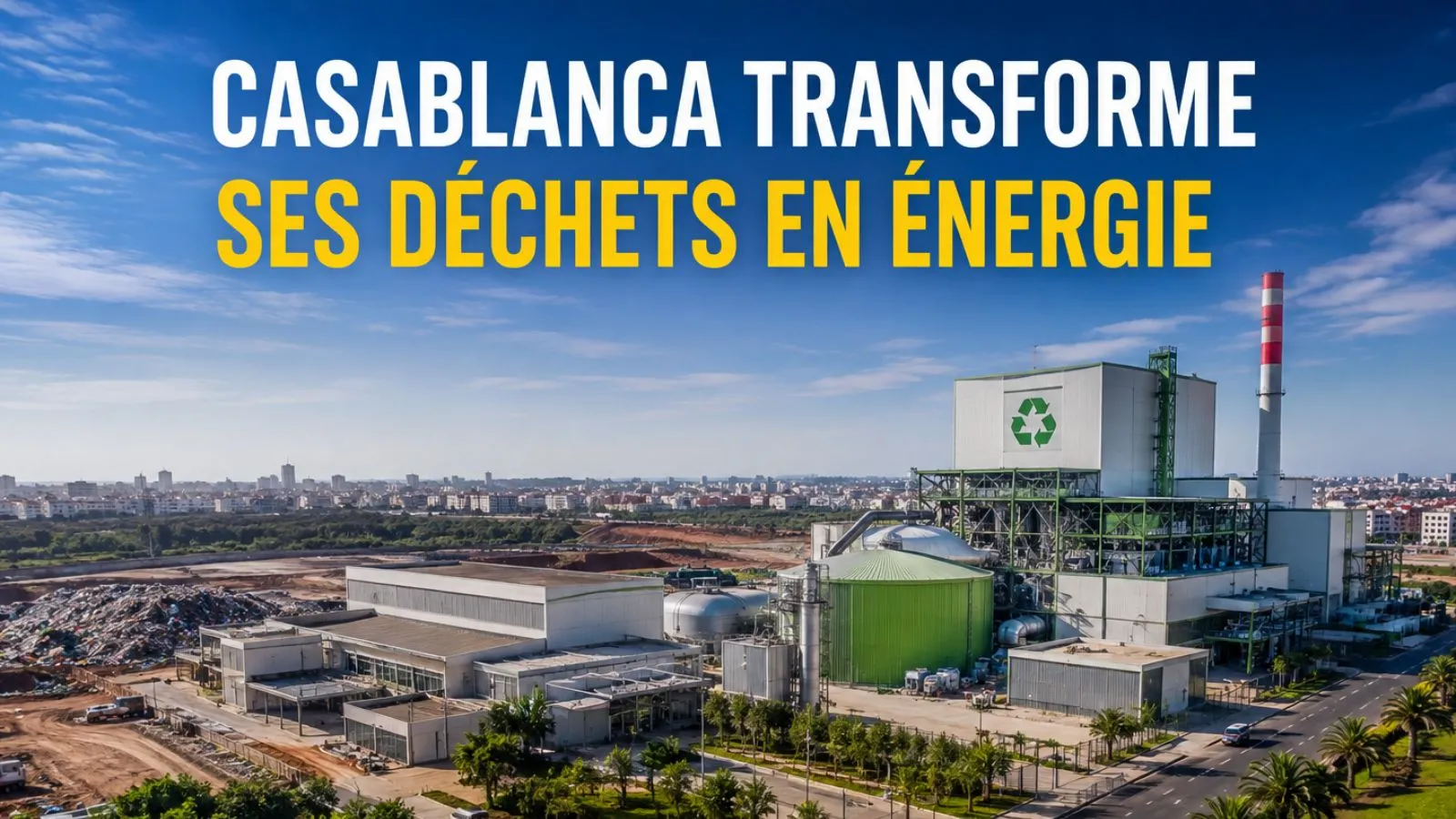

Innovative Waste Management Initiative in Casablanca
In a significant move towards enhancing energy recovery from waste, Morocco has unveiled a groundbreaking project in Casablanca, boasting an investment of approximately €1.3 billion. According to the Portuguese publication Jornal PT Green, this initiative is poised to become one of the largest of its kind across Africa. Positioned strategically near the Médiouna landfill, this facility will mark a pioneering effort in Morocco's waste management landscape.
The new facility has the capacity to process around 1.5 million tons of municipal waste annually, generating close to 1 terawatt-hour (TWh) of electricity. This ambitious project aims to revolutionize waste management in the Greater Casablanca area, which is home to over 4.2 million residents, by increasing the waste recovery rate to nearly 80% and significantly reducing reliance on landfilling.
Employment and Environmental Impact
Construction of the facility is expected to span approximately three and a half years, during which time it will create around 1,240 jobs, in addition to nearly 300 jobs related to supporting infrastructure. Once operational, the project is anticipated to generate approximately 140 permanent, skilled positions.
The collaboration between Nareva, Kanadevia Inova, and Itochu will result in an installed electric capacity of about 126 megawatts (MW), complemented by a solar photovoltaic power plant rated at 50 MW and a biogas recovery system of 4 MW. This comprehensive setup is designed to meet the energy needs of roughly 1 million people.
As electricity demand in Morocco is projected to grow by 3% annually through 2030, this project aims to contribute to the reduction of greenhouse gas emissions, particularly methane associated with landfill operations, while producing clean electricity. Furthermore, the facility is envisioned to eventually integrate carbon capture and storage technologies, aligning with Morocco's decarbonization goals.
As reported by infomediaire.net.

