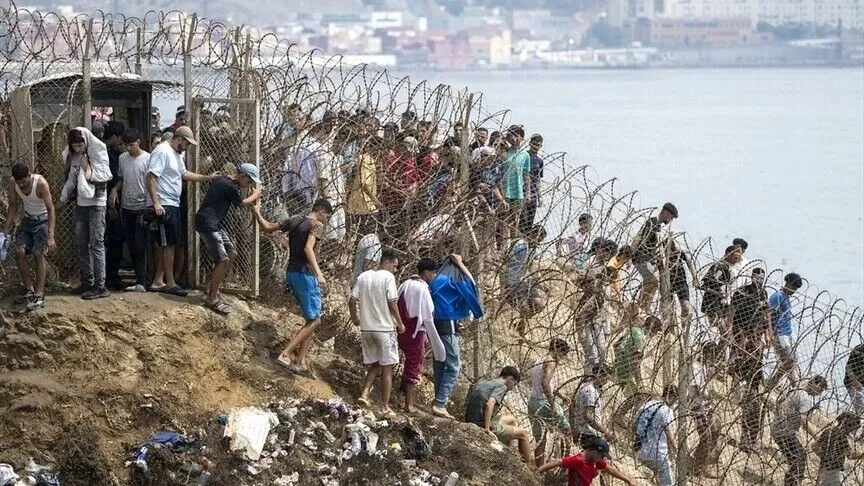

Gradually, calm is returning to the city of Ceuta after a tumultuous few days marked by the influx of tens of thousands of migrants arriving on its shores in a remarkably short time via the waves of the Mediterranean Sea. However, this tranquility is intertwined with caution and anticipation as European Union interior ministers convene on Tuesday to discuss the ongoing crisis.
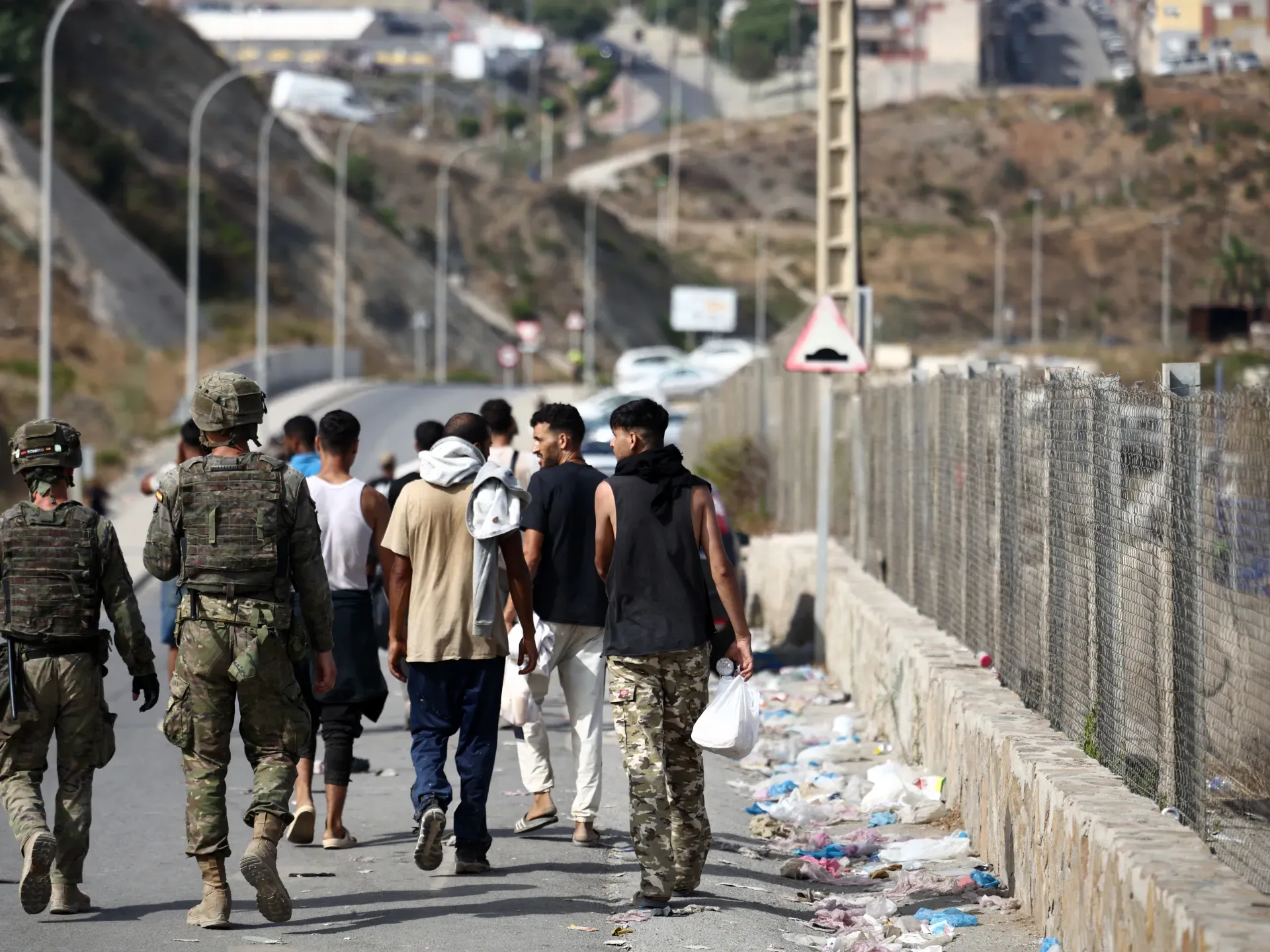
Most of those who reached Ceuta, carrying their hopes and sorrows, believed that the doors to the old continent had suddenly opened for them. Yet, many returned to Morocco empty-handed, bearing tales of hunger, thirst, and exhaustion from their brief journey towards what they envisioned as a "European paradise." Amidst the chaos, the Spanish interior ministry announced the deployment of 60 armed forces members alongside 30 Guardia Civil officers to assist in managing the overwhelming number of arrivals.
As per Spanish security sources, approximately 69,500 irregular migrants who crossed from Morocco to the Spanish-administered city have returned to Moroccan territory. The authorities have confirmed that the repatriation processes are ongoing, with reports indicating that nearly all migrants who surged into Ceuta in recent days have since returned home. However, the crisis bore a tragic face; the sea claimed the lives of 72 migrants who drowned while attempting to swim to Ceuta, according to recent reports from city officials.
Concerns and Political Repercussions
While Spanish authorities have attempted to portray a return to normalcy, the reality on the ground reflects a different atmosphere of anxiety and tension. Journalists and observers have noted a prevailing sense of unease following the shock caused by the arrival of migrants, which nearly equaled the city's population. A report from Al Jazeera’s correspondent in Spain, Ayman Al-Zubair, highlights that this sentiment dominates Ceuta, with fears that the ramifications of the crisis could extend beyond migration issues to affect security, politics, and even the relationship between Rabat and Madrid.
Despite the majority of migrants returning, disappointment matched the hopes they carried, as many discovered that the city they believed was their gateway to Europe was merely a short stop that ended in return. The suffering continues for some, including mothers searching for their children who embarked on perilous journeys without their families' knowledge, some of which ended in tragedy.
In Spain, the return of migrants has not sufficiently assuaged political concerns or public opinion. The leader of Spain's conservative party described the situation as an "occupation" of the disputed city, urging the government to adopt a stricter policy to protect its borders. He stated, "The situation is not normal; thousands of people remain within the city, and what is more alarming is that some refuse to leave. If the interior minister considers this a normal situation, it is clear we differ in our understanding of reality." Residents of Ceuta have not been reassured by the government’s attempts to calm fears; although businesses that closed during the crisis are slowly reopening, anxiety persists, with many locals agreeing that the wounds inflicted during those tumultuous days will not heal quickly.
European Emergency Meeting
The repercussions of the Ceuta crisis have swiftly escalated beyond the city and the Spanish stage, extending to the level of the European Union, where the wave of mass crossings has placed migration and border security back at the forefront of the European agenda. In this context, 22 European nations called for heightened surveillance of the EU's external borders and stricter measures to prevent irregular mass crossings.
Among the countries signing this call are Italy, Denmark, Belgium, the Netherlands, Germany, Finland, the Czech Republic, Poland, Lithuania, Slovenia, Slovakia, Croatia, Bulgaria, Romania, Latvia, Estonia, Hungary, Sweden, Greece, Cyprus, Malta, and Austria. In parallel, Irish Prime Minister Micheál Martin announced that EU interior ministers would hold an emergency meeting on the following Tuesday to discuss the implications of the crisis and explore ways to address the recent developments at the Spanish border. Martin stated via a post on X that Ireland, which currently holds the rotating presidency of the EU Council, will convene a meeting of the Justice and Home Affairs Council to coordinate a unified European stance regarding the crisis that has reignited questions about the EU's capacity to protect its external borders and manage sudden waves of migration.
Ceuta holds particular significance in this context, located at the northernmost point of Morocco in a strategic position along the southern shore of the Mediterranean Sea, bordered by water on three sides and merely 26 kilometers from the Spanish coast across the Strait of Gibraltar. This proximity renders it one of the most sensitive crossing points between Africa and Europe, with implications that extend beyond geography to political and security dimensions regarding Moroccan-Spanish relations and the EU's migration and external border policies.
As reported by aljazeera.net.