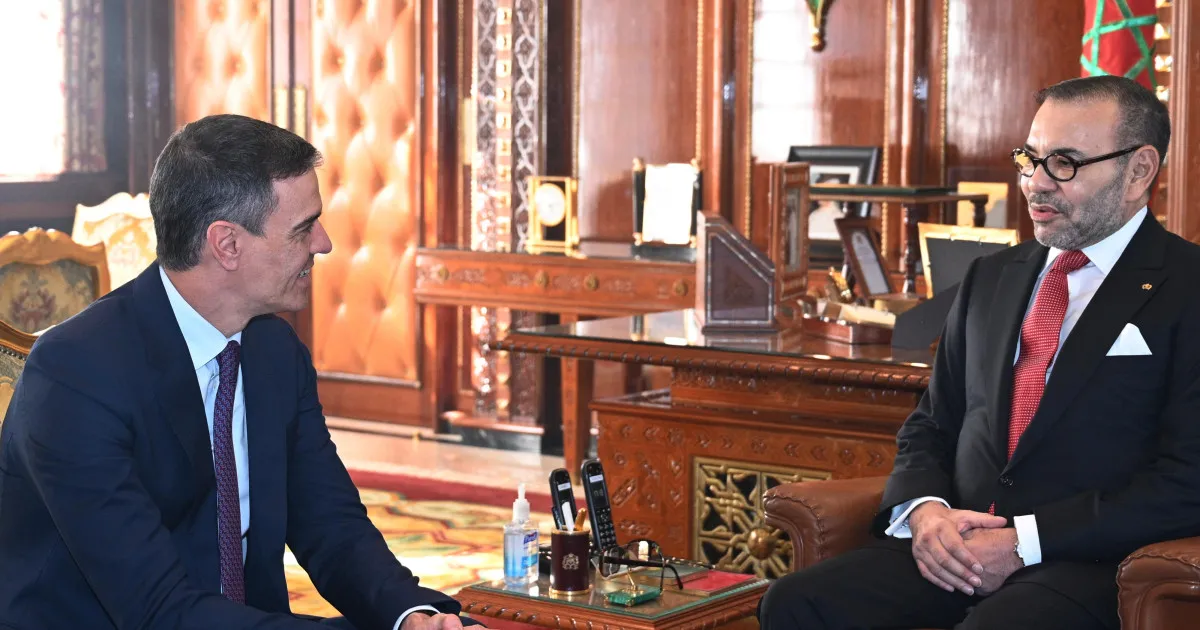
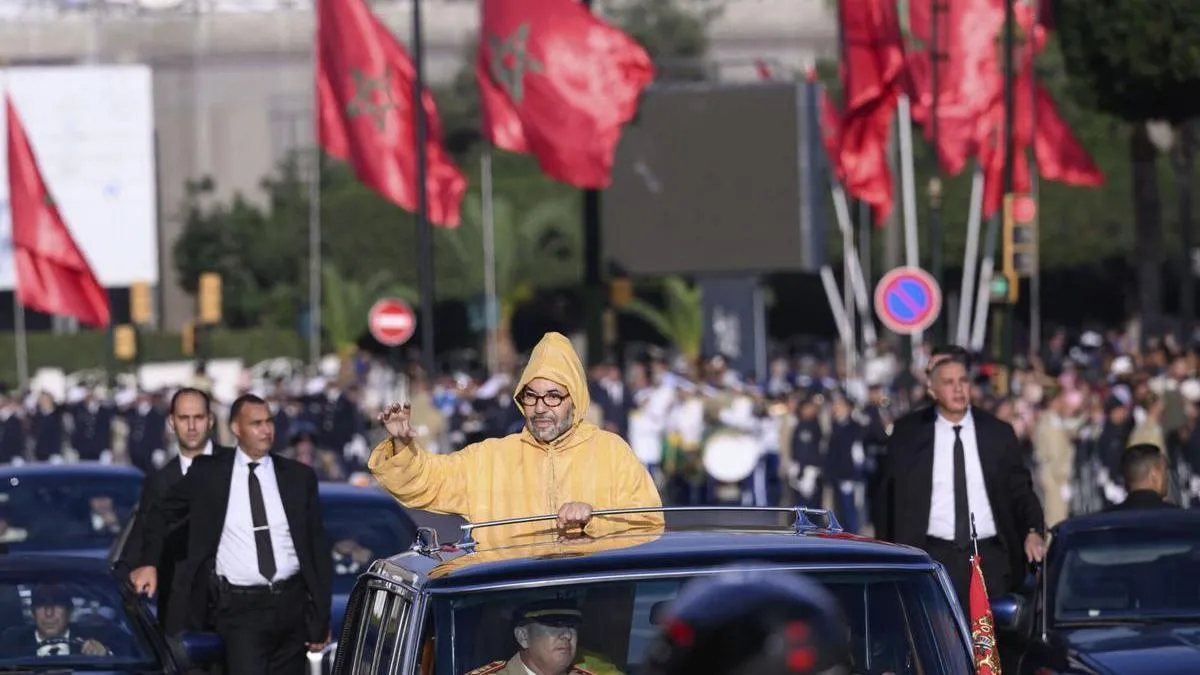

The arrival of King Mohammed VI at the Moroccan Parliament marks a significant moment as Morocco closely monitors the preparations, agenda, and every detail surrounding the upcoming visit of King Felipe VI and Queen Letizia to the cities of Ceuta and Melilla. The heightened anticipation and scrutiny from Moroccan media sharply contrast with the official silence maintained by authorities, at least until Monday afternoon. The last visit by a Spanish monarch to these autonomous cities in 2007 triggered a diplomatic crisis with Rabat, and nearly two decades later, this official trip by the head of state could once again strain the relations between the two nations.
Moroccan press outlets widely agree that this visit poses a "high diplomatic risk," as highlighted by the magazine TelQuel. The online publication Le360 has labeled it as an “announced provocation.” An article from the same outlet asserts that this journey plunges the relations between both countries back into a colonial anachronism, running counter to any logic of appeasement. One notable event that has captured the attention of the Moroccan media is the royal couple’s planned visit to the Sidi Embarek cemetery in Ceuta, where nearly a hundred individuals were buried after tragically losing their lives while attempting to enter the city on July 30 and 31.
On the other side of the border, Ceuta and Melilla remain a sensitive topic. Rabat insists that these cities are Moroccan territories under Spanish occupation. Following the Ceuta crisis, several Moroccan ministers have asserted their country’s “historical right” to these cities—a claim that, while not new, is seldom echoed at the highest levels. Furthermore, nationalist sectors on social media have spread calls for protests against King Felipe VI’s visit, although these calls have yet to gain widespread traction.
In his address last Friday, King Mohammed VI focused partially on the bilateral relations between Morocco and Spain, although he refrained from making direct references to the impending royal visit. He characterized the relationship with Spain as a “sovereign option and a voluntary commitment,” warning that it would “not be subject to any pressure, threats, or blackmail.” He also criticized certain Spanish political and media sectors for their “flagrant” and “irresponsible” exploitation of the migration crisis without specifically mentioning Ceuta.
Comparing the reactions from Morocco regarding the visits of King Juan Carlos I in 2007 and that of his son this week reveals some differences. The 2007 trip was announced only six days in advance, prompting an almost immediate response from Rabat, which called its ambassador in Madrid for consultations just three days after the announcement. “The ball is in Spain's court, and we expect this country to consider the feelings of the Moroccan people and the interests of bilateral relations,” stated the Moroccan government spokesman.
Rabat's criticisms were constant both before and after the previous visit, with King Mohammed VI issuing an official declaration expressing “strong condemnation” and denouncing the unprecedented nature of that visit. This time, however, the situation appears different; there has been no official reaction from Morocco even after more than a week since the announcement, just hours before the royal couple's arrival in the autonomous cities. Notably, the Moroccan ambassador in Madrid attended a reception hosted by the kings at the Royal Palace in honor of the National Day on Monday.
This royal visit comes during a transitional phase for the North African country, as elections were held nearly three weeks ago, resulting in a new government president, although the new cabinet has yet to be formed. Additionally, it occurs at a pivotal diplomatic moment for Morocco, focusing on the resolution that the United Nations Security Council is expected to approve at the end of the month regarding the future of Western Sahara and the ongoing peacekeeping mission (MINURSO) in the region.
As reported by elperiodico.com.