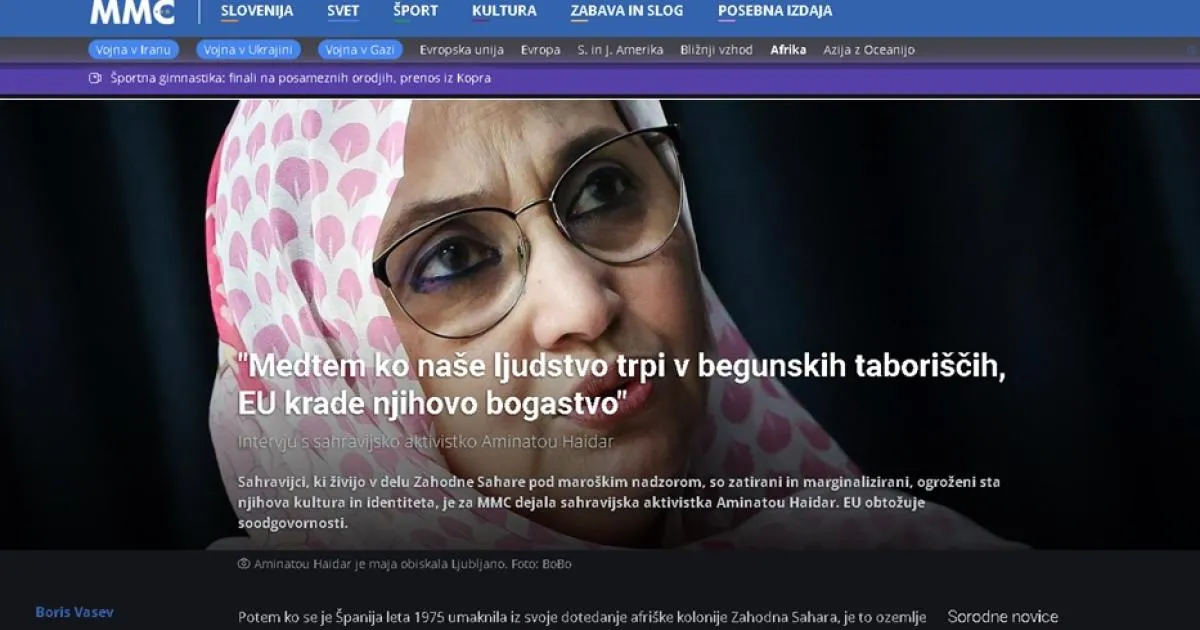
Ljubljana, Slovenia, May 31, 2026 (SPS) – The esteemed Slovenian news program UPULS devoted a substantial segment of its May 30 episode to the Sahrawi issue, featuring an in-depth interview with Aminatou Haidar, a prominent human rights defender and the President of the Sahrawi Body Against the Moroccan Occupation (ISACOM). This significant discussion provided Slovenian viewers with valuable insights into the plight of the Sahrawi people, particularly those residing in the occupied territories of Western Sahara and in the Sahrawi refugee camps.
During the interview, Haidar articulated the ongoing human rights violations faced by the Sahrawi population, emphasizing their deprivation of the fundamental right to self-determination and independence. She passionately called for increased support and solidarity from the international community, particularly from European nations, to empower the Sahrawi people in their quest for autonomy, in alignment with resolutions established by the United Nations and recognized international norms.
This interview coincided with Haidar's visit to Slovenia from May 18 to 20, during which she engaged in various political, human rights, and media activities designed to elevate awareness of the Sahrawi cause. Throughout the discussion, she underscored the European Union's role in perpetuating the conflict, attributing this to the economic and political backing that certain European countries extend to Morocco.
Haidar argued that the European Union and its member states bear a direct or indirect responsibility for the ongoing situation in Western Sahara. She highlighted how trade agreements that involve the region's resources contribute to the exploitation of these natural assets, while many Sahrawis endure harsh living conditions in refugee camps, relying heavily on international aid for survival.
Furthermore, the Sahrawi activist shed light on the systemic social and economic discrimination faced by Sahrawis in the occupied areas. She pointed to significant barriers they encounter in securing employment, housing, and educational opportunities, contrasting their struggles with the privileges afforded to settlers from Morocco.
In recounting her own experiences, Haidar detailed instances of persecution, arrest, and ongoing surveillance. She disclosed that she had been subjected to detention, torture, and restrictions on her freedom of movement, and continues to face digital surveillance, including the use of spyware. She noted the daunting challenges human rights defenders encounter in the region, where their work must be conducted under extreme secrecy due to stringent limitations on freedom of assembly and association, as well as severe restrictions imposed on Sahrawi human rights organizations.
As reported by spsrasd.info.